Translate

Donate to EOS

We aim to build a network of experimental sustainable communities to demonstrate that we do have a sustainable alternative to our current socioeconomic system. Want to help us build for a sustainable future? Please donate what you can:
Thanks!

Wednesday, 27 April 2011

New Hydroponic System


This is my new hydroponic system.  That I got a new pump last year second hand which has a bit more power than my last pump.  Also, I have a number of small buckets which it can connect and disconnect instead of one large bucket as last year.  This makes the system a bit more modular or have I can extend this next year.
Smaller buckets

The new pump

The timer used to start the pump twice a day

Thursday, 21 April 2011

A review of "Plan B" by Lester R. Brown


This book I feel starts off well.  He gives a good overview and presentation of the problems that we face, although he does seem to concentrate on the symptoms such as population pressure and water supply.  However he does seem to give some indication of understanding the core of the problem.  In the chapter on water supply he does point out exponential growth.   

Why are we in this problem?  If we live within the carrying capacity of the earth we would not have problems with water supply, we would not have population pressure.  These symptoms result from the fact that we have started pushing ourselves beyond the carrying capacity of the Earth because we live in a system that must constantly grow exponentially, precisely like the lily pond example in the book.

The book then goes on to look at a solution but a solution that aims to fix symptoms not core problem.  He goes on to talk about improving energy efficiency.  Fine, we need to do that but in a system that expands exponentially how long will it take even with the energy efficiency to end up back where we started?  This can go for many of the other measures proposed; necessary but not sufficient.  Whether we talk about designing cities for people or new manufacturing methods but unless we deal with exponential growth we achieve nothing in the end.

Tuesday, 19 April 2011

Understand the world in anthropomorphic terms


I am going to start with what might appear as dogmatic statements but I do have a reasoning behind these:

  1. People have a very wrong, intuitive, understanding of how the world works.
  2. Nature does not care.

People have a very wrong, intuitive, understanding of how the world works
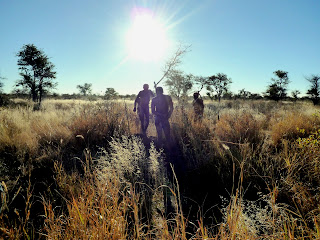
Hunter gather; the type of society we have evolved to live in.


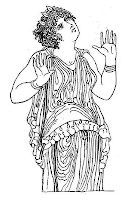
Gaia
Essentially, human beings have evolved as hunter gathers, living in small communities.  We have evolved a number of characteristic behaviours that help us lived in such groups.  We understand each other in emotional terms; “love”, “hate”, “hope” etc., the dictionary has many words that help us to describe the emotional state and motivations of other people.   We project ourselves outwards as we try to understand others (and then get surprised when people do things we would not do)

To a limited degree, this intuitive understanding of other people helps us understand the world around us.  We project our human understanding into the world around us and understand the world in anthropomorphic terms; “Jack Frost”, “Death”, “spirits”, “wights”, The Earth goddess Gaia etc., mythology has many examples of creatures that we create to explain the world around us.  Extending this idea further we end up with religion were we explain the world around us as “divine will”.  Yet, we have it wrong when trying to understand the world in such terms because …

Nature does not care
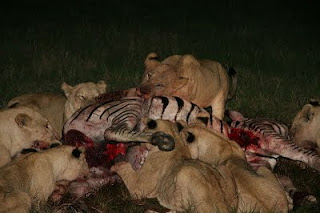
Animals inflict suffering on other animals; nature doesn't care! (photo: jeffrey sohn)


We tend to have this impression of nature as a “caring and loving mother” (because we do care), and use other anthropomorphic understandings of the world.  We see mother nature as nurturing us (an example of our anthropomorphic understanding of the world) .  Yet, if we were to go out and explore the world we can see that nature does not care.  Animals inflict suffering and harm on other animals, cats torment their prey, diseases inflict suffering.  Perhaps you have to live in a survival situation to understand how little nature cares; make a mistake and you can die. We have a recent example of how nature doesn't care in the nuclear accident in Japan.

Building a future world

This understanding of the world causes us many problems.  In a way, the problems we have today result from a lack of understanding of how nature works; as if we see ourselves as something special and exempt from laws of nature.  I also see this same problem reoccurring when people talk about solutions to our current problem.  

Essentially we have to deal with the real world.  We have physical resources, energy and physical needs.  We need to manage these within the limits that nature provides.  To do so, we have to understand nature not in anthropomorphic terms of “mother nature” but as a real physical system and work with nature. 
However, instead of working with nature, I see people proposing solutions based on our erroneous anthropomorphic understanding of the world.  So we get things like “we need a love economy” or a “gift economy”. 
Instead, EOS proposes a different way of dealing with this; treat people as people and nature as nature.  Let people deal with each other in our anthropomorphic terms which works so well when dealing with human relationships but when it comes to dealing with the physical world we use an approach based in how nature actually works not in our emotional anthropomorphic understanding of the world. 

So, on one side we have communities of people managing their own affairs on the other side we have people with the knowledge and skills and understanding of the natural world to manage the natural systems in this world.

Wednesday, 13 April 2011

The Latest Energy Credit Simulator

I have finished the latest Energy Credit simulator and run some basic tests and I have assembled at all in at package. I have uploaded the sim to the EOS file site in a zip format but only members can access that area. I will look at making it more public if I can.

The zip file contains:

EnergyCredit Sim.jar

The main jar file. If you run this from the command line you would get lots of text output otherwise you will get two file dialogue windows. In the first, navigate to an select the setup file. In the second, navigate to and select the results file.

EnergyCredit simulator.pdf

This file describes the format of the input files for the simulator.

Three directories

Each directory contains the setup files for a simulation. Run the jar file, navigate to one of these directories and load in the setup file.

This represents, as far as I’m aware, the only attempt to scientifically research an alternative, energy based, resource allocation system to our current, money based, socioeconomic system.

Thursday, 10 February 2011

The Design

EOS aims to propose an alternative, moneyless, socioeconomic system to our current system through the application of science to society.  Basically, we can take the word "engineering" as meaning the "application of science".  So essentially, we aim to engineer society.

An engineering project begins with a "customer specification", which describe something about the end result but not really how will we should achieve that.  It becomes the engineers jobs to translate that vague customer specification into a solid implementation in a number of steps.  We often begin with developing prototypes and after testing out a number of prototypes we move on to what we call a top level design document.  The top level design document specifies in a bit more detail how we should achieve the end result.  We can then progress to a more detailed design document which describes in more detail the implementation.  We then go into implementation where we actually built what the customer originally desired, or as close as we can practically get.

The design process doesn't necessary follow the above linear path.  As we learn more we can go back to earlier stages and redo things so the designed becomes a circular process.  It is easier to correct mistakes in the earlier phase of design than to correct mistakes in the implementation so we should spend some time on getting the design right.

In EOS, we have a vision of a future, sustainable, moneyless world around civilisation.  That forms our customer specification.  We then see around this planet a number of groups exploring similar visions.  Effectively, all these groups are exploring different prototypes so we have moved on to the top level design for a proposal of an alternative socioeconomic system.  We simply call our design "The Design" and we have worked on it over the last five or six years.  I have been putting all our work together and am now produced a draft document that covers most of the aspects of our design.  I have now send it around to a number of people to review.  We still have more work to do but it feels like we're heading towards something that we could start testing; heading towards a moneyless society.

Monday, 24 January 2011

Understanding holons

I've noticed that some people have trouble understanding the idea of holons and how a holonic society works. As the idea of holons forms an important part of the socioeconomic design that EOS presents I thought I would try an present an overview of the idea in the hope it clarifies some points.

The whole idea of holons comes from observations of nature so in proposing a holonic structure EOS presents a structure that emulates nature. Nature organises herself in a bit of a different way to humans and I suspect that the main problem people have with the holonic concept stems from this difference. People tend to form hierarchies around a leader  and when people come to EOS they tend to look for a centralised leadership; "show me my leader and I'll pledge obedience". However, a holonic system has no centralised leadership. This doesn't mean that it has no leaders at all but it means we have no one overall leader. Instead we have a distributed form of governance.

A holonic system has a number of groups or organisations and individuals that form a network. Each group within the network runs itself the way that it wants to. Which means it can have leaders within the group or not, depending on the group.

What keeps the whole thing together? In a word; goals. The whole system, exists to achieve a goal. In the case of EOS we aim for an overall goal of a sustainable, technological, moneyless society that offers a high standard of living for everyone. We aim to achieve this through the appliance of science to society. Each group in the network can work towards its own goals its own way so long as those goals fit in with the overall goal. We do envision that groups will work on projects so will have some kind of project leader and coordinators to help cooperation with other groups. These act to achieve the goals of the group.  We also envision people having technical expertise in each group and the technical experts will make the decisions within their domain.

All the groups within the network cooperate; each putting something into the network and each getting something out of it in a symbiotic relationship (again, like in nature). When two or more groups find that they have something in common they can elect to work together on that common project. In doing so they form a new group higher up the holarchy. This enables multiple groups to combine resources to efficiently achieve a common goal.  Those higher up holons can form, themselves, other higher up holons.  Much like cells in a  body form organs which in turn form a body.

Where groups differ with other groups they can go their own way and do their own thing, within the limits of the overall goal. A holonic system allows diversity and differences and sees them as strengths.  We do not see the need to control everyone nor have everyone do the same thing; people have a great deal of freedom to get on and do things with out having to have someone to stand over them and constantly tell them what to do. Thus, we accept groups that have their differences and welcome that difference.  This allows us to test out new ideas and explore other alternatives. So EOS doesn't need to dominate other groups nor absorb them into EOS. Pick a project you would like to work on. Does it fit in with the goal (check with a director if unsure). Yes? Then get on with it!
The system does have a hierarchy of functional sequences on the side. This structure has appointed directors that match onto the holarchy. The directors have the job of ensuring communications between groups and ensuring that each group has compatible goals but the directors do not interfere with the internal running of the group.

The Terran Technate as of early 2011


For more on holons see:


http://wiki.eoslife.eu/index.php/Engineering_Society

Sunday, 16 January 2011

Zeitgeist III - Moving Forward

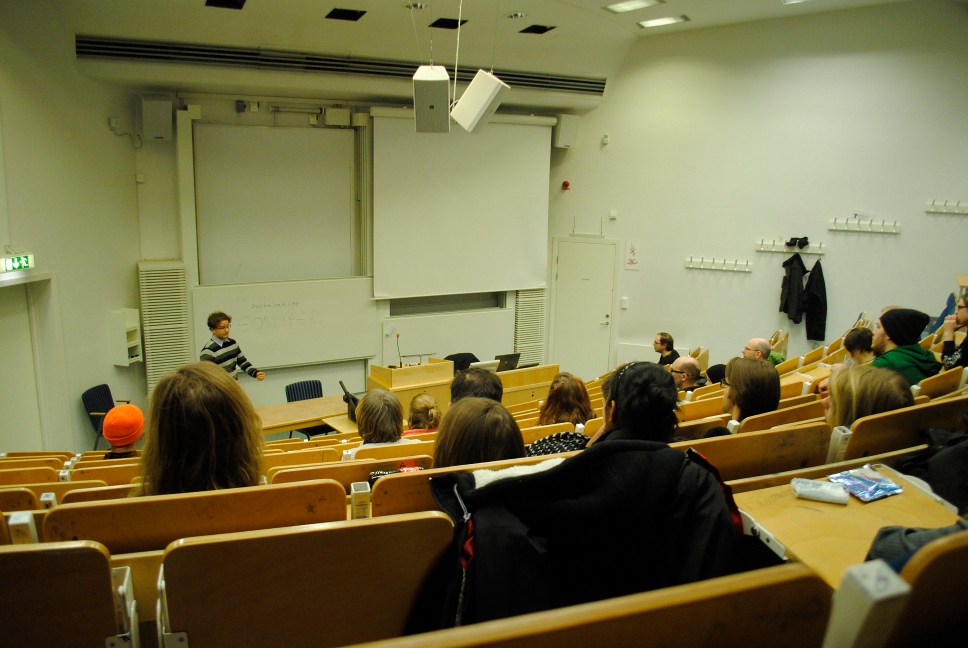
Last night EOS had a showing of "Zeitgeist III - Moving Forward", the latest film from Peter Joseph, at Umeå University. The event went really well and we had 42 people along, some stayed for a chat afterwards. I think I would class this as the best ZM film so far. It does a good overview of our socio-economic system and human nature.  Most of the film I would agree with with. Nice to see that in the human nature part the film pointed out that human behaviour results from a combination of environment and genes but it did place more emphasis on the environment. On the violence part; yes, children of violent parents tend to behave violently themselves but does such behaviour only result from the environment? Also, we have a body of evidence that shows that past societies had more violence than today's (see Steven Pinker's TED talk).

The film gave a good overview of The Venus Project design for a city, although I had hoped for more details. The animations in the film ranks among the best! Given the title, I though it a bit odd it didn't cover more about moving forward such as a transition plan but then we do have a number of groups, including EOS, working on moving away from our current socio-economic system to a moneyless one. Another odd thing in the film; given the emphasis on science applied to society and the central roll of testing in science and the fact that Jaqcue Fresco mentioned the need for testing in the film yet the film didn't say anything about testing out any alternative to our current system.

Overall, very well worth seeing!

The ZM III Showing, Umeå University, 15 January 2011.