Translate

Donate to EOS

We aim to build a network of experimental sustainable communities to demonstrate that we do have a sustainable alternative to our current socioeconomic system. Want to help us build for a sustainable future? Please donate what you can:
Thanks!
Showing posts with label exergy. Show all posts

Thursday, 5 December 2024

Technocracy : What is it and why would we want it?

“Many forms of Government have been tried, and will be tried in this world of sin and woe. No one pretends that democracy is perfect or all-wise. Indeed, it has been said that democracy is the worst form of Government except all those other forms that have been tried from time to time; but there is the broad feeling in our country that the people should rule, continuously rule, and that public opinion, expressed by all constitutional means, should shape, guide, and control the actions of Ministers who are their servants and not their masters.” - Winston Churchill, UK parliamentary speech, 1947 – 11 – 11

Introduction

In this article I want to give a quick introduction to technocracy as an alternative form of government. It could be interesting to look at this form of government given the complexity of the world we live in and the apparent difficulty we are having with dealing with serious problems such as global warming as well as our failure to build a sustainable society. Perhaps we are unable to fix the problems our current system has created within the same system? Perhaps we need to look to an alternative if we really want solutions?

What is technocracy?

To put it simply; technocracy is the rule of the skilled. That is, a government formed of people who know what they are doing. The word “technocracy” comes from combining two Greek words. The first is “tekhne”, which means “skill”, and it can be found in other “tech” words such as “technique”. The second word is “kratos”, which means “power”, and can be found in words like “democracy”.

Why would we want it?

The why we might be interested in exploring technocracy can be summed up in one word; “complexity”. Modern society is complex. Many of the other forms of governance were developed in less complex, pre-industrial, pre-scientific, times. They were not developed to handle the modern complex world. It could be argued that that is why we have been failing to deal with complex problems such as global warming, just to take one example. Global warming is a complex technical problem and it could be argued that we haven't even started to solve that problem (we have even done the opposite like muddle the waters and call it “climate change”). And there are many other such problems. There is nothing in other forms of government that actually guarantees technically competent people will be in a position to make the necessary complex decisions. Authoritarian regimes reward loyalty and democracies reward popularity. No technical skills, qualifications, or even understanding of society are required.

So, why would we want technocracy? Because it is the only form of government that guarantees technically competent people will be making the technically complex decisions in our modern technically complex world.

So, what is technocracy?

I’m coming back to the first question again. I gave a simple answer above and then a brief explanation as to why we might want to look at technocracy. So, now I want to given a better answer to the first question. I’m going to look at technocracy in a little bit more detail with the idea that we live in a complex society in mind.

The Rule of Scientists

One of the most common views of technocracy that I have come across is the view that the government would be made up of scientists. A good view of that type of government was presented in an old children’s programme from 1970 called Timeslip. In the episode called “The Year of the Burn Up”, two children travel forward in time to a future world of the Technocracy, where a government of scientist are remaking the world according to the “master plan”. Things go wrong and the planet starts to warm up to the point where all life on Earth was threatened with extinction.

Personally, I’m not surprised a “rule by scientists” would end in disaster. If you ever meet a real scientist you would understand why they may not be suitable to run a country. Just because a person is skilled in one area doesn’t mean they are skilled in another area. A physicists may be brilliant with physic but it doesn't follow that they would know the first thing about ruling a country.

The Rule of the Computer

Another type of technocracy could be seen in The Venus Project (TVP). TVP originates with Jacques Fresco, who was at one time a member of the Technocracy movement in the US. TVP envisions a society run by computers. Computers would monitor all the variables that are vital for running society such as crop production, the water supply, energy supply, and so on. The computer would then make what ever decision is needed to run society. Jacques Fresco didn’t go into details of how all this would work but I would imagine it would be a distributed system with many computers inter-connected. It would also need teams of experts to manage the system but this is another detail that isn’t clear to my mind. The system is a moneyless system but, again, how it would work isn’t fully explored in Jacques’ works but there are a nice set of ideas for future buildings and cities. 

Jacques Fresco


The Design

“The Design” is another form of technocracy, this one has been put forward by the Swedish based group called EOS. The Design see society divided into two; the people side and the technology side. The people side deals with cultural issues and communities and is ruled by direct democracy. The technological side then deals with the technical aspects of society such as production, transport, computers, and so on. It is the technical side that is more of interest so I’ll focus on that. The technical side is run by teams of experts. The aim is to apply science to society but the experts are not all scientists. They are teams composed of experts from a variety of domains. Food production, for example, could be managed by teams composed of biologists, ecologists, agro-engineers, and farmers. The teams work towards a goal;

Highest standard of living for the longest time possible

This goal originates with Technocracy Inc. in the US. The goal puts people first so we see rights such as the freedom of speech, freedom of association, freedom of movement, etc., as an integrated part of the over all goal. Also part of the overall goal is the idea of sustainability; the need to balance our needs with those of the planet.

To achieve the goal, the Design calls for a moneyless system based on the idea of energy accountancy. This idea originates with Technocracy Inc., but the Design extends the idea. Instead of energy, the Design uses exergy as exergy is the usable energy and that is more of interest when managing a complex system.

The Design also advocates the use of technology to minimise work. That would give people more time to be human. This is achieved through the technical management of resources, automation, and robotics.

Of all the designs for a technocracy, The Design is probably the most comprehensive. However, it is not complete. The Design calls for testing and verification in order to develop the ideas to a complete system (taking a scientific approach).

Technocracy Inc.

The ideas of technocracy go back to the 19th century but the oldest technocracy organisation still in existence is Technocracy Inc. in the US. They date back to the 1930s. They have a plan that includes forming urbanates (cities of the future), how to manage food production, and energy production but they have a more American focus.

Further reading

This was only a very quick look at technocracy but if you want to know more there are various publications / sites to read to go into this subject in more detail.

One good starting point is Technocracy Inc. site and their plan. The Venus Project has a book called the “Best That Money Can’t Buy” by Jacques Fresco and that can be found at their web site. Kenneth S. Keyes, Jr. and Jacques Fresco also wrote a book called “Looking Forward”, which also explore the ideas of TVP. That book is free. The Swedish EOS group has published their ideas in a book called the Design.

Friday, 17 November 2023

Failed

Introduction

We hit another heat record this year. According to NASA, July was the hottest month on record. Heat record we recorded all around the planet. And the heat records continued on in to the second half of 2023. This all shouldn’t come as a surprise as we haven't really done anything about global climate change. We have done “something”, make it look like we have tried but I would argue that all that we have done is try to solve the problem using the same thinking that caused the problem in the first place, not really dealing with the problem itself. Effectively, we just green wash things. If we actually wanted to get to grips with the climate change problem and really deal with global warming then we would have to look at the root causes of the problem; the free market, capitalist based socioeconomic system we have. We would need to look at alternatives.

Where to go?

The current socioeconomic system we have has created a lot of benefits for people over time but in doing so it has also set us on a path of self destruction. We would like to maintain as many of the benefits as we can but avoid the more negative aspects of our current system.

EOS proposes a system that aims to maintain as high a standard of living for as long as possible. A high standard of living for everyone, not just a select few, and for as long as possible means sustainability is built in at the core of the system. The system starts with seeing society as highly complex. So complex it will take many years to study and understand just a part of it. This means that to manage a future society we would need teams of experts taking a scientific and engineering approach. So we start there, dividing society into a technical side and a people side with teams of experts managing the technical side. Scientists and engineers but also accountancy, medical personnel, cleaners, farmers and so on. Each with their own specialisation, each contributing to managing a society to achieve the overall goal.

The system proposed by EOS is also a moneyless system. One of the major problems with our current system is the drive for profit. Profit seeking behaviour pushes infinite growth with finite resources at the expense of the very planet we depend on. Removing money would remove this destructive behaviour. But we will still have resources that need to be allocated to talks. The way EOS proposes to do that is to use a system of energy accounting. We need energy to do anything and we have a certain amount of energy every year that we can allocate to doing things, like producing things. So, we allocate the energy we have available to people and let them allocate the energy to production of items they want. Those items available will be produced in a system managed by skilled experts so as the items are produced in a sustainable way. Thus, we can balance our needs with those of the planet.

In such a system we can automate as much work as we can, minimising the need for work and giving people more time to be human as people don’t need to work to make a living. We can minimise production by making items last longer. We can minimise the amount of items produced by planning and sharing resources (think about cars; what do cars do most of the time and how can we better utilise cars?). Minimising in such a way will allow us to still maintain a high standard of living but lessen our impact on the planet making the system sustainable. The system is also rooted in the application of science and is holonic in nature. So, it’s an open and free society that uses technology to benefit everyone but still maintains a balance with nature. “Balance” is a keyword.

Examples of a future sustainable society

We have not built such a moneyless system managed by skilled experts before so we can’t really point to an example of this type of system today. But fiction does provide us with some examples of societies that have some characteristics of the future World we would like to build. Here is a quick look at a couple; Space 1999 For those of us who were lucky enough to have our childhood in the 1970, we might remember a fascinating sci-fi series called

Space 1999.

Moonbase Alpha, Space 1999

Set on a moon that has been blown out of Earth’s orbit and set a drift in space. The inhabitants of moonbase Alpha have to survive in a hostile universe as the moon is transported from one star system to another via a network of space warps. 

The society on moonbase Alpha is very technical and run by technical experts. Dr. Hellen Russell, in charge of the medical section, Tony Anholt, in charge of security, David Kano, responsible for the computer systems, and Alan Carter, pilot to name but a few. They are all under the command of John Koening with Paul Morrow as second in command. The society is open and decisions are made are decisions where each expert can put forward their opinion. The society is hierarchical, rather than holonic as EOS’ system, but divided into technical domains, like the system proposed by EOS. The economy of moonbase Alpha is not really explained but doesn’t appear to be money based. Production is limited but meets the needs of the inhabitants. The base is also physically limited as everything on the moon outside the base is uninhabitable. Everything produced is maintained within the base which means everything must be recycled and with no waste.

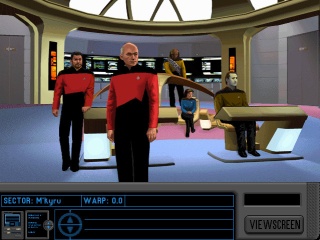
Star Trek

Star Trek TNG

The Federation in Star Trek is another example of a technological organised society. The society is also moneyless. The exact workings of the economy is not fully explained but given the technological nature and the importance of science one can imagine it would be some form of energy accounting. If we look at the starship Enterprise, we again see a society that is organised around technical areas run by technical experts. Mr. Spock as science office, Montgomery “Scotty” Scott, responsible for engineering, Nyota Uhura, in charge of communications, and Dr. Leonard “Bones” McCoy as chief medical office, for example. All under the command of Captain James T. Kirk. The society is still hierarchical but discussions are still held and the opinion of the experts taken into account.

Do you want this kind of future?

If so, then we need to start building it. It won't happen by itself and given the failure we have seen regarding climate change, we need to be more proactive. We would need people who agree with and understand what is proposed. Scientists and engineers but also experts in other fields need to form groups and clubs to start building in the real world. Join up with like minded people. We would need funding, even if we want to build a moneyless society we are not there yet.

We need to start acting. Start doing. If we don’t, then we wont get this king of future. Fiction also provides us with plenty of examples of other types of societies. In the end the choice is ours. Build a better society or settle with what is coming.

EOS is one example of people working together to try and build a better future. Want to join us? Why not start your own group and form a network with us? Much of the ideas are explained in the Design but we are open to discussion if you want to learn more.

Tuesday, 11 April 2023

More time to be human


To be human in the modern world

Foreword

At the moment we live in an unsustainable socioeconomic system that requires infinite exponential growth with finite resources. To be able to live in such a system we require money and for most of us the primary way to obtain the money we need to live is working. We end up spending most of our lives working. A lot of the work we do is demoralising, dehumanising, and, could be argued, unnecessary. From when we leave the education system until we retire and the retirement age is getting higher and higher in many countries. Many people work two jobs to make ends meet. 

Imagine the future

Instead of that, imagine a world where you didn’t need to work, or at least, you didn’t need to work as much as we do today. Those jobs that are needed to be done would be interesting, meaningful, and people who work at those jobs do so because they want to not because they need the money. Working less would mean more time to be human.

Sounds like fantasy? Maybe, but maybe not. EOS proposes a sustainable, moneyless, socioeconomic system that aims to balance our needs with those of nature. In doing so, we could have a system that requires much less work yet still offer a good standard of living for everyone. The system has its roots in the application of science and engineering. How would that work?

The Alternative

To start with, the system that EOS proposes would see society organised in to a people side and a technical side. The people side is all about community, family, and culture. The technical side deals with all the technical aspects of society. From the means of production like farms and factories to transport systems and on to the science and research needed to develop the society. The people side is run by the people through a process of direct democracy and the technical side is managed by interdisciplinary teams of people, each of whom is an expert in their relevant field.

The system EOS proposes is also moneyless. So there is no profit searching behaviours that drive our current destructive system. Instead, the production capacity of a society is divided equally between the people so everyone has an opportunity to gain what they want and what they need. We can do that if we have an accounting system and the one that EOS proposes is based on the physical capacity of society to produce. We can measure that using energy (or to be more exact the usable energy which is called exergy). We can then allocate a set number of energy credits (that represent the production capacity) to individuals who then decide on what gets produced by allocating energy credits (and, therefore, production) to produce items that they want produced. Thus, the system is demand driven and not centrally planed. The teams of experts then manage the system.

As the system is not money based and we are not seeking profit we don’t have a system that needs to continually grow exponentially in the self destructive way of today system. Instead, we have the opportunity to build sustainable products. Built to be recycled or reuse. We can also reduce what we produce. For example, instead of building car after car and then have them spend most of their time standing still in a garage or car park doing nothing. We could rethink our whole transport system and have a system where each car is used for, say, 80% of the time. That means we could reduce the amount of cars we need to produce.

In the system EOS proposes, as much as possible is automated. Robots in factories run by Artificial Intelligence (AI). With the teams of experts running the overall system. With AI and robots doing much of the work, we would have much less work to be done. And what work there is to do would be more interesting to do. 


Building a better world

Conclusion

Less work to do in a sustainable socioeconomic system where everyone has equal access to the means of production would mean more time to be human.

Do you want this kind of “Star Trek” like future? If you want to make this kind of future possible then we need to work together to achieve it. If it is possible to achieve then we can achieve it. 

Links

EOS

The Design


Monday, 23 August 2021

What Have We Done?


Flames
The World on Fire


Introduction


Apparently scientists are “shocked” or “scared” at the ever increasing rate of climate change. This year alone we have seen huge forest fires, like in California or in Siberia, flash floods, like those in Germany, China, or in Tennessee. We have even seen powerful tornadoes in the Czech Republic. But I don’t see any reason to be “shocked” by all this. Perhaps “scared” but not “shocked”. It is not as if this hasn’t been predicted. Scientists have been warning that this would happen for decades. Even if things are happening faster than expected that should have been given as a possibility. The climate is, after all, a non-linear, chaotic system and such systems can suddenly flip from one state to another state. Such a change is called a phase shift.


Despite all the warnings and all the evidence we haven't actually done anything to prevent the current changes have we? I’m sure we are all buying “environmentally friendly” stuff. We are all using some kind of “bio fuel” and our government has made all kinds of environmental agreements and introduced schemes like carbon tax. Yet, all that hasn’t really done much has it? It’s like throwing a bucket of water of the fires in California or Siberia; pissing in the ocean. And just to add to the problem, we have been busy with climate change denial and other activities to counter any advance we might make.


What’s the Problem?


Is the problem too little carbon tax or what stuff we buy? I would say no. And if that is so, it shouldn’t come as a surprise that we are not having much effect on preventing climate change. I would argue that the problem is to do with the way we do things in general; with our whole socioeconomic system.


Our socioeconomic system is a debt based money system that aims to grow exponentially with finite resources. This leads to an amazing advancement in human civilisation but it is also fundamentally unsustainable. We produce more and more stuff and in doing so produce more and more waste as goods are not made to last. We end up over exploiting the planets resources and creating the conditions for climate change as well as many other problems. So, if we really want to do something about climate change then we need to change our current socioeconomic system to something sustainable.


An Alternative?


There are probably many alternative socioeconomic systems to our current one. But I would propose one where we can maintain a high standard of living but one where we also balance our needs with those of the planet. We could do this given the huge waste we have in our current system. Think about cars, just as an example. Cars spend most of their time standing still in a car park or garage or just by the side of the road. Most of them are not actually doing something useful most of the time. Now imagine a system where cars are used for 80% of the time. We could do that if we shared cars. If I was to take my car to work in the morning I wouldn't just park it and leave it for the day until I need to drive home again. Instead, the car could be used by someone else to drive them to work or for other tasks. At the end of the the car would be ready and waiting to take me home again. So long as the car is there when I need it, does it matter if others also use it? If we had such a system we would need far less cars. If we had a system that minimised transport needs (by, for example, work from home) we could cut down the amount of cars even more. If we also made cars to last, we would not have to make so many new ones each year. If we did this for as many products as possible then we could drastically reduce our impact on the planet yet still maintain a high standard of living.


We can’t have such a system in our money based world, so I would propose a system without money. To do that we would still need some way to account for all the materials and energy we have in the system. We could do that by using exergy. Exergy is a measure of how useful the energy we have is (we can’t always use all the energy we have) but it can also be used to measure materials. If we use exergy we would have, what I would call, an energy accounting system. We could then allocate production capacity to people so they decide what gets produced or what services they can use. As the capacity to produce or consume a service will take energy and materials we can use exergy as a way to allocate these to the people.


But for such a system like that to work it will need experts to run it. The whole system is complex and is made of systems within systems. Just to understand how one part of it works can take many years of study or experience. So, we would need teams of experts from different disciplines to run the system, calculate out the exergy, allocate production capacity, and keep things running.


Such a system would also need to balance our needs with those of nature; it will be sustainable by design from the beginning. Again, we will need experts to design the system and the systems within the systems. Cars are just one example of that but cars are part of a transport system. If we think about how a transport system works and what it aims to do, we can start thinking about how to build such a system so it has minimum impact on nature. We wont have to worry about profit or cost, we just need to know if we have the energy and the resources to achieve the goal. But a transport system are part of cities as well, so we would have to think of transport within the context of cities and the other systems that make a city.


The system I propose is really about engineering society. It takes a scientific approach to what we do. Scientific because we need a good understanding of how nature works in order to balance our needs with those of the planet and still maintain a high standard of living. Science is demonstrably the best system for understanding the world. What I propose is engineering society as it is about applying science to society.


A Way Forward

No photo description available.
The Bio Dome that EOS built


I say “I propose” but this is not just my proposal. There are a number of groups around the world working on similar ideas. One of the more well known groups is the Venus Project in the US but the proposal I have just introduced here is put forward by a group called EOS, which is based in Sweden. The full proposal can be found here. But a summery is also presented here and here.


If we want a sustainable future, a future that balances our needs with those of the planet, a sustainable future, then we need to act ourselves. It is not going to build it self. We also ready have people acting. EOS has not only worked on a proposal but has started to test some of the ideas out. From simple projects like building a bio dome, EOS is now working on building a test community. But more needs to be done. More people and more finances (irritatingly for an organisation that wants a moneyless world).

Wednesday, 13 April 2011

The Latest Energy Credit Simulator

I have finished the latest Energy Credit simulator and run some basic tests and I have assembled at all in at package. I have uploaded the sim to the EOS file site in a zip format but only members can access that area. I will look at making it more public if I can.

The zip file contains:

EnergyCredit Sim.jar

The main jar file. If you run this from the command line you would get lots of text output otherwise you will get two file dialogue windows. In the first, navigate to an select the setup file. In the second, navigate to and select the results file.

EnergyCredit simulator.pdf

This file describes the format of the input files for the simulator.

Three directories

Each directory contains the setup files for a simulation. Run the jar file, navigate to one of these directories and load in the setup file.

This represents, as far as I’m aware, the only attempt to scientifically research an alternative, energy based, resource allocation system to our current, money based, socioeconomic system.

Wednesday, 31 March 2010

Thermoeconomics: The use of Exergy in Alternative Socioeconomics

I've worked a bit more of the design of an alternative to our current money based socioeconomic system. This actually formed part of a cause I have just finished in Thermoeconomics. The paper I wrote was on the use of exergy for an energy accounting system.

You can find it here:

Thermoeconomics: The use of Exergy in Alternative Socioeconomics

ui