Translate

Donate to EOS

We aim to build a network of experimental sustainable communities to demonstrate that we do have a sustainable alternative to our current socioeconomic system. Want to help us build for a sustainable future? Please donate what you can:
Thanks!
Showing posts with label Alternative Socioeconomics. Show all posts

Sunday, 29 March 2026

Holons and Holacracy


Building a sustainable moneyless world

Holons : circles within circles


Introduction

The idea of building a sustainable moneyless future based on holons [koe] has been at the core of EOS’ ideology [design] for the last 20 years (as of writing). It’s odd then that I hadn’t come across “Holacracy” by Brian J. Robertson [hol] until last year and it took until the start of this year for me to read the book. There’s a lot in the book that overlaps with EOS and there is a lot more in the book beyond that. So, I thought I would do an article that both reviews the book and looks at how it fits in with EOS’ ideas for the future.

A quick overview of “Holacracy” by Brian J. Robertson

The book advertises it self as “The revolutionary management system that abolishes hierarchy”, which, I would say, is partly true. Holacracy is revolutionary but we still have hierarchy (at least for now). The system presented in the book is aimed at business management and is a holonic based decentralised and adaptive structure that focuses on governance and processes but not people (and the book emphasises that point multiple times). It is a system where power and authority is distributed to those people who do the work, as the book says “the person on the front line has the authority”. In contrast to the top down way most companies are run. The introduction explains holons and holacracy as circles within circles. In holacracy, a “circle” is a holon.

After introducing holacracy, the book then goes on to talk about governance. Governance is about dealing with the way the holacracy is organised. The book outlines how that works within holacracy and the meeting structure that it uses. The way meetings are structured allows everyone to contribute and help to clearly define roles, authority, and expectations. Note “roles”. In holacracy, roles come with authority and responsibilities. People are then assigned roles. Role information and who has what role is well documented so everyone knows who has what responsibilities and authority within a holon / circle.

Operations are what the company does. They are handled in tactical meetings. And like governance, like governance meetings, give everyone the opportunity to contribute. The book gives examples of how these meetings operate.

One thing I found interesting is the idea of “tension”. In holacracy, a “tension” is either an opportunity or a problem and they are both handled the same way. They are the “gap between how things are and how they could be”, as the book says. People see an opportunity or a problem and they can propose a course of action to resolve the problem or exploit the opportunity. And it is through this process of resolving tensions in the governance and tactical meetings that the organisation adapts and evolves. The dynamic nature of a holacracy is one of its strengths. Decision making is distributed and close to where the action is needed making for quick and well focused decisions. As the book says “[e]ach tension human beings sense is a sign-post telling us how the organization could evolve to better express its purpose”. All this is wrapped up in the constitution, a document that lays out how the holacracy works.

The last part of the book deals with installing a holacracy. As a holacracy is a revolutionary way to organise it can have a steep learning curve and there can be opposition for more conservative minds and from those who don’t want to distribute their power and authority. The book discusses these types of problems.

Here are a few quotes from the book :


“Holacracy moves from structuring the people to structuring the organization’s roles and functions”.


“Evolution is an algorithm; it is an all-purpose formula for innovation”.


“… the focus is always on quickly reaching a workable decision …”


“… an organization’s design is an emergent result of an evolutionary algorithm …”


“… govern the organization’s work and its roles not the people.”

Holacracy and EOS’ Approch

In EOS, a holon is based around a task. Multi-skilled teams are then formed to achieve the given task. The team organises itself and it own work. Anyone can form a holon if they see a task that needs to be done so long as that holon works towards the common goal. This is how the technical side of a technate is managed. Holons within holons within holons all focusing on building a sustainable moneyless society. Holons are also the foundation of building the people side of the technate. This type of holonic structure is very dynamic, holons are formed as and when they are needed and disbanded when the task has been accomplished. Like holacracy, EOS’s system of holons distributes authority, power, and responsibilities throughout the system so that people who know what they are doing make the decisions. However, EOS’s system does differ from holacracy in one major aspect. In holacracy we have more a formal structure with meetings, definitions of rolls, and responsibilities.

Conclusion

I think the more formal structure of holacracy does have its advantages. Structure gives clarity. One of the difficulties with holons is that it is not a familiar form of governance. Thus, people can have trouble understanding it and how it works. Having a more formal structure could help with that. Something that EOS should try?

References

[koe] http://www.panarchy.org/koestler/holon.1969.html

[design] https://eosprojects.com/Design.pdf

[hol] https://www.holacracy.org/

Sunday, 7 September 2025

The Future We Deserve


Introduction

We have the world we have today because of the actions and inactions of people in the past. Similarly, the future will be the future it will be because of the actions and inactions of people today.

The world we live in today isn't really the world that I, and others, envisioned 30 - 50 years ago. It seems to me that our imagines of the future was much brighter than it turned out to be. This article is one of three that aims to look at what we have, what we could have, and how we could still achieve a better future.

A Future So Dark


There are many actors in the past and active today that are or have been pro-active in building, what I would consider, a dystopia. From religious fanatics to techno-fascists [tf]. And they have had success. Take religious fanatic groups such as the Taliban [tali] in Afghanistan, who came to power for the second time in 2021. Since then there has been a worsening situation for many Afghans. Human rights abuses are up. Religionous fanatics are not just limited to Afghanistan. They are pro-active from Iran to West Africa and onwards, including Europe and the US [xright, xtrump], where the religious right has been pro-active in implementing their idea of the future [2025].

But it is not just religious groups that are proactive in creating a dystopia. Dark enlightenment [dark] has appeared to have influenced American politics [darkp] with its dystopian, anti-egalitarian, “Snow Crash” [snow], vision of the future. Dark enlightenment can be seen as a type of fascism. And it appears, at least to me, that neo-fascism [neof] is on the rise with right wing popular parties gaining, or partly gained, power [rise] in many democracies such as in Sweden, Hungary, Italy, Poland, Finland, and France to name but a few. The Republican party under Trump, in the US, could be seen as having some anti-democratic and neo-fascists ideological elements [trumpf, soul].

Neo-liberalism could be seen as another ideology that is creating a dystopia. It could be argued that neo-liberalism has resulted in unsustainable damage to the environment and decrease in individual freedoms, and an increase in authoritarianism, exploitation, and inequality as it put profit above all else and making billionaires richer [scidir, scipsy, work, profit].

Techno-fascism [musknazi] is something that a number of influential individuals and organisations seem to promote such as Musk and J. D. Vance in the US [boar, kyle]. Some of the actions of the Trump government could be seen in terms of techno-fascism and Musk’s support of right wing parties would fit as well [afd].

A Future So Bright

On the other side, there are visions for a brighter “Star Trek” like future that people have been working on. We can start with the Technocracy movement [techn] in the US. This reached its peak in 1933 with people like Howard Scott, Thorstein Veblen, and Harold Loeb in the US and Peter Palchinsky in Europe. Of all the early technocracy organisations from that time, the only one to survive into the 21st century is technocracy Inc. Technocracy envisioned a moneyless society of extreme equality. There are a number of offshoots of technocracy that offer a similar vision of the the future. One of the most well known is The Venus Project (TVP) [tvp]. TVP was started by Jacque Fresco, who was a former member of Technocracy Inc. TVP promotes a future, technological, moneyless society and a resource based economy.

Another technocratic organisation that actively works toward building a better future is the Earth Organisation for Sustainability (EOS) [eos]. Based in Sweden, EOS promotes a moneyless, sustainable, socioeconomic system based on the application of science to society where our needs are balanced with the needs of the planet.

Another vision of the future is the Millennial Project proposed by Marshall T. Savage, which is, today, represented by the Living Universe Foundation. The vision of the future sees humans expanding into the Universe, colonising planets. [luf]

Going the Wrong Way

It maybe a bit of a subjective opinion (and, perhaps, even a false dichotomy), but allow me anyway; given the choice we have between the dark future or the bright future, we appear to be choosing the dark future. At least, those who want to build a dark future, as it seems to me, are more proactive and more successful in their aims than those who wish to promote a brighter future. Why? What went wrong with the bright future that was envisioned in the 70s? In his video, “Why doesn’t 2025 feel like “the future”” [why], struthless puts forward three possibilities:

  1. Extremists with political power and wealth that doesn’t promote or act in ways to benefit people as whole.

  2. Negative media bias.

  3. Unfettered capitalism.

Techno-fascism, pointed out earlier, would fit into point 1. When struthless mentions point 1, he also points out that the people who want to build a brighter future are also the sort of people that doesn’t want political power. This, I think, is another reason why. Technocracy Inc., for example, didn’t want politicians to become members. Politics is about people’s opinions and there manipulation where as people who want a brighter future are often focused on technical, practical solutions not people’s opinions. I think there is also a sense that politics will water down or distort the ideas.

The second point is about media’s tendency to sell the negative but are not interested in presenting solutions or ideas as that makes money (perhaps they don’t have solutions?), which leads into the third point.

The current socioeconomic system is all about making profit at whatever cost. Not about developing the best society for all or building a better future (if we get anything better then that is as a side effect not as a goal). I would argue that we are unlikely to get the bright future that we want within the current socioeconomic systems. We have to think of another system. The current system is too focused on profit making and is fundamentally unsustainable given its need for infinite growth with finite resources.

I would add another reason; in my experience, there was an expectation that the future was going to be as it was envisioned in the 70s without having to do anything to create it. It was inevitable, so we didn’t act. But others did and they build the future they wanted. So, we ended up with supermarkets instead of colonies on Mars. In the end we got the future we deserved through our own inaction. But I don’t think it is too late to build a better future. But what future? In the next article I aim to layout a vision for a brighter, sustainable, future, for all.

References

[tf] https://liberality.net/what-is-technofascism-part-one.html

[tali] https://www.nytimes.com/article/who-are-the-taliban.html

[xright] https://theconversation.com/the-christian-right-is-taking-over-america-according-to-talia-lavin-but-what-is-the-best-response-253232

[xtrump] https://www.pbs.org/newshour/politics/trump-energizes-conservative-christians-with-religious-policies-and-assaults-on-cultural-targets

[2025] https://www.bbc.com/news/articles/c977njnvq2do

[musknazi] https://www.youtube.com/watch?v=-VfYjPzj1Xw

[snow] https://en.wikipedia.org/wiki/Snow_Crash

[neof] https://www.cadtm.org/The-Age-of-Neofascism-and-Its-Distinctive-Features

[trumpf] https://www.theguardian.com/commentisfree/2025/jan/24/trump-fascism-what-to-do

[dark] https://time.com/7269166/dark-enlightenment-history-essay/

[rise] https://www.bbc.com/news/world-europe-66056375

[soul] https://peri.umass.edu/wp-content/uploads/joomla/images/publication/Palley-June-2021b.pdf

[tvp] https://www.thevenusproject.com/

[techn] https://technocracynow.com/about-technocracy

[eos] https://eosprojects.com/

[darkp] https://cascadeinstitute.org/dark-enlightenment/

[scidir] https://www.sciencedirect.com/science/article/abs/pii/S2352154620300905

[scipsy] https://bpspsychub.onlinelibrary.wiley.com/doi/10.1111/bjso.12438

[work] https://www.workers.org/2023/01/68835/

[profit] https://en.wikipedia.org/wiki/Profit_over_People

[boar] https://theboar.org/2025/03/founders-funders-fuhrers-is-techno-fascism-on-the-rise/

[kyle] https://kylechayka.substack.com/p/the-history-of-techno-fascism

[afd] https://www.dw.com/en/german-election-why-elon-musk-is-promoting-the-far-right-afd/a-71186763

[luf] https://luf.org/

[why] https://www.youtube.com/watch?v=1zZ3uWQyx5w

Thursday, 13 February 2025

The Beginning ...


We have the potential to build something better ...

Introduction

 
File:TrumpPortrait.jpg
President Trump
 
On the 5th November 2024, the US electorate decided to vote Donald Trump to the highest office in the land. He is the first convicted felon to be elected president (imagine! If only Nixon had known!). He has been convicted in a US court of falsifying business records and of liable but did not serve a prison sentence. Instead, he ended up pardoning himself. He also pardoned several people involved in insurrection. Trump has also been accused of rape and is the first president to be impeached twice. He can be seen as anti-American and anti-West and pro-Russian [rus]. Since elected, he has used his presidential powers to make a number of controversial decisions such as ending DEI programmes, reevaluating foreign aid, and closing government databases. He has been supportive of Christian Nationalists [cn] (not that Christian Nationalists are Christian [cn2] nor are they nationalists as Christianity in the US is more like the worship of money [cm] and the Christian Nationalist don’t exactly support the US constitution). His pro-Russian position makes war more likly [war] as he proposes defeat for the West, NATO, and Ukraine in his "peace plan" for Ukraine. And he has the support of the majority of the American people [sup] to do all this.

Along with Trump comes a set of controversial figures. For example, Elon Must has connections with far right movements and performed a Nazi salute at a Trump rally. Tulsi Gabbard, the director of National Intelligence, is considered a threat to national security [DNI]. Pete Hegseth, the Secretary of State for Defense, supports far right ideologies and has been accused of sexual assault as well as being accused of using funds from a non-profit for himself [ph].

And there is more but I think that is enough to get the point; to many, Trump and his associates are not the best people for the US nor the West and they have come at the worst time for the US and the West.

The End if Nigh

“… it has been said that democracy is the worst form of Government except all those other forms that have been tried from time to time;” - Winston Churchill.

To some people, to have had such a set of controversial figures elected to rule the US is understood as a failure of democracy [failed]. But has democracy failed? Democracy is the rule of the people. But the US doesn’t have a true democracy. Like many democratic countries, the people don’t rule but representatives of the people rule. And those representatives are elected every few years or so with the one that gets the most votes taking office. There is nothing in the definition of either democracy or representative democracy that says that the government so elected would be competent, moral, ethical, or even work for the best interests of the country. One could argue that when it comes to how society works, many politicians in democratic countries have little clue about things. So, I would argue that democracy has not failed in America. This is just part of how it works. If we actually want a competent government then we need people in charge that have expert domain knowledge of how the system works. And that would be a type of technocracy.

Another argument I have seen is that Trump represents the beginning of the end of the US [end] or even the West. Is it? People tend to be here and now thinkers. We tend to think what is happening now as being all important. In some ways it is but it is also part of a bigger picture and we need to see that too. I would say it is too early to tell if we are seeing the beginning of the end. Empires do fall but they can also stumble and get back up again.

On the other hand, it could be argued that Trump is not the problem but only the symptom of a deep rooted problem that has plagued the US for a long time. Only 79% of US citizens are literate [lit] with over half of Americans having a reading age worse than a 12 year old (the poor level of education in the US is evident to those of us who have interacted with many Americans on the Internet). Poverty [pov] is about 14% but social security is paid out to 27.8 million Americans to keep them out of poverty. The US also has many social problems [prob]. With internal problems such as those, one could be forgiven for thinking America is on the way out. But we will have to wait and see if this is really the end of America (personally, I'm expecting a mixed bag. Some good stuff and some bad stuff including damage done to the US and the West).

The Future is Bright

An easy life is not our friend.

It is not just the US where we find problems. We have problems the world around. Global warming (we all remember the fires in California?), resource problems, poverty, to name but a few. But could all this actually work to our advantage?

Jacque Fresco used to argue that the current system has to collapse before we can build something better but maybe we don’t have to go that far. When things are easy and we are comfortable, we tend not to want to act. Even when we see the danger before us. Global warming, for example, we have known about for over 100 years but so far haven't acted (one could argue that Trump’s government is even acting in the opposite direction to what is needed). But Trump’s government and the effects of global warming, just to name a couple of problems, are starting to make things a bit uncomfortable. That could be good. We have a potential here to move in a better direction as people might seek out alternatives to the current system. And EOS offers such a system [EOS]. The more people and the more resources we have the greater our potential becomes to build a sustainable, moneyless, "Star Trek" world. At the very least, we could start building a Foundation for the future to act as seeds for a brighter future. So, if we are seeing the end of the US and the collapse of the West, we could also, potentially, be seeing the start of a brighter future. Trump could be the catalyst that we need. The potential is there but we need to make it happen. We need to act. Will we? If we don't, we will only have ourselves to blame.

"Hard times create strong men. Strong men create good times. Good times create weak men. And, weak men create hard times." - Those Who Remain by G. Michael Hopf,


References

[DNI] https://democrats.org/news/tulsi-gabbard-is-a-threat-to-americas-national-security/

[ph] https://economictimes.indiatimes.com/news/international/global-trends/pete-hegseth-5-controversial-facts-about-the-new-us-secretary-of-defense/articleshow/117542597.cms?from=mdr

[sup] https://www.forbes.com/sites/alisondurkee/2025/02/09/trumps-approval-rating-at-53-in-new-poll-but-americans-are-less-sure-about-elon-musk/

[rus] https://www.theguardian.com/us-news/2024/sep/12/trump-russia-putin-fbi

[cn] https://www.theguardian.com/us-news/2025/feb/07/trumps-executive-order-anti-christian-bias

[cm] https://medium.com/backyard-theology/christianitys-love-of-money-ed6cd56a5e97

[cn2] https://www.johnwhitsett.com/blog/authentic-christianity-versus-christian-nationalism 

[war] https://www.express.co.uk/news/politics/2014086/donald-trump-making-world-war

[failed] https://thephiladelphiacitizen.org/guest-commentary-america-failed-democracy/

[end] https://eastasiaforum.org/2024/11/10/trump-act-ii-spells-the-end-of-the-american-empire/

[lit] https://www.thenationalliteracyinstitute.com/post/literacy-statistics-2024-2025-where-we-are-now

[pov] https://www.census.gov/library/publications/2024/demo/p60-283.html

[EOS] https://eosprojects.com/

[prob] https://www.humanrightscareers.com/issues/examples-of-social-issues-in-the-us/

Monday, 6 January 2025

The Expert in the Room Problem


Introduction


Peter Joseph did a podcast in December 2024 called “Revolution Now! Episode 53”. Somehow I managed to miss all the previous episodes but I caught this one and listened to the whole thing.


The first part was a good explanation of why we need to explore the idea of an alternative socioeconomic systems. For me, this is a bit of preaching to the choir as I’ve been looking into this sort of stuff since the 1990s. To me, the unsustainable nature of our current system is obvious but to anyone new to the subject, the first part of Peter Joseph’s podcast is worth listening to.


The part that interests me the most starts around the 49:22 mark, so I will concentrate a bit more on that.


Self organising and all that jazz

The thing that caught my attention most with Peter Joseph’s podcast is the overview that he gave of a possible future socioeconomic system. What was proposed has a lot of similarities that the system proposed by the Earth Organisation for Sustainability (EOS), which is based in Sweden, and is laid out in The Design. To start with Peter Joseph talks about self organising distributed, decentralised, systems. At 51:39 he states:

“Efficiency

Efficiency emerges through decentralised cooperative networks, with all knowledge shared, infused with direct democratic mechanisms to arrive at economic action.”


EOS also proposes a decentralised cooperative network. Not much is given in the podcast about the network topology however. The impression I got was it was a full connected network. EOS, however, does present more details about the network topology. In EOS’s Design the network is a holonic system. Holonic systems form part – whole constructs, similar to what we find in nature. These type of cooperative decentralised systems can work well if a number of criteria are met:

  • Goals

  • Communications

  • Rules

The system has to have an overall goal. Peter Joseph doesn’t actually say anything as such about goals but goals can be inferred. EOS, however, explicitly states the goal as:


Highest standard of living for the longest time possible


That goal is borrowed from Technocracy Inc. and I would imagine that the goal of Peter Joseph’s network would be much the same (or at least compatible).


Communications is the next important attribute that self organising systems need to function. Peter Joseph talks about feedback loops and certainly feedback in such systems is vital for them to work. However, there is more to communications than just feedback. New ideas need injecting into the system as well, for example.


The last thing that self organising systems need is a set of rules to work with. At the very least they will have the laws of physics to work with but a network of human communities would need other rules in common. Such as a basic set of human rights.


These aspects of self organising systems weren’t explored (although I can infer them as “natural law standards” and “scientific analysis” is mentioned) in the podcast probably because the last section was really a short introduction to a complex subject. I hope, however, Peter Joseph will go into these in more details in later podcasts.


An example of how these three aspects enable self organisation can be seen in the following video. In the video the metronomes fail to synchronise at first. They have rules (the laws of physics) and they have a goal (to measure time) but there is no communication channel. However, when they are put up on to two cans, the vibration form each is able to influence the others. With communications established, the metronomes synchronise automatically.


An other interesting overlap is the presentation of food production as an example. That is something that EOS has also been looking at. EOS was part of a cooperative project to build a biodome in Sweden. 


The biodome built by EOS in Umeå, Sweden


The technical aspect

Now we come to the bit I have most problem with. Both Peter Joseph’s ideas and those presented by EOS aim for a hi-tech society. Both see the system being demand driven rather than centrally planned. Both look at efficiency using science driven analysis and AI. Both see the system as being open source. So far so good. But then we come to complexity. Peter Joseph makes the point at about 54:12 that as participation grows complexity grows. Yet, the system proposed by Peter Joseph relies on democratic mechanisms. I would argue that that is going to require management by technical experts if this is to work. Peter Joseph does make a quick reference to the need for management and how that can be worked out later. I would argue that this point is so fundamentally important that it needs to be worked in from the start.


If the system is to use scientific analysis then it will need people to understand that scientific analysis. If the system is to have technology, then it will need people who can understand that technology and can design and implement it. If the system is to have zero waist then it will need to be able to efficiently manage its resources and that will take knowledge and expertise.


The problem with knowledgeable experts is they tend to be in the minority but the majority, who have a poor understanding of the subject, tend to over estimate their abilities. Thus, you will most likely get wrong decisions being confidently made and correct decisions being overruled if you leave the decision making to the masses. This is known as the expert in the room problem. Imagine needing brain surgery and the brain operation being decided by the masses who have no idea about brain surgery. How confidant would you feel about going under the knife?


You can still have the people participating in what a society does and what is produced. But at the level of a customer. The people can demand what is to be produce but behind the scenes you will need a team of experts making the decisions to get the whole thing to work. This problem is addressed from the beginning in the Design preposed by EOS.


This system will also need regulation and control. Both Peter Joseph’s and EOS’s systems are moneyless systems but there still needs a control mechanism. As they say, you can’t control what you can’t measure and from what I see there is no measurement system in what Peter Joseph proposes. There is a mention of time banks, which is something that could work on a small scale but this system wont take into account the energy and material needs of the system. And as the system becomes more complex, I would expect a system using time banks to run into problems. EOS has a system energy accounting. All systems require energy to work and we can measure the energy we have available and what we need to produced items. If we allocate the energy to the people, this becomes a mechanism to allow people to decide what gets produced. It also allows us to monitor demand and production and to manage the system. The energy accounting system will also scale as the system becomes more complex.

Conclusion

Much of what Peter Joseph proposes is compatible with the Design proposed by EOS. However, there is a need of expert management behind the system. This need for expert management will become more important as the system becomes more complex. This is something that is central to The Design by EOS but appears to be an after thought in Peter Joseph’s proposal.

Thursday, 5 December 2024

Technocracy : What is it and why would we want it?

“Many forms of Government have been tried, and will be tried in this world of sin and woe. No one pretends that democracy is perfect or all-wise. Indeed, it has been said that democracy is the worst form of Government except all those other forms that have been tried from time to time; but there is the broad feeling in our country that the people should rule, continuously rule, and that public opinion, expressed by all constitutional means, should shape, guide, and control the actions of Ministers who are their servants and not their masters.” - Winston Churchill, UK parliamentary speech, 1947 – 11 – 11

Introduction

In this article I want to give a quick introduction to technocracy as an alternative form of government. It could be interesting to look at this form of government given the complexity of the world we live in and the apparent difficulty we are having with dealing with serious problems such as global warming as well as our failure to build a sustainable society. Perhaps we are unable to fix the problems our current system has created within the same system? Perhaps we need to look to an alternative if we really want solutions?

What is technocracy?

To put it simply; technocracy is the rule of the skilled. That is, a government formed of people who know what they are doing. The word “technocracy” comes from combining two Greek words. The first is “tekhne”, which means “skill”, and it can be found in other “tech” words such as “technique”. The second word is “kratos”, which means “power”, and can be found in words like “democracy”.

Why would we want it?

The why we might be interested in exploring technocracy can be summed up in one word; “complexity”. Modern society is complex. Many of the other forms of governance were developed in less complex, pre-industrial, pre-scientific, times. They were not developed to handle the modern complex world. It could be argued that that is why we have been failing to deal with complex problems such as global warming, just to take one example. Global warming is a complex technical problem and it could be argued that we haven't even started to solve that problem (we have even done the opposite like muddle the waters and call it “climate change”). And there are many other such problems. There is nothing in other forms of government that actually guarantees technically competent people will be in a position to make the necessary complex decisions. Authoritarian regimes reward loyalty and democracies reward popularity. No technical skills, qualifications, or even understanding of society are required.

So, why would we want technocracy? Because it is the only form of government that guarantees technically competent people will be making the technically complex decisions in our modern technically complex world.

So, what is technocracy?

I’m coming back to the first question again. I gave a simple answer above and then a brief explanation as to why we might want to look at technocracy. So, now I want to given a better answer to the first question. I’m going to look at technocracy in a little bit more detail with the idea that we live in a complex society in mind.

The Rule of Scientists

One of the most common views of technocracy that I have come across is the view that the government would be made up of scientists. A good view of that type of government was presented in an old children’s programme from 1970 called Timeslip. In the episode called “The Year of the Burn Up”, two children travel forward in time to a future world of the Technocracy, where a government of scientist are remaking the world according to the “master plan”. Things go wrong and the planet starts to warm up to the point where all life on Earth was threatened with extinction.

Personally, I’m not surprised a “rule by scientists” would end in disaster. If you ever meet a real scientist you would understand why they may not be suitable to run a country. Just because a person is skilled in one area doesn’t mean they are skilled in another area. A physicists may be brilliant with physic but it doesn't follow that they would know the first thing about ruling a country.

The Rule of the Computer

Another type of technocracy could be seen in The Venus Project (TVP). TVP originates with Jacques Fresco, who was at one time a member of the Technocracy movement in the US. TVP envisions a society run by computers. Computers would monitor all the variables that are vital for running society such as crop production, the water supply, energy supply, and so on. The computer would then make what ever decision is needed to run society. Jacques Fresco didn’t go into details of how all this would work but I would imagine it would be a distributed system with many computers inter-connected. It would also need teams of experts to manage the system but this is another detail that isn’t clear to my mind. The system is a moneyless system but, again, how it would work isn’t fully explored in Jacques’ works but there are a nice set of ideas for future buildings and cities. 

Jacques Fresco


The Design

“The Design” is another form of technocracy, this one has been put forward by the Swedish based group called EOS. The Design see society divided into two; the people side and the technology side. The people side deals with cultural issues and communities and is ruled by direct democracy. The technological side then deals with the technical aspects of society such as production, transport, computers, and so on. It is the technical side that is more of interest so I’ll focus on that. The technical side is run by teams of experts. The aim is to apply science to society but the experts are not all scientists. They are teams composed of experts from a variety of domains. Food production, for example, could be managed by teams composed of biologists, ecologists, agro-engineers, and farmers. The teams work towards a goal;

Highest standard of living for the longest time possible

This goal originates with Technocracy Inc. in the US. The goal puts people first so we see rights such as the freedom of speech, freedom of association, freedom of movement, etc., as an integrated part of the over all goal. Also part of the overall goal is the idea of sustainability; the need to balance our needs with those of the planet.

To achieve the goal, the Design calls for a moneyless system based on the idea of energy accountancy. This idea originates with Technocracy Inc., but the Design extends the idea. Instead of energy, the Design uses exergy as exergy is the usable energy and that is more of interest when managing a complex system.

The Design also advocates the use of technology to minimise work. That would give people more time to be human. This is achieved through the technical management of resources, automation, and robotics.

Of all the designs for a technocracy, The Design is probably the most comprehensive. However, it is not complete. The Design calls for testing and verification in order to develop the ideas to a complete system (taking a scientific approach).

Technocracy Inc.

The ideas of technocracy go back to the 19th century but the oldest technocracy organisation still in existence is Technocracy Inc. in the US. They date back to the 1930s. They have a plan that includes forming urbanates (cities of the future), how to manage food production, and energy production but they have a more American focus.

Further reading

This was only a very quick look at technocracy but if you want to know more there are various publications / sites to read to go into this subject in more detail.

One good starting point is Technocracy Inc. site and their plan. The Venus Project has a book called the “Best That Money Can’t Buy” by Jacques Fresco and that can be found at their web site. Kenneth S. Keyes, Jr. and Jacques Fresco also wrote a book called “Looking Forward”, which also explore the ideas of TVP. That book is free. The Swedish EOS group has published their ideas in a book called the Design.

Monday, 10 June 2024

E-Books

A selection of books we have written: 


The Alternate - Every day that passes the need to move over to a sustainable society grow even more urgent. But what does a sustainable society look like? How will it work? Andrew Wallace present an introduction to ideas that could for forming a new sustainable society. One that give us more time to be human but still balances our needs with those of the planet.

The Design - As every day passes, the need to move to a sustainable society becomes even more urgent. But what is a sustainable society? How would it function? EOS is an organisation dedicated to building a sustainable society with the highest standard of living for the longest time possible. This book present s the design for a substantial society and shows how it could work. A society where our needs balance with those of the planet. A society where we have more time to be human.

  The Future Civilization -

In an era of unprecedented environmental and societal challenges, The Future Civilization: Building a Sustainable World for the Third Millennium by the Earth Organisation for Sustainability presents a revolutionary path forward. This groundbreaking book offers a comprehensive critique of exponential growth, fractional reserve banking, and the unsustainable practices that define our current global economy. Instead, it proposes a society governed by the immutable laws of Thermodynamics, where resources are managed sustainably and equitably for the benefit of all life on Earth.

Drawing on the Ideology of the Third Millennium (I3M) framework, this book redefines our relationship with the planet, advocating for a civilization that views rights as relational rather than property-based. It emphasizes the importance of empathy, cooperation, and the intrinsic rights of all living beings, fostering a world where every human can truly experience life without exploitation or ecological destruction.

Explore the urgent realities of our environmental crisis, where species extinction rates are alarmingly high, soil fertility is declining, and climate change is reshaping the planet. Discover innovative solutions through the proposed energy credit system, a visionary alternative to capitalism that ensures equitable distribution and sustainable resource management.

The Future Civilization is not just a critique but a call to action, providing a detailed roadmap for a sustainable, post-monetary civilization. Whether you are an environmentalist, economist, policy-maker, or concerned global citizen, this book offers the insights and inspiration needed to envision and build a future where humanity thrives in harmony with the Earth.

 Technocracy : Building a new sustainable society for a post carbon World - What of tomorrow? As our oil resources decline? What would a sustainable society look like? In this book Dr. Wallace presents one possible future, a sustainable future. One where we apply science to society.


Tuesday, 8 June 2021

What can scientists achieve during pandemics?


San Francisco

Introduction


It’s been quite fascinating watching the feed on my facebook page. Beautiful, even if somewhat eerie pictures from San Francisco where the sky is a burnt orange just like the sky in Blade Runner 2049. A comparison that has not gone unnoticed as many pictures on my facebook page testify. Images are shown comparing the real sky in San Francisco to the computer generated sky in Blade Runner 2049. I’ve even seen people recreate scenes from Blade Runner 2049 using the sky of San Francisco.


Blade Runner 2049 is, of course, a dystopian sci-fi film. The images passing by as a scroll down my facebook page all makes it seem like we are heading to a dystopian future. It is not just the images of California on fire but we now live on a planet that has gone into lockdown due to a pandemic caused by a novel coronavirus. How more dystopian sci-fi can you get than that? Perhaps even more. We have many more dystopian scenarios just around the corner; resource depletion and climate change to mention but two. The wild fires in California as well as those in other places such as Australia, Russia, and Sweden are all linked to the ominous approach of climate change but other disasters face us such as biodiversity collapse. If only someone had warned us that this dystopian future would happen!


But they did warn us, people in the know warned us, and what did we do with the timely warnings? It is like riding on a bus where we are all heading to the sheer cliff of certain doom. The all too few passengers at the back of the bus try to warn the all too committed driver but the driver continues to apply increasing pressure to the accelerator so the bus travels faster and faster as it heads to the cliff edge. The other passengers on the bus responded to the situation by painting the bus green. It’s better to do something than nothing, isn’t it?


But now we are in a planet around lockdown as a pandemic rages as if we are in our own dystopian sci-fi. But this gives us a little time to think. So, what can scientists achieve during pandemics? How about coming up with something to solve the bugbear of climate change and resource problems we are heading into? How about a sustainable socio-economic system that balances our needs with the needs of the planet? Clearly, whatever we are doing at the moment doesn’t work. So, we need a new approach. I think this is something that will take scientists from many disciplines, working together, to come up with both an alternative and a way to implement it.


I would split this vital project into two parts. First, what do we need? And second, how do we get there?


What do we need?


By “what do we need”, I’m asking about the social-economic system. Scientists could use their fiery imagination and wealth of knowledge to ask “what would a sustainable socio-economic system look like?” If we could start from scratch, how would we design such a system? If we were to base such a design in science and engineering we would, most likely, end up with a system so vary different from our mess of a current system. 

In the beginning there was physics. An economic system has at its core root a physical reality; materials, energy, and people. We could view such a system as a resource allocation system. But how could the resources be allocated in a sustainable socio-economic system?To start with, we can use physics and chemistry as our foundation. Physicists have developed enlightening theories regarding energy and this also overlaps into the wonderful world of chemistry. We can use concepts already developed to account for the energy in an economic system. Or even more interestingly, we can account for the usable energy in the system, the exergy. But we could also use concepts such as energy memory (emergy) as well. If we use exergy we could also account for materials in the system, the resources we use to make things. So, we now have a possible accounting system that scientists can explore and see how we could use such a system to measure and account for the processes we have in a socioeconomic system. 

At this point we could throw in the marvels of biology and ecology. How would a sustainable socio-economic system be organised? We could see such a system as an interconnected network of production facilities, such as factories and farms as well as people, we could see it as a web of life. To model such a system we could understand it as a biological system. We could then bring in concepts such as holons and see it as a holonic system. Networks within networks within networks, producing a complex society. But there is more to it than this; sustainability. For the system to be sustainable we need a good understanding of biology and how the natural world works so that we can balance our needs with those of the planet. So that we can protect the planet instead of destroying it. Mimicking the beauty of biology. So now we have an area where all kinds of scientists with a knowledge of biology can contribute to the design. But the complexities of networking could also bring in mathematicians as well.


If we look at the intricacies of the people aspect we could see plenty of room for sociologists and psychologists to contributor to the design. After all, if we design a sustainable socio-economic system all kinds of people will be involved and the monkey in the loop is always the weakest point. So, can we design in the human element from the start? Design the system to include the ambiguities of human behaviour in such a way that people contribute to the sustainable nature of the system. But also can we design the system to give a high standard of living for everyone on the planet? Something of interest for anyone interested in human behaviour and societies. How would that work? We already see the human element designed into many business models such as social media with the effect of the like button and the creation of reality bubbles. How about using such ideas in persuasion engineering to benefit the planet?


Going back to networking, not only is that of interest to mathematicians but also to computer scientists. This could bring up the whole idea of automation as well as Artificial Intelligence. How would they apply to a new socio-economic system? Robotics, automation, and AI have the potential to reduce the drudgery of people’s work and to optimise systems to minimise environmental impact. How could we do that? Also, if we reduce people’s work how would we effectively allocate the finite resources of our home planet evenly between people? Now we are starting to see how the different areas of science actually beautify intersect with each other. Designing a new socio-economic system isn’t about scientists working in their own ivory tower. It’s all about teamwork.


But if we make the system sustainable by design, from the start, then that could mean less production and goods having a longer life expectancy. We could also see designs for recycling and reuse, built right in to the core of the system. This is another area where it will take collection of teams from multiple disciplines working together. It will take physics and chemistry to design things that have a low environmental impact and long life. To design things sustainable. And sociologists and psychologists to look at the impact of producing less on society.


How do we get there?


We have had credible warnings for over a century that we would have problems with climate change and global warming. We have had warnings since the time of M. King Hubbert that we will have resource problems. Yet, what have we done with these precocious warnings? What have we done with the precious time it has given us? These warnings come from credible people. People who know what they are talking about. Yet all we have done is find excuses to carry on as we are. Frittered away the time we had. At best we have painted the facade of a rotting building green to make it look pretty.


So, if we want a sustainable future then we need a way to achieve that? How can we do that? How can we do that in a way that works? Can’t we use our knowledge of sociology and psychology to nudge people in the right direction? Towards a sustainable society and away from our current destructive path that we now wonder? There is a task for sociologists, psychologists and even political scientists and behavioural scientists.


But it is not just a case of gentle persuasion, nudging people in the right direction, there is also a question of demonstrating. There is no point in having scientists apply their knowledge to the problem of a sustainable society if their design doesn’t work. So we need a way to build a test platform, a way of showing that we can indeed have a sustainable society, one that balances our needs with those of the planet.


For that we need to experiment. Some of that can be done in cyberspace, the domain of computer scientists. Computer simulations to explore ideas but computer simulations can only get us so far on our life-sustaining journey. Somewhere along the line we will need to experiment in the real world. The first rule of research is to get someone else to pay for it. So, then we will need the collective experience of scientists in applying for grants. 


The Phoenix Arises


But what happens if scientists don’t take up the challenge of designing a sustainable society? One that has a high standard of living for everyone? One that balances our needs with the planet? Will we not just continue on the doomed path to disaster unredeemed that we aimlessly travel upon? What happens then? Are we finished as a species?


Another task that scientists could put their minds to is how to both survive a devastating planet around disaster and then rebuild afterwards as a phoenix arises from the ashes. Rebuild something that is sustainable. It has been argued that we will not be able to build a sustainable society in the present socio-polticial climate. That it will take a collapse before we can build something.


If that is really the case (and perhaps we can determine if it is) then how do we survive? How do we sow the seeds of a future civilisation that will be sustainable. That will care for the planet as well as people? Perhaps we need to apply our minds to that and start laying the foundations?


If we take that path then much of the thought that would go into trying to turn our current society around would go into designing a better society that could emerge from the ashes of a burnt world. A world where resource limits were real. A world where we could see a disastrous runaway climate change. Where we could be looking at species collapse. What kind of foundations would we lay that would not only survive such a scenario but could build from such a ruin to construct something better in the future. These are all questions and problems that scientists could ponder during pandemics. 


Summary


We are currently in a state where we face many serious challenges to not only our future survival but the survival of the planet as a whole. One thing that scientists from many different disciplines could do during this pandemic is work out what a sustainable society looks like and how it would work. One that both benefits our needs as well as those of the planet.


From that, scientists could then work on a realistic plan to implement it. Clearly, whatever we are doing at the moment isn’t working. So, what would work? How?


Failing all that, Scientists could come up with a way to survive the coming disaster so that we could build again and recover. How can we do that?


Conclusion


The challenge of avoiding the coming disaster of climate change and resource depletion could be seen as one of the most important challenges any group of scientists could work on; our very survival could be at stake. There is plenty there to challenge many scientists from many different disciplines, working together. Perhaps in doing so, this pandemic may be one of the best things to happen to the human race. If we could take this pandemic and turn it into a way to build a better future. A sustainable future. One that works for us all and for the planet as a whole.


So, what can scientists achieve during pandemics? I don’t know, but maybe save the planet and perhaps the humans too?


Sunday, 31 August 2014

Building a Star Trek Economy – going from here to there.


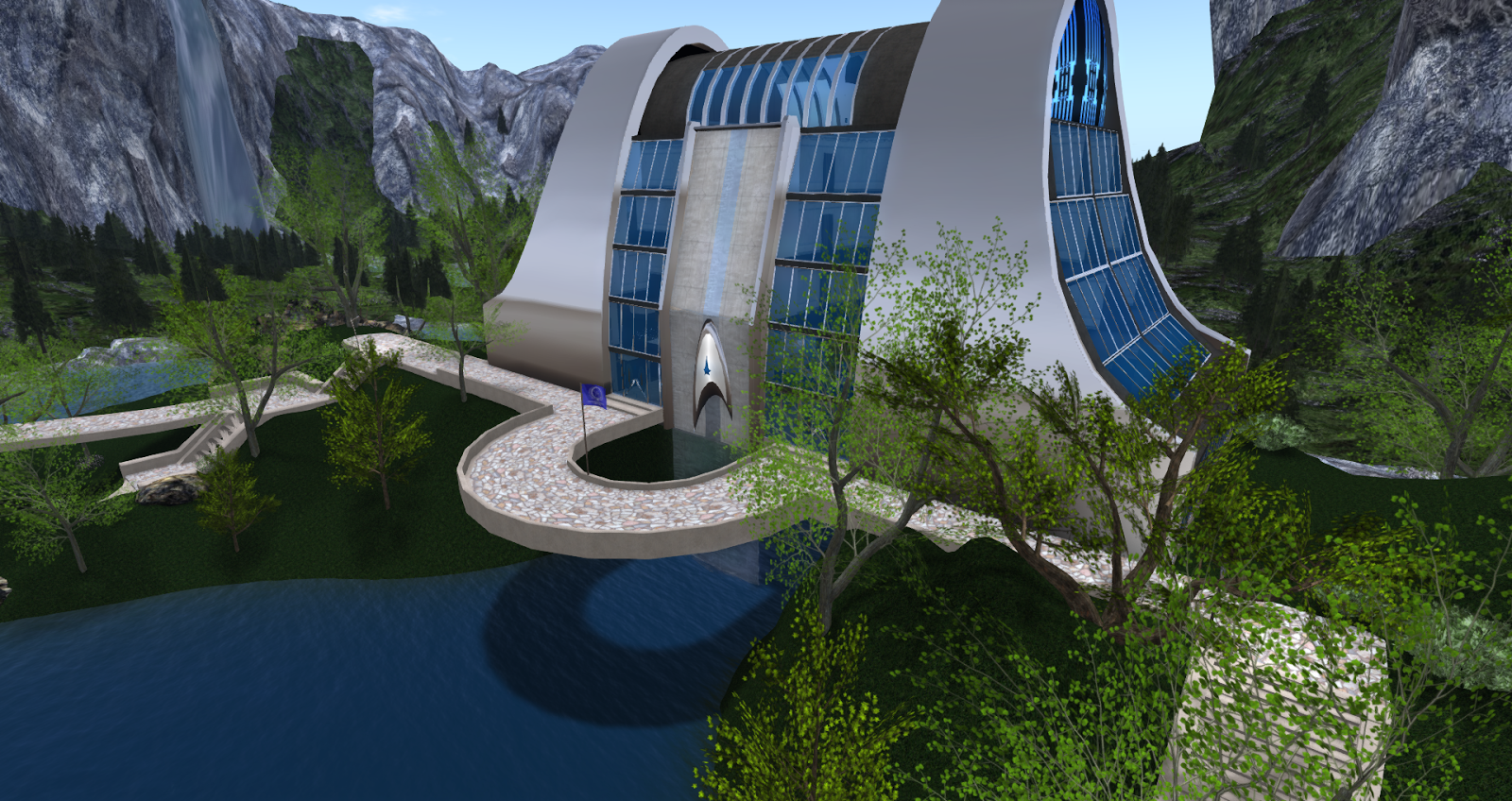
Starbase - proto-type community of the future?


Having vision doesn’t bring about the reality; we also need to act. So, having some idea of what we mean with a Star Trek Economy, how do we bring one about? Especially, how do we bring one about when we have limited resources?

Evolution


Rick Webb sees the evolving from the social democracies in Europe. The European social democracies achieved a great success during the 20th century as they brought countries Such as Sweden form the level of a poor “third world” nation to the level of a modern wealthy industrial nation in the span of a life time. However, they began to run into problems of their own towards the end of the 20th century for various reason (but all to do with their success). In addition, the social democracies do have quite the right vision. Although equality features highly in both the vision for a Star Trek economy and the Social democracies, social democracies still have the idea of work for all as central. Whereas, in a Star Trek economy we would see technology more at the centre reducing the need for work. Thus, we would need a change in direction away from the current social democracies. It can work out harder to change something than to start again. So, rather than redirecting one ideology, perhaps we should work towards build another? 

On saying that, the idea of a Star Trek economy does have a lot of overlaps with social democracy so I could see many social democrats would also support a Start Trek economy. This could lead to another way to bring about such a system; work within the groups and organisations that have similar goal with a view of society. For example, a Star Trek economy should have a sustainable nature and balance between nature and society. In so doing it overlaps with many environmentalist. It would not take a hug step to go from sustainability or equality to the sustainable, equal and moneyless society of a Star Trek like economy. 

Here in I see one way we could go; evolution. From a multiple of compatible ideologies in the world we could see a gradual step towards the idea of sustainable, moneyless, science based Star Trek economy. For that to work we would need many small groups to star working on the same goal; independent groups, self-starting groups to start with. As more groups form with the same vision, networking will occur and strength each group. As we have more and more follower we have the potential to raise finances and in doing so, to start to build something. Small sustainable communities at first; “starbases” on Earth. The network could grow and evolve towards a type one civilization; working towards the vision. 

The vision has a key role; the vision of a future, a Star Trek, economy, unites otherwise separate groups. Beyond vision, however, we also need skill and willingness to act. So many people have enthusiasm but so few have skill.

Building starbases on Earth?


Stepping Stones.


The process I outlines of a vision orientated goal directed building up of a sustainable moneyless system I call stepping stones. What I present could form one way to achieve such a system with minimal resources. We just need people and skills. Any volunteers?