Translate

Donate to EOS

We aim to build a network of experimental sustainable communities to demonstrate that we do have a sustainable alternative to our current socioeconomic system. Want to help us build for a sustainable future? Please donate what you can:
Thanks!
Showing posts with label Rick Webb. Show all posts

Sunday, 31 August 2014

Building a Star Trek Economy – going from here to there.


Starbase - proto-type community of the future?


Having vision doesn’t bring about the reality; we also need to act. So, having some idea of what we mean with a Star Trek Economy, how do we bring one about? Especially, how do we bring one about when we have limited resources?

Evolution


Rick Webb sees the evolving from the social democracies in Europe. The European social democracies achieved a great success during the 20th century as they brought countries Such as Sweden form the level of a poor “third world” nation to the level of a modern wealthy industrial nation in the span of a life time. However, they began to run into problems of their own towards the end of the 20th century for various reason (but all to do with their success). In addition, the social democracies do have quite the right vision. Although equality features highly in both the vision for a Star Trek economy and the Social democracies, social democracies still have the idea of work for all as central. Whereas, in a Star Trek economy we would see technology more at the centre reducing the need for work. Thus, we would need a change in direction away from the current social democracies. It can work out harder to change something than to start again. So, rather than redirecting one ideology, perhaps we should work towards build another? 

On saying that, the idea of a Star Trek economy does have a lot of overlaps with social democracy so I could see many social democrats would also support a Start Trek economy. This could lead to another way to bring about such a system; work within the groups and organisations that have similar goal with a view of society. For example, a Star Trek economy should have a sustainable nature and balance between nature and society. In so doing it overlaps with many environmentalist. It would not take a hug step to go from sustainability or equality to the sustainable, equal and moneyless society of a Star Trek like economy. 

Here in I see one way we could go; evolution. From a multiple of compatible ideologies in the world we could see a gradual step towards the idea of sustainable, moneyless, science based Star Trek economy. For that to work we would need many small groups to star working on the same goal; independent groups, self-starting groups to start with. As more groups form with the same vision, networking will occur and strength each group. As we have more and more follower we have the potential to raise finances and in doing so, to start to build something. Small sustainable communities at first; “starbases” on Earth. The network could grow and evolve towards a type one civilization; working towards the vision. 

The vision has a key role; the vision of a future, a Star Trek, economy, unites otherwise separate groups. Beyond vision, however, we also need skill and willingness to act. So many people have enthusiasm but so few have skill.
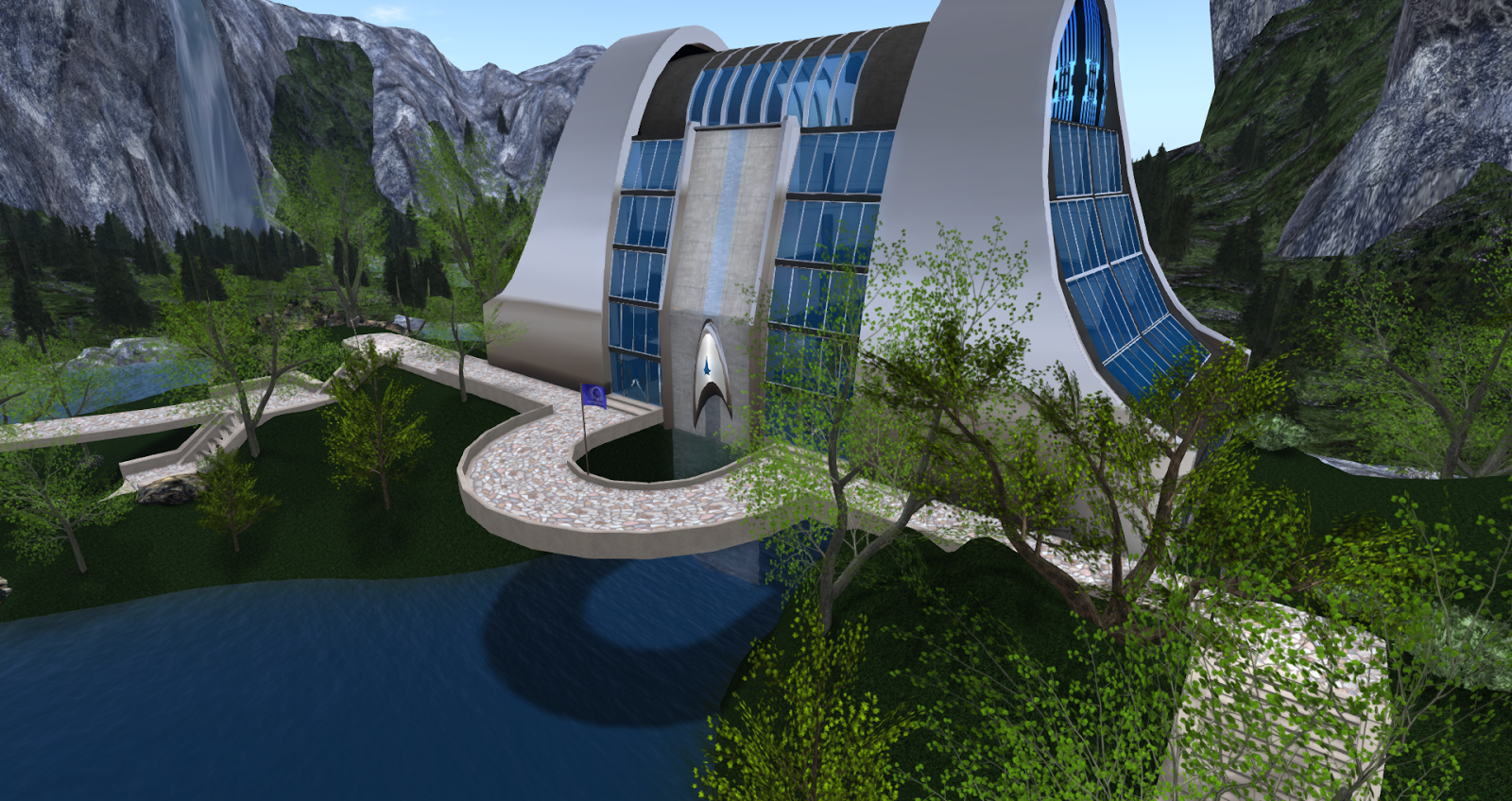
Building starbases on Earth?


Stepping Stones.


The process I outlines of a vision orientated goal directed building up of a sustainable moneyless system I call stepping stones. What I present could form one way to achieve such a system with minimal resources. We just need people and skills. Any volunteers?

Sunday, 29 June 2014

Building a ”Star Trek” Economy – Definition


I thought I would write a bit about how we go from A to B with a Resource Based Economy (RBE), or more colloquially know as a “Star Trek” Economy. But before that, I thought I would need to define a “Star Trek” economy and how it exemplifies an RBE. However, I found Rick Webb has already given a good definition and overview of “Star Trek” economics, although I don’t agree with all the point he mentions. So, for this definition I will take Rick’s article and add a few comments of my own as well and compare it to the Energy Accounting (EA) system that we, in EOS, propose.

Pre-planned and Capitalist Economics.


Rick begins his article talking about “Star Trek” economics a little way down with pointing out that “The Federation is clearly not a centrallyplanned economy” and “Private ownership stillexists” (Although some sources describe the system as post-capitalist). This matches with the EA system we propose. EA has a distributed, demand driven nature. The system makes available what it can but it adapts to the demands of the people. It does this through self-organisation and through expert management and computer control. The system can predict demand to a degree (using AI and data mining, for example) but also runs at about 80% capacity to allow for unforeseen demand or problems. 

As for having a capitalistic nature, ownership has no relevance in EA. You can still have private property, especially personal possessions and pre-EA property, but the production resources come under expert management and get used as needed in the system, regardless of who owns it. The system, however, will also constructed new facilities and these will most likely have no owner or someone will own the property for life or till they relinquish ownership (such as a house, for example).

Post-Scarcity or Proto-Post-Scarcity?


You can find some references giving a “Star Trek” Economy as an example of a post-scarcity economy. However, Rick argues that we should consider it an example of a proto-post-scarcity economy. Rick gives an example that famines still occur. 


As well as pointing out :


However, I would argue that neither example goes against the idea that a “Star Trek” Economy exemplifies a type of post-scarcity economy.  I would argue that “post-scarcity” does not mean perfect nor limitless. If you ordered an infinite supply of star ship you would break any real system.  I would argue that we should define a post-scarcity economy as one that can met demand “within reason”. So, if a citizen orders 10 million star ships and the system fails to produce I would argue that such as order does not come within the bounds of “within reason”. But what defines “within reason”? Firstly, I think the culture of such a society would define “within reason”; as Picard points out “we work to better ourselves and humanity” and ordering more than you could possibly use and breaking the system does not “work to better yourself nor humanity” and may even work in the opposite direction That then brings me to the other things that defines “within reason”; the finite capacity to consume. People can only consume so much and many items they don’t need all the time so the limits of human beings and the ability to share parts of the system (such as transport) will limit the demand. So, someone would not order 10 million star ships as they could not use 10 million star ship nor would they want to do so. 

As for famines, even if a post-scarcity system has the capacity to meet demand in general it can still fail on a local level. The system could experience occasional failures and local spikes in demands. This results for its distributed and demand nature; we don’t all live in the same place nor produce everything where we live. As the system develops over time it should get better at handling such failures and in doing so, famines will occur less and less. 

So, to my mind, so long a “Star Trek” Economy can met demand within reason then it forms an example of a post-scarcity economy. 

Work in a “Star Trek” Economy


And I almost agree and we, in EOS, see things in a similar way. People would get intensely board if they did nothing. Work in a “Star Trek” Economy gives people the opportunity to do something they want to do, to develop themselves. We would have automation to do much of the dull work as well. But if some people don’t want to work? In EOS we do talk about the idea of having a minimum amount of work like 16 hours a week for a few years. People tend to treat things better if they see it has a “cost”. If they do the minimum service and then don’t want to work after that then OK but they can, of cause, continue to work if they want to.

Accountancy in a “Star Trek” Economy


And that basically sums up the Energy Accounting system we propose in EOS. Using energy allows us to measure our production capacity. People then have an equal allocation of production capacity that they allocate as they will. This makes the system demand driven and connected to the actual physical resources we have in the system.  

Actually, we propose the use of exergy, which means the usable energy in the system. Exergy also allows us to account for materials and information so we have a common accountancy unit.


At this point I would disagree. In our Energy Accounting system we allocate production capacity as measured in energy terms to the people so everyone gets an equal share of the production capacity. That measure of production capacity we refer to as energy credits and I would argue that “federation credits” equals the same thing; a measure of production capacity.

In such a system you, as a citizen, allocate production capacity to produce an item you would like though allocating energy credits. This does not equate to money. Money you can save, energy credits you cannot. If we had the capacity to produce 100 units a year but only produced 80 in one year then we cannot produce 120 next year. We still only have the capacity to produce 100 units.


Summery


We can define a “Star Trek” Economy as a post-scarcity, demand driven system that uses energy as an accounting unit. I would also add that as the Federation has an enlightened nature it would also have a sustainable system as well that doesn’t destroy the planet’s environment.  System a system presents o vision for the type of system that EOS aims to build.