Translate

Donate to EOS

We aim to build a network of experimental sustainable communities to demonstrate that we do have a sustainable alternative to our current socioeconomic system. Want to help us build for a sustainable future? Please donate what you can:
Thanks!
Showing posts with label communities. Show all posts

Sunday, 29 March 2026

Holons and Holacracy


Building a sustainable moneyless world

Holons : circles within circles


Introduction

The idea of building a sustainable moneyless future based on holons [koe] has been at the core of EOS’ ideology [design] for the last 20 years (as of writing). It’s odd then that I hadn’t come across “Holacracy” by Brian J. Robertson [hol] until last year and it took until the start of this year for me to read the book. There’s a lot in the book that overlaps with EOS and there is a lot more in the book beyond that. So, I thought I would do an article that both reviews the book and looks at how it fits in with EOS’ ideas for the future.

A quick overview of “Holacracy” by Brian J. Robertson

The book advertises it self as “The revolutionary management system that abolishes hierarchy”, which, I would say, is partly true. Holacracy is revolutionary but we still have hierarchy (at least for now). The system presented in the book is aimed at business management and is a holonic based decentralised and adaptive structure that focuses on governance and processes but not people (and the book emphasises that point multiple times). It is a system where power and authority is distributed to those people who do the work, as the book says “the person on the front line has the authority”. In contrast to the top down way most companies are run. The introduction explains holons and holacracy as circles within circles. In holacracy, a “circle” is a holon.

After introducing holacracy, the book then goes on to talk about governance. Governance is about dealing with the way the holacracy is organised. The book outlines how that works within holacracy and the meeting structure that it uses. The way meetings are structured allows everyone to contribute and help to clearly define roles, authority, and expectations. Note “roles”. In holacracy, roles come with authority and responsibilities. People are then assigned roles. Role information and who has what role is well documented so everyone knows who has what responsibilities and authority within a holon / circle.

Operations are what the company does. They are handled in tactical meetings. And like governance, like governance meetings, give everyone the opportunity to contribute. The book gives examples of how these meetings operate.

One thing I found interesting is the idea of “tension”. In holacracy, a “tension” is either an opportunity or a problem and they are both handled the same way. They are the “gap between how things are and how they could be”, as the book says. People see an opportunity or a problem and they can propose a course of action to resolve the problem or exploit the opportunity. And it is through this process of resolving tensions in the governance and tactical meetings that the organisation adapts and evolves. The dynamic nature of a holacracy is one of its strengths. Decision making is distributed and close to where the action is needed making for quick and well focused decisions. As the book says “[e]ach tension human beings sense is a sign-post telling us how the organization could evolve to better express its purpose”. All this is wrapped up in the constitution, a document that lays out how the holacracy works.

The last part of the book deals with installing a holacracy. As a holacracy is a revolutionary way to organise it can have a steep learning curve and there can be opposition for more conservative minds and from those who don’t want to distribute their power and authority. The book discusses these types of problems.

Here are a few quotes from the book :


“Holacracy moves from structuring the people to structuring the organization’s roles and functions”.


“Evolution is an algorithm; it is an all-purpose formula for innovation”.


“… the focus is always on quickly reaching a workable decision …”


“… an organization’s design is an emergent result of an evolutionary algorithm …”


“… govern the organization’s work and its roles not the people.”

Holacracy and EOS’ Approch

In EOS, a holon is based around a task. Multi-skilled teams are then formed to achieve the given task. The team organises itself and it own work. Anyone can form a holon if they see a task that needs to be done so long as that holon works towards the common goal. This is how the technical side of a technate is managed. Holons within holons within holons all focusing on building a sustainable moneyless society. Holons are also the foundation of building the people side of the technate. This type of holonic structure is very dynamic, holons are formed as and when they are needed and disbanded when the task has been accomplished. Like holacracy, EOS’s system of holons distributes authority, power, and responsibilities throughout the system so that people who know what they are doing make the decisions. However, EOS’s system does differ from holacracy in one major aspect. In holacracy we have more a formal structure with meetings, definitions of rolls, and responsibilities.

Conclusion

I think the more formal structure of holacracy does have its advantages. Structure gives clarity. One of the difficulties with holons is that it is not a familiar form of governance. Thus, people can have trouble understanding it and how it works. Having a more formal structure could help with that. Something that EOS should try?

References

[koe] http://www.panarchy.org/koestler/holon.1969.html

[design] https://eosprojects.com/Design.pdf

[hol] https://www.holacracy.org/

Monday, 6 January 2025

The Expert in the Room Problem


Introduction


Peter Joseph did a podcast in December 2024 called “Revolution Now! Episode 53”. Somehow I managed to miss all the previous episodes but I caught this one and listened to the whole thing.


The first part was a good explanation of why we need to explore the idea of an alternative socioeconomic systems. For me, this is a bit of preaching to the choir as I’ve been looking into this sort of stuff since the 1990s. To me, the unsustainable nature of our current system is obvious but to anyone new to the subject, the first part of Peter Joseph’s podcast is worth listening to.


The part that interests me the most starts around the 49:22 mark, so I will concentrate a bit more on that.


Self organising and all that jazz

The thing that caught my attention most with Peter Joseph’s podcast is the overview that he gave of a possible future socioeconomic system. What was proposed has a lot of similarities that the system proposed by the Earth Organisation for Sustainability (EOS), which is based in Sweden, and is laid out in The Design. To start with Peter Joseph talks about self organising distributed, decentralised, systems. At 51:39 he states:

“Efficiency

Efficiency emerges through decentralised cooperative networks, with all knowledge shared, infused with direct democratic mechanisms to arrive at economic action.”


EOS also proposes a decentralised cooperative network. Not much is given in the podcast about the network topology however. The impression I got was it was a full connected network. EOS, however, does present more details about the network topology. In EOS’s Design the network is a holonic system. Holonic systems form part – whole constructs, similar to what we find in nature. These type of cooperative decentralised systems can work well if a number of criteria are met:

  • Goals

  • Communications

  • Rules

The system has to have an overall goal. Peter Joseph doesn’t actually say anything as such about goals but goals can be inferred. EOS, however, explicitly states the goal as:


Highest standard of living for the longest time possible


That goal is borrowed from Technocracy Inc. and I would imagine that the goal of Peter Joseph’s network would be much the same (or at least compatible).


Communications is the next important attribute that self organising systems need to function. Peter Joseph talks about feedback loops and certainly feedback in such systems is vital for them to work. However, there is more to communications than just feedback. New ideas need injecting into the system as well, for example.


The last thing that self organising systems need is a set of rules to work with. At the very least they will have the laws of physics to work with but a network of human communities would need other rules in common. Such as a basic set of human rights.


These aspects of self organising systems weren’t explored (although I can infer them as “natural law standards” and “scientific analysis” is mentioned) in the podcast probably because the last section was really a short introduction to a complex subject. I hope, however, Peter Joseph will go into these in more details in later podcasts.


An example of how these three aspects enable self organisation can be seen in the following video. In the video the metronomes fail to synchronise at first. They have rules (the laws of physics) and they have a goal (to measure time) but there is no communication channel. However, when they are put up on to two cans, the vibration form each is able to influence the others. With communications established, the metronomes synchronise automatically.


An other interesting overlap is the presentation of food production as an example. That is something that EOS has also been looking at. EOS was part of a cooperative project to build a biodome in Sweden. 


The biodome built by EOS in Umeå, Sweden


The technical aspect

Now we come to the bit I have most problem with. Both Peter Joseph’s ideas and those presented by EOS aim for a hi-tech society. Both see the system being demand driven rather than centrally planned. Both look at efficiency using science driven analysis and AI. Both see the system as being open source. So far so good. But then we come to complexity. Peter Joseph makes the point at about 54:12 that as participation grows complexity grows. Yet, the system proposed by Peter Joseph relies on democratic mechanisms. I would argue that that is going to require management by technical experts if this is to work. Peter Joseph does make a quick reference to the need for management and how that can be worked out later. I would argue that this point is so fundamentally important that it needs to be worked in from the start.


If the system is to use scientific analysis then it will need people to understand that scientific analysis. If the system is to have technology, then it will need people who can understand that technology and can design and implement it. If the system is to have zero waist then it will need to be able to efficiently manage its resources and that will take knowledge and expertise.


The problem with knowledgeable experts is they tend to be in the minority but the majority, who have a poor understanding of the subject, tend to over estimate their abilities. Thus, you will most likely get wrong decisions being confidently made and correct decisions being overruled if you leave the decision making to the masses. This is known as the expert in the room problem. Imagine needing brain surgery and the brain operation being decided by the masses who have no idea about brain surgery. How confidant would you feel about going under the knife?


You can still have the people participating in what a society does and what is produced. But at the level of a customer. The people can demand what is to be produce but behind the scenes you will need a team of experts making the decisions to get the whole thing to work. This problem is addressed from the beginning in the Design preposed by EOS.


This system will also need regulation and control. Both Peter Joseph’s and EOS’s systems are moneyless systems but there still needs a control mechanism. As they say, you can’t control what you can’t measure and from what I see there is no measurement system in what Peter Joseph proposes. There is a mention of time banks, which is something that could work on a small scale but this system wont take into account the energy and material needs of the system. And as the system becomes more complex, I would expect a system using time banks to run into problems. EOS has a system energy accounting. All systems require energy to work and we can measure the energy we have available and what we need to produced items. If we allocate the energy to the people, this becomes a mechanism to allow people to decide what gets produced. It also allows us to monitor demand and production and to manage the system. The energy accounting system will also scale as the system becomes more complex.

Conclusion

Much of what Peter Joseph proposes is compatible with the Design proposed by EOS. However, there is a need of expert management behind the system. This need for expert management will become more important as the system becomes more complex. This is something that is central to The Design by EOS but appears to be an after thought in Peter Joseph’s proposal.

Tuesday, 11 April 2023

More time to be human


To be human in the modern world

Foreword

At the moment we live in an unsustainable socioeconomic system that requires infinite exponential growth with finite resources. To be able to live in such a system we require money and for most of us the primary way to obtain the money we need to live is working. We end up spending most of our lives working. A lot of the work we do is demoralising, dehumanising, and, could be argued, unnecessary. From when we leave the education system until we retire and the retirement age is getting higher and higher in many countries. Many people work two jobs to make ends meet. 

Imagine the future

Instead of that, imagine a world where you didn’t need to work, or at least, you didn’t need to work as much as we do today. Those jobs that are needed to be done would be interesting, meaningful, and people who work at those jobs do so because they want to not because they need the money. Working less would mean more time to be human.

Sounds like fantasy? Maybe, but maybe not. EOS proposes a sustainable, moneyless, socioeconomic system that aims to balance our needs with those of nature. In doing so, we could have a system that requires much less work yet still offer a good standard of living for everyone. The system has its roots in the application of science and engineering. How would that work?

The Alternative

To start with, the system that EOS proposes would see society organised in to a people side and a technical side. The people side is all about community, family, and culture. The technical side deals with all the technical aspects of society. From the means of production like farms and factories to transport systems and on to the science and research needed to develop the society. The people side is run by the people through a process of direct democracy and the technical side is managed by interdisciplinary teams of people, each of whom is an expert in their relevant field.

The system EOS proposes is also moneyless. So there is no profit searching behaviours that drive our current destructive system. Instead, the production capacity of a society is divided equally between the people so everyone has an opportunity to gain what they want and what they need. We can do that if we have an accounting system and the one that EOS proposes is based on the physical capacity of society to produce. We can measure that using energy (or to be more exact the usable energy which is called exergy). We can then allocate a set number of energy credits (that represent the production capacity) to individuals who then decide on what gets produced by allocating energy credits (and, therefore, production) to produce items that they want produced. Thus, the system is demand driven and not centrally planed. The teams of experts then manage the system.

As the system is not money based and we are not seeking profit we don’t have a system that needs to continually grow exponentially in the self destructive way of today system. Instead, we have the opportunity to build sustainable products. Built to be recycled or reuse. We can also reduce what we produce. For example, instead of building car after car and then have them spend most of their time standing still in a garage or car park doing nothing. We could rethink our whole transport system and have a system where each car is used for, say, 80% of the time. That means we could reduce the amount of cars we need to produce.

In the system EOS proposes, as much as possible is automated. Robots in factories run by Artificial Intelligence (AI). With the teams of experts running the overall system. With AI and robots doing much of the work, we would have much less work to be done. And what work there is to do would be more interesting to do. 


Building a better world

Conclusion

Less work to do in a sustainable socioeconomic system where everyone has equal access to the means of production would mean more time to be human.

Do you want this kind of “Star Trek” like future? If you want to make this kind of future possible then we need to work together to achieve it. If it is possible to achieve then we can achieve it. 

Links

EOS

The Design


Sunday, 31 August 2014

Building a Star Trek Economy – going from here to there.


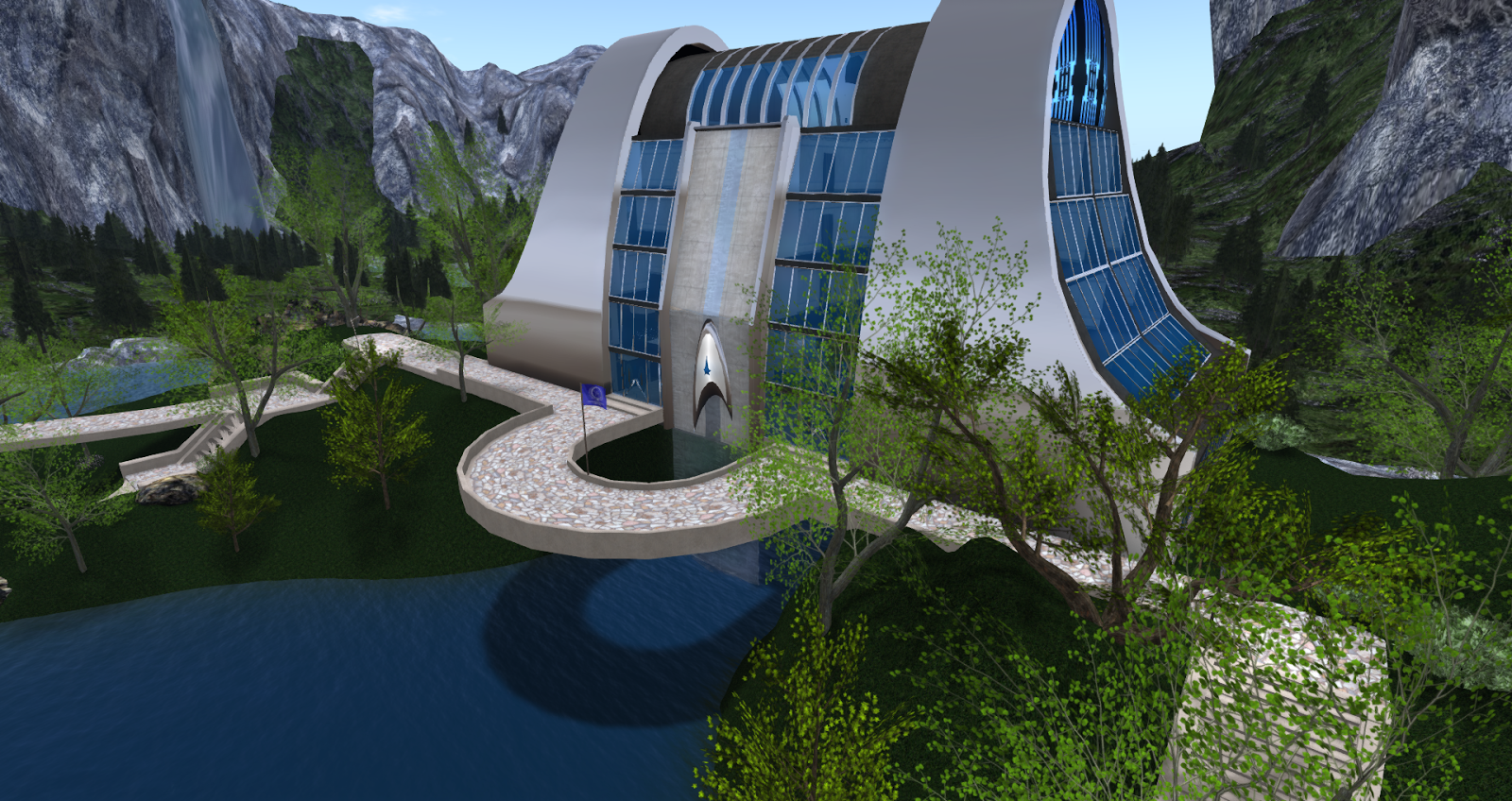
Starbase - proto-type community of the future?


Having vision doesn’t bring about the reality; we also need to act. So, having some idea of what we mean with a Star Trek Economy, how do we bring one about? Especially, how do we bring one about when we have limited resources?

Evolution


Rick Webb sees the evolving from the social democracies in Europe. The European social democracies achieved a great success during the 20th century as they brought countries Such as Sweden form the level of a poor “third world” nation to the level of a modern wealthy industrial nation in the span of a life time. However, they began to run into problems of their own towards the end of the 20th century for various reason (but all to do with their success). In addition, the social democracies do have quite the right vision. Although equality features highly in both the vision for a Star Trek economy and the Social democracies, social democracies still have the idea of work for all as central. Whereas, in a Star Trek economy we would see technology more at the centre reducing the need for work. Thus, we would need a change in direction away from the current social democracies. It can work out harder to change something than to start again. So, rather than redirecting one ideology, perhaps we should work towards build another? 

On saying that, the idea of a Star Trek economy does have a lot of overlaps with social democracy so I could see many social democrats would also support a Start Trek economy. This could lead to another way to bring about such a system; work within the groups and organisations that have similar goal with a view of society. For example, a Star Trek economy should have a sustainable nature and balance between nature and society. In so doing it overlaps with many environmentalist. It would not take a hug step to go from sustainability or equality to the sustainable, equal and moneyless society of a Star Trek like economy. 

Here in I see one way we could go; evolution. From a multiple of compatible ideologies in the world we could see a gradual step towards the idea of sustainable, moneyless, science based Star Trek economy. For that to work we would need many small groups to star working on the same goal; independent groups, self-starting groups to start with. As more groups form with the same vision, networking will occur and strength each group. As we have more and more follower we have the potential to raise finances and in doing so, to start to build something. Small sustainable communities at first; “starbases” on Earth. The network could grow and evolve towards a type one civilization; working towards the vision. 

The vision has a key role; the vision of a future, a Star Trek, economy, unites otherwise separate groups. Beyond vision, however, we also need skill and willingness to act. So many people have enthusiasm but so few have skill.

Building starbases on Earth?


Stepping Stones.


The process I outlines of a vision orientated goal directed building up of a sustainable moneyless system I call stepping stones. What I present could form one way to achieve such a system with minimal resources. We just need people and skills. Any volunteers?

Wednesday, 10 April 2013

The Bio-Dome Project - A stepping stone.


Background


Today's cities are largely dependent on intercontinental transport to secure their supply of food. Globally, humanity has built a civilization that is dependent on fossil fuels to feed the growing cities. This leads to a difficult adjustment process now as the amount of newly discovered fossil fuels declines. The price of food will increase, which means a reduction of growth in many other sectors where consumption is severely limited by the greater part of disposable income swallowed up by rising food prices.


In a globalized world where information and technology travels quickly and efficiently, there is little reason not to act now. There are already technologies and knowledge that can show us a sustainable way into the future distinctive of adequate understanding of the earth's resources and the ability to allocate and use them right. In order to "build a bridge" that mitigate the impact of increased food prices focus has shifted to local production. The Scandinavian climate does not lend itself naturally to the production of agricultural products during the winter months without the use of greenhouses. Traditional greenhouses are not ecologically sustainable and rely largely on pesticides and fertilizers which not only can be questioned in terms of ecological sustainability but also because they are based on fossil fuels. Therefore, we want to develop a system of cost-efficient and climate-regulating greenhouses for sustainable production. The aim of this project is to create innovative models to support local action to pave the way towards a sustainable future for all.


Purpose


Innovative, Feasible


With this project, we intend to add new knowledge in technology and agrarian strategies for sustainable growth through technology that promotes self-sufficiency at the local-level and the reduction of greenhouse gases. These skills should be made available and the technological applications will be simplified to the level that people at the grassroots level can take these innovations and introduce them into their own business / everyday life. The idea is to deploy innovations to various municipalities, companies, associations and individuals regionally / internationally to support the transition towards sustainable development.


Long-term objective is to mitigate the adverse effects of rising food prices globally, which Västerbotten, where we are based, is a vulnerable region due to transport lengths and climatic conditions. We hope to excite interest, commitment and enthusiasm for alternative solutions, engineered ecosystems and implementations of alternative technologies to solve the agrarian problem. As part of this we want to apply the geodesic design, which represents one of the most ecologically sustainable ways to use materials.


Another objective is to create conditions for the large scale production of organic vegetables.


Goal


Thoughtful, Relevance, Sustainability


Milestones I: Prototype


Complete a semi-prototype of a bio-dome. Below is a breakdown of the components of bio-dome


a: Structure


A dome-shaped structure based on geodesics principles. Such a shape holds heat well in winter plus, with the need for ventilation in the summer the air circulation is done almost automatically by the air traveling up the sides of the dome and then out through the top, which is explained below (see Geodesics).


b: Aquaponics
A agro-systems that produces vegetables with fish feces as manure. Aquaponics has two main components; an aquarium, with aquaculture, and a plant bed. An aqua culture will be in the aquarium and in the plant bed, plants that provide the fish with vital minerals and bacteria.
(Vegetables, edible fish)


c: Control controllers


This system controls all sensors to keep track of the climate inside the dome, for example. temperature in the water / air, humidity, light, also bacterial levels, nitrite / nitrate levels in the Aquaponics system.


(Programs that control different sensors in bio-vault)


Milestones II: Employment Opportunities within the project


The project will open new opportunities for many different types of work, below is a list of the occupations that would be involved. It is also open for internships, where work on the project would be an advantage for participants. Participants can choose any of the following and have the opportunity to learn from a supervisor in the chosen profession.


a: Construction Work
b: biologists
c: Program Planner
d: engineer
e: Media Producers
f: IT


Milestones III: The Media


Continuously create new channels to communicate the collected knowledge and experience gained from the work in different media.


a: WordPress
b: Facebook
c: Tidnginar
d: Forums


Milestones XI: Scientific documentation process.


a: continuously measure and log levels in the Aquaponics system.
b: Continuous film construction of bio-dome
c: Total documentation and transparency


Milestones X: The public


a: Everyone should have access to the finished product.
b: A more developed understanding of ecosystems be given on the availability of bio-dome.
c: Improving our national footprint.


Milestones XI observance of equality


a: Achieving gender composition of the team.
b: Increase awareness and interest in these issues among young women.
c: Well, a good partnership between women and men in the project and oppose discrimination and suppression techniques.


Target


Delimited, Accessibility to, Well-defined


The primary target group for the project's end product is expert players in industry and academia with an interest in technology and studies and activities in sustainable development. The User Group is divided into primary users whose need of vegetables and fish will be met up to 70 percent by the bio-dome. The secondary user group consists of users, who through the activities that take place in bio-dome, gain greater knowledge and awareness of the importance of organic and local food.


Method


What we want to achieve

The bio-dome is an encapsulated and closed ecosystems in a dome built using geodesic principles. This means that the dome is constructed of triangles that are angled according to geometric calculations, maximizing the use of space and sunlight. The dome houses an aquarium with aqua culture for food fish, small fish, small shrimps and aquatic insects.
Above the aquarium are the plant beds with material of high porosity (eg hydrograins) for growing vegetables. In the plant bed will be worms which will eat up old plant matter so that bacteria levels are kept at a steady balance.


The water from the aquarium is fed to these beds and filtered through the root systems before returning to the aquarium. As they return to the aquarium, the water is enriched with vital minerals and bacteria that the fish need, particularly for the gills to function as they should. This circle of fish and gardening - aquaponics - forms a closed ecosystem that reduces the need for addition of new resources for the system's survival. The only thing that must be added on a monthly basis will be iron, which ends up in the plant beds through adding particles of dust to the aquaponics system, this will not harm the fish and goes through the system until it is completely absorbed by the plants.


How it is accomplished


• The first step is to write the project description and business plan as well as the budget.


• Financing of the project is done by searching stakeholders including public, private and social networks.


• Composition of a production team with the right skills.


• Collaboration with companies and public institutions for the production of components.


• A mix of bio-dome prototypes.


• Monitoring and analysis of the success of the project, final report.


• Organization


The project is owned by the non-profit organization EOS (or the economic association UBG14) and is thus the legal entity behind the project. For implementation of the project, working groups will be appointed composed of people who represent areas of expertise. A reference group is also connected to the project in order to review the business plan and provide feedback on the performance of the plan. The project will have three project managers with responsibility for the technical construction and management and a coordinator with coordinating mandate and overview of the business as a whole. Project managers work on planning, statement of operations for the project's working group for feedback and facilitation of follow-up.


The project will document all activities through documents and photography to achieve broad transparency in all relevant areas of the project.


Time and activity


Milestones Activity Time Results


Milestones in building prototype via existing channels within the Umeå University and the business community, seeking new expertise February 2013, extending skills base and increase the quality level


Organize information meetings from February to March deepening partner’s knowledge and connect with new partners for the project.


Contact representatives of the partners / target March. Forming peer group.
Applying for planning permission in March. Initiate the process of digging
Test new materials / models of Oil Heating and begin work on the control systems from April to October. Build dome control system 1.0
Excavation for the basic structure from May to September. Finished Building bio heating model.
Test material for Energy 1 and begin construction June to September. Determine the suitability of the material and produce prototype for Energy 1


Test materials for Aqua 2 October to April. Finished Building Aqua2


Purchase of fish / plants in March 2014


Aqua 2 and controllers tested April. Ensuring the validity of the model and the system.
Test Power 2 and heat 2 June to September. Finished Building Energy 2 and heat 2
Harvest Festival September arousing interest and curiosity and inform the public.


Presentation of the prototype in October. Identify new partners and begin marketing model


Milestones II:


Scientific documentation
Milestones III Study November 2013 ((Purpose and result))
Study June 2014


Effectiveness and expected results


Some indicators that will provide instructions on the projects performance are:


that we make progress with the construction of the structure and that it fulfills the same purpose as the mission statement, that we implement the project on a voluntary basis as it is described in the project plan.


Risk Analysis


RMP broken down by milestones. (This goes through the whole group together (SWOT))


Follow-up


From the outset of the project, will be linked external evaluators, beneficial representative from universities that will oversee operations in terms of plan accordingly, implementation, effectiveness, and dissemination of results.


Beyond this, the project managers will continuously keep log of activities and inform the Working Group on the work. In consultation with the working group and the reference group established the monitoring template for each milestone.


After the project is summarized, logs and documentation and a final report by the evaluator and project manager will be produced and signed.


Cooperation


EOS


Umeå University

International cooperation


We work for global sustainability, and therefore we work at national and international level with other players. Our goal is to promote social development, entrepreneurship and creativity worldwide.


Therefore, our projects seek sustainable transparency, collaboration with public, private and non-profit-driven actors, be inclusive and strive for gender equality and the participation of all major groups in society, to reflect the diversity we want to achieve at the global level.


A common strategy will be developed to realize this goal on the composition of the people involved in the project. We will work to support employment goals in Västerbotten region.


We will try to achieve diversity within the project and engage people with a wide variety of backgrounds and life experiences; we must also have the final report in English.