Translate

Donate to EOS

We aim to build a network of experimental sustainable communities to demonstrate that we do have a sustainable alternative to our current socioeconomic system. Want to help us build for a sustainable future? Please donate what you can:
Thanks!
Showing posts with label Climate Change. Show all posts

Wednesday, 17 September 2025

What Do We Want …


Introduction

This is the second part in, what I plan to be, a series of three articles about the future. The first article looked at the choices we have about the future. It seems to me that we, as a species, have great potential to build a better world for all. A sustainable future that is also in balance with the planet. Yet, as it appears to me from my corner of the Universe, the groups and individuals that are successful in driving their idea of the future forward are also building what I would consider a dystopia. From techno-fascism to religious theocracy.

In this second article I thought I would outline my vision of the future. In some ways this could be considered a manifesto for the future.

A Future Society

The Goal : Highest standard of living for the longest time possible

The goal (which originates with Technocracy Inc.) outlines what I think a future society should aim to achieve, the rest that follows is about what I think the goal means when it comes to implementation.


  1. Demarcation between the complex, technical aspects of society, on the one hand, and the social, people, side of society, on the other hand. The technical side effectively forms the life support systems that keeps society running such as mining, farming, production, distribution, and housing as well as health care, for example. The social, people, side deals with people to people interactions, ethics, morality, and spirituality, for example.

  2. Expert management of the technical side of society. From the goal, I would argue, the highest standard of living can be achieved by the application of science and engineering to society. That means society will be hi-tech. A hi-tech, complicated, society has many different parts which takes many years to learn and understand before a person can make a competent decision in a given area. Therefore, this vision of a future society calls for teams of skilled domain experts to manage the areas that they have knowledge and expertise in (which makes this system a type of technocracy). This approach will allows us to build a substantial society that minimises work through robotics and automation and thereby increase individual freedoms. Giving people more time to be human. It also allows us to build a world based around what people can do, not what they look like, their gender, sexual orientation, or the clothes they ware. But even so, to benefit in this future society, you just need to be a sentient life form. It’s a society that works for all, regardless.

  3. Direct democracy for the social side. Not all aspects of society have a correct technical solution. We propose that people would live in communities where they would use direct democracy to manage the social side of the community (people themselves are the best experts to manage people related issues). Following from the goal, individual freedoms are to be guaranteed. Freedom of movement, freedom of speech, freedom of association, right to life, etc.

  4. A moneyless socioeconomic system. This also follows from the goal. Sustainability is built right into the system from the start. We can’t maintain a high standard of living for the longest time possible in a society that is unsustainable like today society. Today’s socioeconomic system is a money based, for profit, system, that relies on infinite growth with finite resources. Instead, we would need an alternative resource allocation system. I propose a system of Energy Accounting as a means of managing the supply of goods within a society. In an Energy Accounting System we measure the production capacity of society in energy terms. The people can then choose the allocation of production capacity through the allocation of energy credits. The energy credits represents each individual’s share of the production capacity in energy terms. This also leads to a system that is extremely equal. Everyone has the same access as everyone else to the resources available.

  5. A holonic socioeconomic structure. We propose a non-nation centric structure built around communities, network of communities, and projects. This would form a “building block like” structure where people would work locally within their own community on various projects. Projects could link up with other projects and communities with other communities in a network that would lead to a world around system. Using a holonic structure is a form of biomimetics, so we are emulating how nature works. It is also an example of applying engineering and science to society. This type of structure would allow for a great deal of diversity. Different groups of communities having their own culture and language as well as laws. Each community will deicide how much or how little it interacts with the technology side. So, we could find very primitive communities that want to be free from technology to all embracing transhumanists communities and anything in-between.

  6. No private ownership. As all the means of production come under the management of experts, ownership makes no sense. Instead we would have a form of user rights. Some items such as personal items and housing would have exclusive user rights but most items people will have the right to use as they need such as ground vehicles.

  7. Environment design. We aim to design environments not only to allow people to develop to their full potential but also to discourage aberrant behaviour. Just removing money and making a more equal society where we can meet people’s needs could reduce crime dramatically, for a start. But environment design also means building a world with a high standard of living for people but sill balancing our needs with those of the planet. So even nature, and all life, befits from this future society.

Examples

This approach to society hasn’t been tried before. The closest real society I could find is the Inca empire, which was a moneyless society, but otherwise is quite far from my vision. But science fiction does provide a few examples that have some characteristics of the type of society I envision.

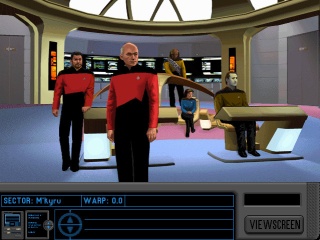
United Federation of Planets of Star Trek


“The acquisition of wealth is no longer the driving force in our lives. We work to better ourselves and the rest of humanity.” - Captain Jean-Luc Picard, Star Trek TNG.

Gene Roddenberry was influenced by a number of ideologies such as secular humanism. But in the design of the United Federation of Planets, some similarities between the Technocracy movement in the US and the United Federation of Planets can be seen. Both are moneyless, hi-tech, societies, for example. The United Federation of Planets also has similarities to the vision I present here. There is a high emphasis on education and self improvement, for example, which would be needed in a hi-tech society that values science and engineering. The decision making process is based on expert opinion and positions of importance and power are achieved through individual expertise and the contribution that they make.

There are some differences, however. The United Federation of Planets still maintains a democratically elected government. Society isn’t divided between a technical side and a people side. It is also a hierarchical society rather than a holonic society. It is a post scarcity society but doesn’t appear to use a resource allocating system such as energy accounting, so in that regard, it differs from my vision.

How the economy works in the United Federation of Planets is never fully explored beyond being moneyless. One could surmise that there will be a great deal of computer control. However, I would imagine that such a society is going to require some kind of expert management to be able to keep it running.

Another aspect of the United Federation of Planets is it’s level of freedom, opportunity, and equality. Like in my vision, it only matters what you can do and the effort you put in in the United Federation of Planets. This can also be seen in the high level of diversity, where people from all kinds of backgrounds are accepted.


“… the prejudices people feel about each other disappear when they get to know each other.” Captain James T. Kirk, Star Trek.

Moonbase Alpha

By JefferyWright

“And you are not political on Alpha?”
“No, we’re not!” - Zamara and John Koenig, Space 1999

In Space 1999, the moon is blasted out of orbit in a nuclear accident. The moon then drifts (with the aid of space warps) from one star system to another. Located on the moon is Moonbase Alpha, whose inhabitants now have to survive in a hostile environment.

The governing structure on the moonbase resembles, in some ways, my vision for the future. It is a technological society reliant on science and engineering and is ruled over by a base commander who has a number of technical experts, and a computer, to aid him. It is not quite a dictatorship as the commander and the various senior staff members arrive at their decisions through the application of science and engineering, making it a type of technocracy. Survival is the main focus of the moonbase’s inhabitants, which means resources are allocated as needed, so it can be seen as a moneyless society.

The governance also differs a bit from my vision. It is a bit more militaristic in it’s structure with a hierarchy and an overall commander in charge rather than a holonic structure, where power is distributed. There is no split between the people side and the technological side and there is no democratic element. There is diversity on Moonbase Alpha in terms of people but the culture is uniform.

Trantor

Trantor is a planet wide city and the capitol of Asimov’s Galactic Empire in the Foundation series of books. The planet is almost totally covered in domes, each with it’s own society underneath. In some ways Trantor is similar to a holonic structure. Each community under each dome is autonomous to a degree and has it’s own specialisation that contributes to the whole. Governance could be seen as a nested structure, similar to a holonic structure, that combines together to produce a planet around governance. In this way, Trantor is an example of the holonic structure that I envision for a future society. However, it doesn’t fit perfectly.

Trantor differs from my vision in that it doesn’t appear to have feedback loops, which would be needed for it to be a true holonic structure. The whole governance is still top down for the planet and the Empire as a whole with the emperor at the top. Rather than bottom up as it would be in a holonic structure.

However, Trantor is still a hi-tech society. It is at the centre of a Galactic, space fairing, Empire.

Summary


I envision a future society that has it’s roots in the application of science and engineering to society. A sustainable society that balances our needs with those of the planet. A decentralised society that is diverse and equal where people have more freedom. You can find out more about this vision of the future in The Design.

How can such a society be built? That will be the subject of the next article …

Friday, 17 November 2023

Failed

Introduction

We hit another heat record this year. According to NASA, July was the hottest month on record. Heat record we recorded all around the planet. And the heat records continued on in to the second half of 2023. This all shouldn’t come as a surprise as we haven't really done anything about global climate change. We have done “something”, make it look like we have tried but I would argue that all that we have done is try to solve the problem using the same thinking that caused the problem in the first place, not really dealing with the problem itself. Effectively, we just green wash things. If we actually wanted to get to grips with the climate change problem and really deal with global warming then we would have to look at the root causes of the problem; the free market, capitalist based socioeconomic system we have. We would need to look at alternatives.

Where to go?

The current socioeconomic system we have has created a lot of benefits for people over time but in doing so it has also set us on a path of self destruction. We would like to maintain as many of the benefits as we can but avoid the more negative aspects of our current system.

EOS proposes a system that aims to maintain as high a standard of living for as long as possible. A high standard of living for everyone, not just a select few, and for as long as possible means sustainability is built in at the core of the system. The system starts with seeing society as highly complex. So complex it will take many years to study and understand just a part of it. This means that to manage a future society we would need teams of experts taking a scientific and engineering approach. So we start there, dividing society into a technical side and a people side with teams of experts managing the technical side. Scientists and engineers but also accountancy, medical personnel, cleaners, farmers and so on. Each with their own specialisation, each contributing to managing a society to achieve the overall goal.

The system proposed by EOS is also a moneyless system. One of the major problems with our current system is the drive for profit. Profit seeking behaviour pushes infinite growth with finite resources at the expense of the very planet we depend on. Removing money would remove this destructive behaviour. But we will still have resources that need to be allocated to talks. The way EOS proposes to do that is to use a system of energy accounting. We need energy to do anything and we have a certain amount of energy every year that we can allocate to doing things, like producing things. So, we allocate the energy we have available to people and let them allocate the energy to production of items they want. Those items available will be produced in a system managed by skilled experts so as the items are produced in a sustainable way. Thus, we can balance our needs with those of the planet.

In such a system we can automate as much work as we can, minimising the need for work and giving people more time to be human as people don’t need to work to make a living. We can minimise production by making items last longer. We can minimise the amount of items produced by planning and sharing resources (think about cars; what do cars do most of the time and how can we better utilise cars?). Minimising in such a way will allow us to still maintain a high standard of living but lessen our impact on the planet making the system sustainable. The system is also rooted in the application of science and is holonic in nature. So, it’s an open and free society that uses technology to benefit everyone but still maintains a balance with nature. “Balance” is a keyword.

Examples of a future sustainable society

We have not built such a moneyless system managed by skilled experts before so we can’t really point to an example of this type of system today. But fiction does provide us with some examples of societies that have some characteristics of the future World we would like to build. Here is a quick look at a couple; Space 1999 For those of us who were lucky enough to have our childhood in the 1970, we might remember a fascinating sci-fi series called

Space 1999.

Moonbase Alpha, Space 1999

Set on a moon that has been blown out of Earth’s orbit and set a drift in space. The inhabitants of moonbase Alpha have to survive in a hostile universe as the moon is transported from one star system to another via a network of space warps. 

The society on moonbase Alpha is very technical and run by technical experts. Dr. Hellen Russell, in charge of the medical section, Tony Anholt, in charge of security, David Kano, responsible for the computer systems, and Alan Carter, pilot to name but a few. They are all under the command of John Koening with Paul Morrow as second in command. The society is open and decisions are made are decisions where each expert can put forward their opinion. The society is hierarchical, rather than holonic as EOS’ system, but divided into technical domains, like the system proposed by EOS. The economy of moonbase Alpha is not really explained but doesn’t appear to be money based. Production is limited but meets the needs of the inhabitants. The base is also physically limited as everything on the moon outside the base is uninhabitable. Everything produced is maintained within the base which means everything must be recycled and with no waste.

Star Trek

Star Trek TNG

The Federation in Star Trek is another example of a technological organised society. The society is also moneyless. The exact workings of the economy is not fully explained but given the technological nature and the importance of science one can imagine it would be some form of energy accounting. If we look at the starship Enterprise, we again see a society that is organised around technical areas run by technical experts. Mr. Spock as science office, Montgomery “Scotty” Scott, responsible for engineering, Nyota Uhura, in charge of communications, and Dr. Leonard “Bones” McCoy as chief medical office, for example. All under the command of Captain James T. Kirk. The society is still hierarchical but discussions are still held and the opinion of the experts taken into account.

Do you want this kind of future?

If so, then we need to start building it. It won't happen by itself and given the failure we have seen regarding climate change, we need to be more proactive. We would need people who agree with and understand what is proposed. Scientists and engineers but also experts in other fields need to form groups and clubs to start building in the real world. Join up with like minded people. We would need funding, even if we want to build a moneyless society we are not there yet.

We need to start acting. Start doing. If we don’t, then we wont get this king of future. Fiction also provides us with plenty of examples of other types of societies. In the end the choice is ours. Build a better society or settle with what is coming.

EOS is one example of people working together to try and build a better future. Want to join us? Why not start your own group and form a network with us? Much of the ideas are explained in the Design but we are open to discussion if you want to learn more.

Saturday, 21 January 2023

To Heed No Warning


Use Case

I’ve been reading “A Vertical Empire” by C. N. Hill. It’s a rather interesting account of the British Rocketry programme from the 1950s until the cancellation of the satellite launch vehicle Black Arrow in 1971. The rocketry programme was technically excellent. There was an agreement between the UK and the US to share information on rocketry and they did. For the UK part, there was innovative work of interest to the US in silo research, solid rocket development, and research into re-entry. The last one was of such interest that US got involved with the experiments and worked on the Dazzle project using the Black Knight launch vehicles. 


Black Arrow
Blue Streak


However, the programme was plagued by internal fighting within the government and between the RAF and the Royal Navy, bureaucrats with little understanding of the technical aspects and business opportunities, and politicians that waxed and waned in their support that led to sabotaging the programme and its eventual cancellation, although some rocketry did continue with Skylark until 2005 but that was a shadow of what was dome before Black Arrow was cancelled. 


Black Knight

In amongst all the internal fighting and irrational arguments against the programme there were some good objections; after the ballistic missile project using Blue Streak was cancelled there was no real use case for the rocketry programme. But what interested me about why the programme was cancelled was the point that the book made about the Zeitgeist of the time. There just was no popular support for the project at a time when the UK was facing severe financial and economic problems and the empire was in decline. The media mocked the programme and even the government ministries that did support the programme eventually gave up with it.

But there was an interest in space exploration. As has been pointed out in "A Vertical Empire", the Dan Dare stories in the Eagle comic "gave a whole generation of British boys... a totally false impression that Britain was going to dominate the space race". Doctor Who began in 1961, Gerry Anderson’s Thunderbirds and Captain Scarlet come out in the 1960s, all popular shows. Maybe this interest was not enough to boost national interest in a real British space programme but I do wonder; could the UK have entertained itself into inaction? People who were interested in space and space exploration where too busy with watching fantasy on TV to actually be active in supporting a real space programme?


Global Warming

When I first moved to the north of Europe the typical January and February temperature was about -10o C during the day. Temperatures would, however, go down to -20o C quite often and there would be a handful of days where the temperature would drop to -30o C during the day. We haven't had a day time temperature of -30o C for years now. Seldom does the temperature go down -20o C and this year we have had quite a few days where the temperature oscillates around freezing. We have even had rain. Although weather is not climate and one year’s weather is not a good indicator of climate change there is a large body of evidence to say the planet we inhabit and keeps us alive is getting warmer due to human activity and the temperature patten I observe would fit into the idea of global warming.

Global warming is something we have known about for over a century but it was in the 1980s that it became more well established with scientific evidence. So, we can say that we have had since the 1980s to do something about it? And have we? Well, yes we have. Nothing effective as the planet is still warming. Basically we painted the façade green of a rotting house. The house is still rotting but it looks pretty and at least we did something.

One thing we have done is made the climate crisis in to entertainment. From “Soylent Green” in 1973, to “Don’t LookUp” in 2021. There’s “Day After Tomorrow”, “The Day The Earth Stood Still”, and “Avatar” to name but a few. We could even throw in “An Inconvenient Truth”. As for TV, I remember the climate crisis coming up in the first Doctor Who programme I watched; “Robot”. But there were other shows that the climate crisis came up in. I remember Tomorrow People but in more recent times we have shows like “Cowspiracy”. But even so, films and TV shows that includes global warming or climate change are still a very small part of an industry that has increased exponentially since the 1980s.

TV and films are not the only form of entertainment that has consumed more of our time since the 1980s. We have computer games taking off in the 1980s and today we can spend nearly eight hours a day engrossed in some form of digital entertainment whether it be games, TV, or on line content such a social media platforms. All this reminds me of “Tomorrowland” and a quote from Hugh Laurie’s character, Nix;

“To save civilization, I would show its collapse. But, how do you think this vision was received? How do you think people responded to the prospect of imminent doom? They gobbled it up like a chocolate éclair! They didn't fear their demise, they re-packaged it. It could be enjoyed as video-games, as TV shows, books, movies, the entire world wholeheartedly embraced the apocalypse and sprinted towards it with gleeful abandon.”

Question

We never had so much entertainment available to us in the history of out little planet. Yet, access to such entertainment has come at a time when we face potentially the most serious threat to our survival. One we are failing to deal with. So, are we entertaining ourselves into inaction?

Again from Hugh Laurie’s character in Tomorrowland;

“In every moment there's the possibility of a better future, but you people won't believe it. And because you won't believe it you won't do what is necessary to make it a reality.”