Monday, 8 April 2024


Friday, 17 November 2023
Failed
Introduction
We hit another heat record this year. According to NASA, July was the hottest month on record. Heat record we recorded all around the planet. And the heat records continued on in to the second half of 2023. This all shouldn’t come as a surprise as we haven't really done anything about global climate change. We have done “something”, make it look like we have tried but I would argue that all that we have done is try to solve the problem using the same thinking that caused the problem in the first place, not really dealing with the problem itself. Effectively, we just green wash things. If we actually wanted to get to grips with the climate change problem and really deal with global warming then we would have to look at the root causes of the problem; the free market, capitalist based socioeconomic system we have. We would need to look at alternatives.
Where to go?
The current socioeconomic system we have has created a lot of benefits for people over time but in doing so it has also set us on a path of self destruction. We would like to maintain as many of the benefits as we can but avoid the more negative aspects of our current system.
EOS proposes a system that aims to maintain as high a standard of living for as long as possible. A high standard of living for everyone, not just a select few, and for as long as possible means sustainability is built in at the core of the system. The system starts with seeing society as highly complex. So complex it will take many years to study and understand just a part of it. This means that to manage a future society we would need teams of experts taking a scientific and engineering approach. So we start there, dividing society into a technical side and a people side with teams of experts managing the technical side. Scientists and engineers but also accountancy, medical personnel, cleaners, farmers and so on. Each with their own specialisation, each contributing to managing a society to achieve the overall goal.
The system proposed by EOS is also a moneyless system. One of the major problems with our current system is the drive for profit. Profit seeking behaviour pushes infinite growth with finite resources at the expense of the very planet we depend on. Removing money would remove this destructive behaviour. But we will still have resources that need to be allocated to talks. The way EOS proposes to do that is to use a system of energy accounting. We need energy to do anything and we have a certain amount of energy every year that we can allocate to doing things, like producing things. So, we allocate the energy we have available to people and let them allocate the energy to production of items they want. Those items available will be produced in a system managed by skilled experts so as the items are produced in a sustainable way. Thus, we can balance our needs with those of the planet.
In such a system we can automate as much work as we can, minimising the need for work and giving people more time to be human as people don’t need to work to make a living. We can minimise production by making items last longer. We can minimise the amount of items produced by planning and sharing resources (think about cars; what do cars do most of the time and how can we better utilise cars?). Minimising in such a way will allow us to still maintain a high standard of living but lessen our impact on the planet making the system sustainable. The system is also rooted in the application of science and is holonic in nature. So, it’s an open and free society that uses technology to benefit everyone but still maintains a balance with nature. “Balance” is a keyword.
Examples of a future sustainable society
We have not built such a moneyless system managed by skilled experts before so we can’t really point to an example of this type of system today. But fiction does provide us with some examples of societies that have some characteristics of the future World we would like to build. Here is a quick look at a couple; Space 1999 For those of us who were lucky enough to have our childhood in the 1970, we might remember a fascinating sci-fi series called
Space 1999.
 |
| Moonbase Alpha, Space 1999 |
Set on a moon that has been blown out of Earth’s orbit and set a drift in space. The inhabitants of moonbase Alpha have to survive in a hostile universe as the moon is transported from one star system to another via a network of space warps.
The society on moonbase Alpha is very technical and run by technical experts. Dr. Hellen Russell, in charge of the medical section, Tony Anholt, in charge of security, David Kano, responsible for the computer systems, and Alan Carter, pilot to name but a few. They are all under the command of John Koening with Paul Morrow as second in command. The society is open and decisions are made are decisions where each expert can put forward their opinion. The society is hierarchical, rather than holonic as EOS’ system, but divided into technical domains, like the system proposed by EOS. The economy of moonbase Alpha is not really explained but doesn’t appear to be money based. Production is limited but meets the needs of the inhabitants. The base is also physically limited as everything on the moon outside the base is uninhabitable. Everything produced is maintained within the base which means everything must be recycled and with no waste.
Star Trek
 |
| Star Trek TNG |
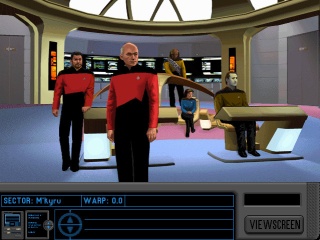
The Federation in Star Trek is another example of a technological organised society. The society is also moneyless. The exact workings of the economy is not fully explained but given the technological nature and the importance of science one can imagine it would be some form of energy accounting. If we look at the starship Enterprise, we again see a society that is organised around technical areas run by technical experts. Mr. Spock as science office, Montgomery “Scotty” Scott, responsible for engineering, Nyota Uhura, in charge of communications, and Dr. Leonard “Bones” McCoy as chief medical office, for example. All under the command of Captain James T. Kirk. The society is still hierarchical but discussions are still held and the opinion of the experts taken into account.
Do you want this kind of future?
If so, then we need to start building it. It won't happen by itself and given the failure we have seen regarding climate change, we need to be more proactive. We would need people who agree with and understand what is proposed. Scientists and engineers but also experts in other fields need to form groups and clubs to start building in the real world. Join up with like minded people. We would need funding, even if we want to build a moneyless society we are not there yet.
We need to start acting. Start doing. If we don’t, then we wont get this king of future. Fiction also provides us with plenty of examples of other types of societies. In the end the choice is ours. Build a better society or settle with what is coming.
EOS is one example of people working together to try and build a better future. Want to join us? Why not start your own group and form a network with us? Much of the ideas are explained in the Design but we are open to discussion if you want to learn more.
Tuesday, 11 April 2023
More time to be human
 |
| To be human in the modern world |
Foreword
At the moment we live in an unsustainable socioeconomic system that requires infinite exponential growth with finite resources. To be able to live in such a system we require money and for most of us the primary way to obtain the money we need to live is working. We end up spending most of our lives working. A lot of the work we do is demoralising, dehumanising, and, could be argued, unnecessary. From when we leave the education system until we retire and the retirement age is getting higher and higher in many countries. Many people work two jobs to make ends meet.
Imagine the future
Instead of that, imagine a world where you didn’t need to work, or at least, you didn’t need to work as much as we do today. Those jobs that are needed to be done would be interesting, meaningful, and people who work at those jobs do so because they want to not because they need the money. Working less would mean more time to be human.
Sounds like fantasy? Maybe, but maybe not. EOS proposes a sustainable, moneyless, socioeconomic system that aims to balance our needs with those of nature. In doing so, we could have a system that requires much less work yet still offer a good standard of living for everyone. The system has its roots in the application of science and engineering. How would that work?
The Alternative
To start with, the system that EOS proposes would see society organised in to a people side and a technical side. The people side is all about community, family, and culture. The technical side deals with all the technical aspects of society. From the means of production like farms and factories to transport systems and on to the science and research needed to develop the society. The people side is run by the people through a process of direct democracy and the technical side is managed by interdisciplinary teams of people, each of whom is an expert in their relevant field.
The system EOS proposes is also moneyless. So there is no profit searching behaviours that drive our current destructive system. Instead, the production capacity of a society is divided equally between the people so everyone has an opportunity to gain what they want and what they need. We can do that if we have an accounting system and the one that EOS proposes is based on the physical capacity of society to produce. We can measure that using energy (or to be more exact the usable energy which is called exergy). We can then allocate a set number of energy credits (that represent the production capacity) to individuals who then decide on what gets produced by allocating energy credits (and, therefore, production) to produce items that they want produced. Thus, the system is demand driven and not centrally planed. The teams of experts then manage the system.
As the system is not money based and we are not seeking profit we don’t have a system that needs to continually grow exponentially in the self destructive way of today system. Instead, we have the opportunity to build sustainable products. Built to be recycled or reuse. We can also reduce what we produce. For example, instead of building car after car and then have them spend most of their time standing still in a garage or car park doing nothing. We could rethink our whole transport system and have a system where each car is used for, say, 80% of the time. That means we could reduce the amount of cars we need to produce.
In the system EOS proposes, as much as possible is automated. Robots in factories run by Artificial Intelligence (AI). With the teams of experts running the overall system. With AI and robots doing much of the work, we would have much less work to be done. And what work there is to do would be more interesting to do.
 |
| Building a better world |
Conclusion
Less work to do in a sustainable socioeconomic system where everyone has equal access to the means of production would mean more time to be human.
Do you want this kind of “Star Trek” like future? If you want to make this kind of future possible then we need to work together to achieve it. If it is possible to achieve then we can achieve it.
Links