Translate

Donate to EOS

We aim to build a network of experimental sustainable communities to demonstrate that we do have a sustainable alternative to our current socioeconomic system. Want to help us build for a sustainable future? Please donate what you can:
Thanks!
Showing posts with label technocracy. Show all posts

Tuesday, 15 September 2026

Blueprint for Tomorrow; Holons – Revisited (part 2)


Blueprint for Tomorrow

Holons – Revisited (part 2)


Introduction

Anyone who has been following what is happening in our world should have got the idea that what we are doing is both unsustainable and destructive to our planet. Destructive as in we are heading towards a scenario where this planet of ours will become uninhabitable. Global Warming, loss of biodiversity, pollution; we are killing the Earth and failing humanity. We need, we absolutely must, move over to a sustainable way of doing things. To a sustainable, moneyless, socioeconomic system that balances our needs with those of the planet. But what would a sustainable society look like? Well, not like today's societies for a start!

The first article in this series was laying the foundations. That article explored the idea of autonomous, self-organising, holons that mimic nature mixed in with concepts like Mission Command and Leader - Leader as the foundation blocks for a sustainable moneyless society. In this article I want to explore that idea a bit more and try to answer the question of what would a sustainable society look like? I’m going to try and make the ideas a bit more concrete with a six layered structure of individuals, groups, zones, areas, sectors and then on to what I call a technate. But I’m also going to add a bit more to our blueprint. We have dynamic holons that form, achieve a task, and then dissolve. To that, I will add a second structure called sequences that focuses on skills.

I am aiming to move beyond the theory and towards a practical path to building a sustainable future. And from this article, I hope you will have some understanding of how it will work. In the next article I will look into the practicalities of forming, running, and dissolving holons; the nuts and bolts of making this real.

The Building Blocks of a Sustainable Society

For holons, you can think of Lego bricks. Each brick is a complete and functional unit but to get the most out of it we need to plug it together with other bricks. We can plug bricks together to make something greater. And then those somethings can be plugged together to make something even greater. But we can do more. We can reconfigure what we have built to make something different. They are adaptable and flexible. We can model this as holons within holons within holons. This system has inbuilt ways to change the structure and organisation. The individual bricks are like individual people. We can group the bricks together just as people can form groups to work on a task. From this we can build larger structures to create our final model.

So, like Lego bricks building somethings, there isn’t one organisational structure for building a holonic based moneyless socioeconomic system but we have to start somewhere. So, what I’m going to do is lay down a starting point from which the system can evolve as needed. Holons are task orientated but I’m going to start with a more geographical structure as that is easier to envision for a starting point. People and communities occupy physical space. Projects like farms and housing work on geographical areas. So, thinking tasks performed in a geographically area seems like a good place to start. The expectation, however, is that the system will then adapt and change as it evolves to become something else and that something else will be better adapted to the tasks that need to be done.

The structure I’m proposing consists of six layers as follows:

  • Individual – Virtually everyone has a skill and a roll to play in our system. So, I start with the individual. They can bring their skills and knowledge to solving problems that work towards the overall goal and purpose of the system.

  • Group – Individuals can work together on local community projects from waste management, to growing food, to building maintenance. As they do so they form the next holon in are holarchy; the group.

  • Zone – Groups can work together to form larger multi-community projects that are too large for one community such as growing luxury foods or a common energy farm that serves a number of communities. A zone could be, for example, an area like Southern England.

  • Area – the next level in our holarchy is the Area. Areas work on projects that server a larger number of communities over a much larger geographical area than zones. Such projects could be clothes manufacturing, for example, or travel systems. An Area could be something like the southern part of Scandinavia or the British Isles.

  • Sector – Sectors deal with much larger projects such as coordinating energy production between areas. Or handling agricultural production for world around distribution. A sector might cover an area the size of a continent, for example.

  • Technate – This is our final layer in our holarchy. This layer keeps the whole system together. Handles projects that effect the whole planet and perhaps even beyond. The term “technate” is borrowed from Technocracy Inc. and encompasses the idea of a state like entity that manages the resources of the planet using science and engineering. Originally in our design, this layer would cover just Europe and maybe a bit further out but as I’m now revising the idea, I think the technate should be planet around.


All change!

We have our starting point, so, now what happens?

Unlike a static structure, our holonic structure is responsive to change as the system is dynamic. So holons are created and, possibly, later they are dissolved. I say “possibly” because some holons may exist for a very long time. A maintenance holon, for example, may exist for as long as there are things to maintain. Where as other holons may come and go as the wind blows like a holon that produces a fashionable product and dissolves when the project is no longer in fashion.

Holons are created when individuals see a problem or an opportunity, a “tension” in our system, and they create a new holon to solve the problem or exploit the opportunity. That means that the holon has a purpose, a goal, and an intent. That goal and intent needs to fit in with the goal and intent of the above holon and with the over all goal and intent of the system as a whole. If all is well, the holon is formed and it can start working on it’s task.

Holons can come to an end when it has achieved its task. Alternatively, if it has no more members and it becomes obsolete it can be dissolved. Another way to end a holon is if it merges with another holon. That could happen if two holons realise they are duplicating each others work, for example.

As an example, we could take a Zone level wind farm project.

  • A need is identified. - An older wind farm is coming to the end of its life cycle (this is the tension) and needs to be replaced. This is going to effect a number of communities that were serviced by the former wind farm.

  • The Groups representing the effected communities come together to form a Zone level holon with the task of constructing a new wind farm. This will require a Zone level governance meeting (no need for central approval). The project is checked to see that it aligns with the goals and intent of the Zone holon (there is also another approval step at this stage. More on that later). If it achieves consent, the holon is started and necessary resources allocated as needed.

  • The holon runs the project to construct the wind farm. Rolls are defined and filled by holon members.

  • When the construction is completed, the holon self dissolves (efficient as no other holons are needed) and the wind farm is handed over to an Area holon that is responsible for managing a number of wind farms. Another holon is formed to maintain the wind farm. Documentation and lessons learnt are then added to the knowledge database for use by future holons (this allows for feedback and continuous improvement). Unused resources are returned to the Zone holon (to minimise waste).

The life cycle of a holon


Those Who Know Make the Decisions

In the above example of a wind farm, the members of the holon would be technical experts. Each with one or more rolls within the holon. Power engineers who know about wind farms. Perhaps ecologists would also be involved if the farm has to be built on a new site. Experts managing the Energy Account and resource allocation would also be involved. We need experts because of the complex nature of the project. We often assume that everyone's opinion is equal but there are many technical issues where that is not true. It takes technical skill and many years of study to be able to understand how the system works. And we have a problem, as humans, where unskilled people with poor knowledge tend to over estimate their abilities (what is often referred to as the “Dunning-Kruger Effect”). Bad decisions, as in technically incorrect, could lead to waste, damage, and project failure. Often, the people who know how to do things are in the minority and we can end up with the “expert in the room problem”. But think about it, who should design a bridge? Civil engineers or the general public? If you needed brain surgery, who would you rather perform the brain surgery? Brain surgeons or would you leave decisions up to the vote of the majority?

There would also be members who have the link roll. They act as the link between the project holon and the community level group holons as well as the above Area holon.

Within the holon there would be technical meetings to plan and then implement the technical solution. There would also be governance meetings to look at the organisation. The project would, most likely, need a few sub holons, and they would be created in the governance meeting. For example, there might be a sub holon to connect the system to the main power grid that then supplies the communities. There could be another holon responsible for transporting the new wind turbines to the site. These sub holons could come and go during the projects life time.

Doubling Up

What happens if the experts are wrong? Although experts are more likely to make technically correct decision than the general public, experts are not perfect and can make mistakes but the system isn’t without accountability. To handle errors, information is open so other experts can check on what is happening in a project. For that, we need another structure.

So far I have talked about holons; the whys and hows. But the structure that I would like to introduce now is the sequences. Holons focus on tasks and get things done but the sequences focus on skills. They are like standards organisations and they define the current “best practices” for each given technical area such as power systems, education, health, or transport to name but a few. They are formed at each level of the holarchy and are headed up by a director who is a technical expert in the given domain. The sequences approve projects if each project meets the required standards (this is the second approval mentioned earlier).

The sequences can also be responsible for technical oversight. Each project would be subjected to expert review to see that everything is done according to standards and technically correct decisions are made. For example, a wind power project would have a number of safety standards. The sequence responsible for power and wind farms would define those standards. A representative from the sequence would inspect the wind farm project to insure that the safety standards were followed. This transparency ensure accountability.

Another function of the sequences is communications. Lessons learnt can be pass to the sequence and adjustments can be made to the relevant standards. Also, each sequence can function as a channel for technical experts to keep up to date with the changes in their technical field. So, a sequence also acts as a professional society.

Sequences have no control over how a project is implemented but they can approve a project or cancel a project if standards are violated. They can also help in identifying duplicated work. You can think of the way the connect as being like the way muscles and nerves connect. The holons are the muscles, they get the work done, and the sequences are like the nervous system, they ensure coordination and that the work is done correctly.


Summary

In this article I looked a bit more at the design of a holonic based, sustainable, moneyless, socioeconomic system. I have laid out the initial six layered structure but noted that that structure is expected to change. It is a structure that works like nature. It is made up of autonomous holons that self organise. Each holon is temporary unless their function is essential. They self-optimise, minimising waste, and removing redundancy. I have also introduced the idea of sequences so the system is expert guided. Experts fill the rolls in each holon so they can be trusted but we also have the other organisation to ensure standards and accountability. It is a distributed system so there is no central control and no bureaucracy. The system continues to adapt and learn. In the next article, I will look more at the formation and the running of a holon.

Wednesday, 15 October 2025

… When do we want it


… When do we want it

Building a Better Tomorrow

Introduction

This is the third in a series of three articles about building a future society. The first outlined our choices. The second article was about the type of society that I envision. And this last article is about how we could get there.

There are basically two main approaches to building a better future. We can either plan for the future and so we are ready for when the current system collapses or we can be pro-active and start building today.

Foundation

In the Foundation series, Asimov wrote about a post collapsed galactic civilisation. Before the collapse a mathematician by the name of Hari Seldon was able to predict the collapse using a method he called psychohistory. He also predicted that the coming dark age could be shortened if two foundation were established to preserve knowledge.

Today we face, I would argue, a situation of potential collapse as our current socioeconomic system is fundamentally unsustainable. But even so, there are forces at work that will try and preserve this current socioeconomic system. As a result, any attempt to move to an alternative substantial system will be thwarted, so the argument goes. Thus, all we can do today is set up “foundations” to preserve knowledge, prepare for a collapse, and then wait to the system collapses.

The “foundation” approach is basically the approach taken by Technocracy Inc. and The Venus Project (TVP). The idea goes, at least, back to Thorstein Veblen in his book “Engineers and the Price System”. In his book, Veblen proposed a Soviet of Technicians to take over the means of production in the US, but not by force, as he says :

“… and what will of necessity be the manner of organization which alone can hope to take over the industrial system, following the eventual abdication or dispossession of the Vested Interests and their absentee owners. And, by way of parenthesis, it is always the self-made though reluctant abdication of the Vested Interests and their absentee owners, rather than their forcible dispossession, that is to be looked for as a reasonably probable event in the calculable future. It should, in effect, cause no surprise to find that they will, in a sense, eliminate themselves, by letting go quite involuntarily after the industrial situation gets quite beyond their control.”

Jacques Fresco follows the same idea as he said :

“The transition to a resource-based economy will not happen through violence or revolution. It will happen when the old system collapses under its own weight, and those who are prepared can offer a viable alternative.”

He also pointed out the need for being prepared for the collapse on other occasions :

“The future is not something we wait for—it’s something we design. The question is: Will we be ready when the old system fails?”

and

“The only way to create real change is to make the old system irrelevant. Build the new world in the shell of the old, and when the collapse comes, people will naturally gravitate toward what works.”

“The Venus Project is not about predicting collapse—it’s about preparing for it. When the old system fails, we must be ready with a viable alternative.”

and then he also warned :

“The people who control the world today—bankers, politicians, corporate leaders—do not want change. They profit from scarcity, war, and debt. A resource-based economy would eliminate their power, so they will fight it with everything they have.”

The idea of collapse first and the need to be ready for it can also be seen in some of Technocracy Inc. publications such as :

“We are not waiting for the system to collapse—we are preparing the blueprints for what comes next. When the old system fails, those with a viable alternative will lead the way.”

“The first step is education. People must understand that another system is possible—one that is not based on money, politics, or scarcity.”

The problem I have with this approach is what kind of world will be left after a collapse and would that world be a good bases to build a future sustainable, moneyless, world from? I doubt it. Even if we were to prepare, a collapsed society will be a desperate place and we could see the rise of more irrational ideologies instead.

Evolution

Jacques Fresco makes an interesting point :

“We are not trying to overthrow the system—we are trying to make it irrelevant. The Venus Project is about building a new world in the shell of the old. When the old system collapses, we will be ready with an alternative.”

There is a tendency, I think, to dislike revolution among groups that propose a technocratic like socioeconomic system. You can see that in Technocracy Inc. as well :

“We don’t need revolution—we need engineering. The solution is not to overthrow the system, but to make it obsolete by designing a better one.”

I would also go down the “no revolution” route. I would also agree, we need to actually build an alternative and demonstrate that it can and actually does work. We also need to test the ideas out. The ideas for a better society, whether from me, from Technocracy Inc, or from TVP have never been tested. It would be seriously unwise to overthrow a government and install such an untested alternative. That could lead to an even worse disaster than trying to preserve our current unsustainable system.

The “MillennialProject” is a book written by Marshall T. Savage. It is not really about building an alternative, sustainable, moneyless, socioeconomic system. However, it does argue that our current system is unsustainable and the solution lies off world in colonising the galaxy. To achieve that, Savage proposes a number of steps. The early ones, like forming a Foundation and then sea colonies, relies on working within our current system and then moving in to space. A sort of evolution and it is this idea of evolving to a desired state that I would propose for moving towards a better socioeconomic system.

Basically the idea is similar to TVP and Technocracy Inc. educate, build, and prepare but instead of just waiting for a collapse start linking together, forming networks and gradually move society to an alternative without having to go through the pain of collapse. An example of this is EOS in Sweden. In the Design, they propose a process called stepping stones, where they work within the current system but towards a better system. For example, they have a project centred around a biodome and an urban garden where they are building a sustainable solution and testing it out. They are also forming a network with other EOS groups.


UmeƄ biodome

The argument against this approach goes back to the idea that those with a vested interest in the current system will stop any move to an alternative. As Jacques Fresco says about TVP :

“Any movement that threatens the status quo will be infiltrated, discredited, or destroyed. Look at what happened to the Occupy Movement—it was crushed because it challenged the financial elite. The Venus Project is a bigger threat, so they will ignore it, ridicule it, or try to co-opt it.”

And that maybe true and what will happen but I still think we should try to evolve society to a sustainable solution regardless. We still need to build something and test it out even if we are waiting for a collapse. We are still educating and preparing so even if the evolution fails we fall back to the waiting for collapse idea anyway. But if we try to evolve society to a sustainable socioeconomic system it might just work, especially if we can point to something and show that a moneyless system does actually work.

One more quote from Technocracy Inc. :

"The future will be built by those who prepare for it. The question is: Will you be part of the solution?".


Wednesday, 17 September 2025

What Do We Want …


Introduction

This is the second part in, what I plan to be, a series of three articles about the future. The first article looked at the choices we have about the future. It seems to me that we, as a species, have great potential to build a better world for all. A sustainable future that is also in balance with the planet. Yet, as it appears to me from my corner of the Universe, the groups and individuals that are successful in driving their idea of the future forward are also building what I would consider a dystopia. From techno-fascism to religious theocracy.

In this second article I thought I would outline my vision of the future. In some ways this could be considered a manifesto for the future.

A Future Society

The Goal : Highest standard of living for the longest time possible

The goal (which originates with Technocracy Inc.) outlines what I think a future society should aim to achieve, the rest that follows is about what I think the goal means when it comes to implementation.


  1. Demarcation between the complex, technical aspects of society, on the one hand, and the social, people, side of society, on the other hand. The technical side effectively forms the life support systems that keeps society running such as mining, farming, production, distribution, and housing as well as health care, for example. The social, people, side deals with people to people interactions, ethics, morality, and spirituality, for example.

  2. Expert management of the technical side of society. From the goal, I would argue, the highest standard of living can be achieved by the application of science and engineering to society. That means society will be hi-tech. A hi-tech, complicated, society has many different parts which takes many years to learn and understand before a person can make a competent decision in a given area. Therefore, this vision of a future society calls for teams of skilled domain experts to manage the areas that they have knowledge and expertise in (which makes this system a type of technocracy). This approach will allows us to build a substantial society that minimises work through robotics and automation and thereby increase individual freedoms. Giving people more time to be human. It also allows us to build a world based around what people can do, not what they look like, their gender, sexual orientation, or the clothes they ware. But even so, to benefit in this future society, you just need to be a sentient life form. It’s a society that works for all, regardless.

  3. Direct democracy for the social side. Not all aspects of society have a correct technical solution. We propose that people would live in communities where they would use direct democracy to manage the social side of the community (people themselves are the best experts to manage people related issues). Following from the goal, individual freedoms are to be guaranteed. Freedom of movement, freedom of speech, freedom of association, right to life, etc.

  4. A moneyless socioeconomic system. This also follows from the goal. Sustainability is built right into the system from the start. We can’t maintain a high standard of living for the longest time possible in a society that is unsustainable like today society. Today’s socioeconomic system is a money based, for profit, system, that relies on infinite growth with finite resources. Instead, we would need an alternative resource allocation system. I propose a system of Energy Accounting as a means of managing the supply of goods within a society. In an Energy Accounting System we measure the production capacity of society in energy terms. The people can then choose the allocation of production capacity through the allocation of energy credits. The energy credits represents each individual’s share of the production capacity in energy terms. This also leads to a system that is extremely equal. Everyone has the same access as everyone else to the resources available.

  5. A holonic socioeconomic structure. We propose a non-nation centric structure built around communities, network of communities, and projects. This would form a “building block like” structure where people would work locally within their own community on various projects. Projects could link up with other projects and communities with other communities in a network that would lead to a world around system. Using a holonic structure is a form of biomimetics, so we are emulating how nature works. It is also an example of applying engineering and science to society. This type of structure would allow for a great deal of diversity. Different groups of communities having their own culture and language as well as laws. Each community will deicide how much or how little it interacts with the technology side. So, we could find very primitive communities that want to be free from technology to all embracing transhumanists communities and anything in-between.

  6. No private ownership. As all the means of production come under the management of experts, ownership makes no sense. Instead we would have a form of user rights. Some items such as personal items and housing would have exclusive user rights but most items people will have the right to use as they need such as ground vehicles.

  7. Environment design. We aim to design environments not only to allow people to develop to their full potential but also to discourage aberrant behaviour. Just removing money and making a more equal society where we can meet people’s needs could reduce crime dramatically, for a start. But environment design also means building a world with a high standard of living for people but sill balancing our needs with those of the planet. So even nature, and all life, befits from this future society.

Examples

This approach to society hasn’t been tried before. The closest real society I could find is the Inca empire, which was a moneyless society, but otherwise is quite far from my vision. But science fiction does provide a few examples that have some characteristics of the type of society I envision.

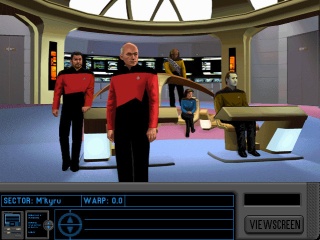
United Federation of Planets of Star Trek


“The acquisition of wealth is no longer the driving force in our lives. We work to better ourselves and the rest of humanity.” - Captain Jean-Luc Picard, Star Trek TNG.

Gene Roddenberry was influenced by a number of ideologies such as secular humanism. But in the design of the United Federation of Planets, some similarities between the Technocracy movement in the US and the United Federation of Planets can be seen. Both are moneyless, hi-tech, societies, for example. The United Federation of Planets also has similarities to the vision I present here. There is a high emphasis on education and self improvement, for example, which would be needed in a hi-tech society that values science and engineering. The decision making process is based on expert opinion and positions of importance and power are achieved through individual expertise and the contribution that they make.

There are some differences, however. The United Federation of Planets still maintains a democratically elected government. Society isn’t divided between a technical side and a people side. It is also a hierarchical society rather than a holonic society. It is a post scarcity society but doesn’t appear to use a resource allocating system such as energy accounting, so in that regard, it differs from my vision.

How the economy works in the United Federation of Planets is never fully explored beyond being moneyless. One could surmise that there will be a great deal of computer control. However, I would imagine that such a society is going to require some kind of expert management to be able to keep it running.

Another aspect of the United Federation of Planets is it’s level of freedom, opportunity, and equality. Like in my vision, it only matters what you can do and the effort you put in in the United Federation of Planets. This can also be seen in the high level of diversity, where people from all kinds of backgrounds are accepted.


“… the prejudices people feel about each other disappear when they get to know each other.” Captain James T. Kirk, Star Trek.

Moonbase Alpha

By JefferyWright

“And you are not political on Alpha?”
“No, we’re not!” - Zamara and John Koenig, Space 1999

In Space 1999, the moon is blasted out of orbit in a nuclear accident. The moon then drifts (with the aid of space warps) from one star system to another. Located on the moon is Moonbase Alpha, whose inhabitants now have to survive in a hostile environment.

The governing structure on the moonbase resembles, in some ways, my vision for the future. It is a technological society reliant on science and engineering and is ruled over by a base commander who has a number of technical experts, and a computer, to aid him. It is not quite a dictatorship as the commander and the various senior staff members arrive at their decisions through the application of science and engineering, making it a type of technocracy. Survival is the main focus of the moonbase’s inhabitants, which means resources are allocated as needed, so it can be seen as a moneyless society.

The governance also differs a bit from my vision. It is a bit more militaristic in it’s structure with a hierarchy and an overall commander in charge rather than a holonic structure, where power is distributed. There is no split between the people side and the technological side and there is no democratic element. There is diversity on Moonbase Alpha in terms of people but the culture is uniform.

Trantor

Trantor is a planet wide city and the capitol of Asimov’s Galactic Empire in the Foundation series of books. The planet is almost totally covered in domes, each with it’s own society underneath. In some ways Trantor is similar to a holonic structure. Each community under each dome is autonomous to a degree and has it’s own specialisation that contributes to the whole. Governance could be seen as a nested structure, similar to a holonic structure, that combines together to produce a planet around governance. In this way, Trantor is an example of the holonic structure that I envision for a future society. However, it doesn’t fit perfectly.

Trantor differs from my vision in that it doesn’t appear to have feedback loops, which would be needed for it to be a true holonic structure. The whole governance is still top down for the planet and the Empire as a whole with the emperor at the top. Rather than bottom up as it would be in a holonic structure.

However, Trantor is still a hi-tech society. It is at the centre of a Galactic, space fairing, Empire.

Summary


I envision a future society that has it’s roots in the application of science and engineering to society. A sustainable society that balances our needs with those of the planet. A decentralised society that is diverse and equal where people have more freedom. You can find out more about this vision of the future in The Design.

How can such a society be built? That will be the subject of the next article …

Sunday, 7 September 2025

The Future We Deserve


Introduction

We have the world we have today because of the actions and inactions of people in the past. Similarly, the future will be the future it will be because of the actions and inactions of people today.

The world we live in today isn't really the world that I, and others, envisioned 30 - 50 years ago. It seems to me that our imagines of the future was much brighter than it turned out to be. This article is one of three that aims to look at what we have, what we could have, and how we could still achieve a better future.

A Future So Dark


There are many actors in the past and active today that are or have been pro-active in building, what I would consider, a dystopia. From religious fanatics to techno-fascists [tf]. And they have had success. Take religious fanatic groups such as the Taliban [tali] in Afghanistan, who came to power for the second time in 2021. Since then there has been a worsening situation for many Afghans. Human rights abuses are up. Religionous fanatics are not just limited to Afghanistan. They are pro-active from Iran to West Africa and onwards, including Europe and the US [xright, xtrump], where the religious right has been pro-active in implementing their idea of the future [2025].

But it is not just religious groups that are proactive in creating a dystopia. Dark enlightenment [dark] has appeared to have influenced American politics [darkp] with its dystopian, anti-egalitarian, “Snow Crash” [snow], vision of the future. Dark enlightenment can be seen as a type of fascism. And it appears, at least to me, that neo-fascism [neof] is on the rise with right wing popular parties gaining, or partly gained, power [rise] in many democracies such as in Sweden, Hungary, Italy, Poland, Finland, and France to name but a few. The Republican party under Trump, in the US, could be seen as having some anti-democratic and neo-fascists ideological elements [trumpf, soul].

Neo-liberalism could be seen as another ideology that is creating a dystopia. It could be argued that neo-liberalism has resulted in unsustainable damage to the environment and decrease in individual freedoms, and an increase in authoritarianism, exploitation, and inequality as it put profit above all else and making billionaires richer [scidir, scipsy, work, profit].

Techno-fascism [musknazi] is something that a number of influential individuals and organisations seem to promote such as Musk and J. D. Vance in the US [boar, kyle]. Some of the actions of the Trump government could be seen in terms of techno-fascism and Musk’s support of right wing parties would fit as well [afd].

A Future So Bright

On the other side, there are visions for a brighter “Star Trek” like future that people have been working on. We can start with the Technocracy movement [techn] in the US. This reached its peak in 1933 with people like Howard Scott, Thorstein Veblen, and Harold Loeb in the US and Peter Palchinsky in Europe. Of all the early technocracy organisations from that time, the only one to survive into the 21st century is technocracy Inc. Technocracy envisioned a moneyless society of extreme equality. There are a number of offshoots of technocracy that offer a similar vision of the the future. One of the most well known is The Venus Project (TVP) [tvp]. TVP was started by Jacque Fresco, who was a former member of Technocracy Inc. TVP promotes a future, technological, moneyless society and a resource based economy.

Another technocratic organisation that actively works toward building a better future is the Earth Organisation for Sustainability (EOS) [eos]. Based in Sweden, EOS promotes a moneyless, sustainable, socioeconomic system based on the application of science to society where our needs are balanced with the needs of the planet.

Another vision of the future is the Millennial Project proposed by Marshall T. Savage, which is, today, represented by the Living Universe Foundation. The vision of the future sees humans expanding into the Universe, colonising planets. [luf]

Going the Wrong Way

It maybe a bit of a subjective opinion (and, perhaps, even a false dichotomy), but allow me anyway; given the choice we have between the dark future or the bright future, we appear to be choosing the dark future. At least, those who want to build a dark future, as it seems to me, are more proactive and more successful in their aims than those who wish to promote a brighter future. Why? What went wrong with the bright future that was envisioned in the 70s? In his video, “Why doesn’t 2025 feel like “the future”” [why], struthless puts forward three possibilities:

  1. Extremists with political power and wealth that doesn’t promote or act in ways to benefit people as whole.

  2. Negative media bias.

  3. Unfettered capitalism.

Techno-fascism, pointed out earlier, would fit into point 1. When struthless mentions point 1, he also points out that the people who want to build a brighter future are also the sort of people that doesn’t want political power. This, I think, is another reason why. Technocracy Inc., for example, didn’t want politicians to become members. Politics is about people’s opinions and there manipulation where as people who want a brighter future are often focused on technical, practical solutions not people’s opinions. I think there is also a sense that politics will water down or distort the ideas.

The second point is about media’s tendency to sell the negative but are not interested in presenting solutions or ideas as that makes money (perhaps they don’t have solutions?), which leads into the third point.

The current socioeconomic system is all about making profit at whatever cost. Not about developing the best society for all or building a better future (if we get anything better then that is as a side effect not as a goal). I would argue that we are unlikely to get the bright future that we want within the current socioeconomic systems. We have to think of another system. The current system is too focused on profit making and is fundamentally unsustainable given its need for infinite growth with finite resources.

I would add another reason; in my experience, there was an expectation that the future was going to be as it was envisioned in the 70s without having to do anything to create it. It was inevitable, so we didn’t act. But others did and they build the future they wanted. So, we ended up with supermarkets instead of colonies on Mars. In the end we got the future we deserved through our own inaction. But I don’t think it is too late to build a better future. But what future? In the next article I aim to layout a vision for a brighter, sustainable, future, for all.

References

[tf] https://liberality.net/what-is-technofascism-part-one.html

[tali] https://www.nytimes.com/article/who-are-the-taliban.html

[xright] https://theconversation.com/the-christian-right-is-taking-over-america-according-to-talia-lavin-but-what-is-the-best-response-253232

[xtrump] https://www.pbs.org/newshour/politics/trump-energizes-conservative-christians-with-religious-policies-and-assaults-on-cultural-targets

[2025] https://www.bbc.com/news/articles/c977njnvq2do

[musknazi] https://www.youtube.com/watch?v=-VfYjPzj1Xw

[snow] https://en.wikipedia.org/wiki/Snow_Crash

[neof] https://www.cadtm.org/The-Age-of-Neofascism-and-Its-Distinctive-Features

[trumpf] https://www.theguardian.com/commentisfree/2025/jan/24/trump-fascism-what-to-do

[dark] https://time.com/7269166/dark-enlightenment-history-essay/

[rise] https://www.bbc.com/news/world-europe-66056375

[soul] https://peri.umass.edu/wp-content/uploads/joomla/images/publication/Palley-June-2021b.pdf

[tvp] https://www.thevenusproject.com/

[techn] https://technocracynow.com/about-technocracy

[eos] https://eosprojects.com/

[darkp] https://cascadeinstitute.org/dark-enlightenment/

[scidir] https://www.sciencedirect.com/science/article/abs/pii/S2352154620300905

[scipsy] https://bpspsychub.onlinelibrary.wiley.com/doi/10.1111/bjso.12438

[work] https://www.workers.org/2023/01/68835/

[profit] https://en.wikipedia.org/wiki/Profit_over_People

[boar] https://theboar.org/2025/03/founders-funders-fuhrers-is-techno-fascism-on-the-rise/

[kyle] https://kylechayka.substack.com/p/the-history-of-techno-fascism

[afd] https://www.dw.com/en/german-election-why-elon-musk-is-promoting-the-far-right-afd/a-71186763

[luf] https://luf.org/

[why] https://www.youtube.com/watch?v=1zZ3uWQyx5w

Thursday, 13 February 2025

The Beginning ...


We have the potential to build something better ...

Introduction

 
File:TrumpPortrait.jpg
President Trump
 
On the 5th November 2024, the US electorate decided to vote Donald Trump to the highest office in the land. He is the first convicted felon to be elected president (imagine! If only Nixon had known!). He has been convicted in a US court of falsifying business records and of liable but did not serve a prison sentence. Instead, he ended up pardoning himself. He also pardoned several people involved in insurrection. Trump has also been accused of rape and is the first president to be impeached twice. He can be seen as anti-American and anti-West and pro-Russian [rus]. Since elected, he has used his presidential powers to make a number of controversial decisions such as ending DEI programmes, reevaluating foreign aid, and closing government databases. He has been supportive of Christian Nationalists [cn] (not that Christian Nationalists are Christian [cn2] nor are they nationalists as Christianity in the US is more like the worship of money [cm] and the Christian Nationalist don’t exactly support the US constitution). His pro-Russian position makes war more likly [war] as he proposes defeat for the West, NATO, and Ukraine in his "peace plan" for Ukraine. And he has the support of the majority of the American people [sup] to do all this.

Along with Trump comes a set of controversial figures. For example, Elon Must has connections with far right movements and performed a Nazi salute at a Trump rally. Tulsi Gabbard, the director of National Intelligence, is considered a threat to national security [DNI]. Pete Hegseth, the Secretary of State for Defense, supports far right ideologies and has been accused of sexual assault as well as being accused of using funds from a non-profit for himself [ph].

And there is more but I think that is enough to get the point; to many, Trump and his associates are not the best people for the US nor the West and they have come at the worst time for the US and the West.

The End if Nigh

“… it has been said that democracy is the worst form of Government except all those other forms that have been tried from time to time;” - Winston Churchill.

To some people, to have had such a set of controversial figures elected to rule the US is understood as a failure of democracy [failed]. But has democracy failed? Democracy is the rule of the people. But the US doesn’t have a true democracy. Like many democratic countries, the people don’t rule but representatives of the people rule. And those representatives are elected every few years or so with the one that gets the most votes taking office. There is nothing in the definition of either democracy or representative democracy that says that the government so elected would be competent, moral, ethical, or even work for the best interests of the country. One could argue that when it comes to how society works, many politicians in democratic countries have little clue about things. So, I would argue that democracy has not failed in America. This is just part of how it works. If we actually want a competent government then we need people in charge that have expert domain knowledge of how the system works. And that would be a type of technocracy.

Another argument I have seen is that Trump represents the beginning of the end of the US [end] or even the West. Is it? People tend to be here and now thinkers. We tend to think what is happening now as being all important. In some ways it is but it is also part of a bigger picture and we need to see that too. I would say it is too early to tell if we are seeing the beginning of the end. Empires do fall but they can also stumble and get back up again.

On the other hand, it could be argued that Trump is not the problem but only the symptom of a deep rooted problem that has plagued the US for a long time. Only 79% of US citizens are literate [lit] with over half of Americans having a reading age worse than a 12 year old (the poor level of education in the US is evident to those of us who have interacted with many Americans on the Internet). Poverty [pov] is about 14% but social security is paid out to 27.8 million Americans to keep them out of poverty. The US also has many social problems [prob]. With internal problems such as those, one could be forgiven for thinking America is on the way out. But we will have to wait and see if this is really the end of America (personally, I'm expecting a mixed bag. Some good stuff and some bad stuff including damage done to the US and the West).

The Future is Bright

An easy life is not our friend.

It is not just the US where we find problems. We have problems the world around. Global warming (we all remember the fires in California?), resource problems, poverty, to name but a few. But could all this actually work to our advantage?

Jacque Fresco used to argue that the current system has to collapse before we can build something better but maybe we don’t have to go that far. When things are easy and we are comfortable, we tend not to want to act. Even when we see the danger before us. Global warming, for example, we have known about for over 100 years but so far haven't acted (one could argue that Trump’s government is even acting in the opposite direction to what is needed). But Trump’s government and the effects of global warming, just to name a couple of problems, are starting to make things a bit uncomfortable. That could be good. We have a potential here to move in a better direction as people might seek out alternatives to the current system. And EOS offers such a system [EOS]. The more people and the more resources we have the greater our potential becomes to build a sustainable, moneyless, "Star Trek" world. At the very least, we could start building a Foundation for the future to act as seeds for a brighter future. So, if we are seeing the end of the US and the collapse of the West, we could also, potentially, be seeing the start of a brighter future. Trump could be the catalyst that we need. The potential is there but we need to make it happen. We need to act. Will we? If we don't, we will only have ourselves to blame.

"Hard times create strong men. Strong men create good times. Good times create weak men. And, weak men create hard times." - Those Who Remain by G. Michael Hopf,


References

[DNI] https://democrats.org/news/tulsi-gabbard-is-a-threat-to-americas-national-security/

[ph] https://economictimes.indiatimes.com/news/international/global-trends/pete-hegseth-5-controversial-facts-about-the-new-us-secretary-of-defense/articleshow/117542597.cms?from=mdr

[sup] https://www.forbes.com/sites/alisondurkee/2025/02/09/trumps-approval-rating-at-53-in-new-poll-but-americans-are-less-sure-about-elon-musk/

[rus] https://www.theguardian.com/us-news/2024/sep/12/trump-russia-putin-fbi

[cn] https://www.theguardian.com/us-news/2025/feb/07/trumps-executive-order-anti-christian-bias

[cm] https://medium.com/backyard-theology/christianitys-love-of-money-ed6cd56a5e97

[cn2] https://www.johnwhitsett.com/blog/authentic-christianity-versus-christian-nationalism 

[war] https://www.express.co.uk/news/politics/2014086/donald-trump-making-world-war

[failed] https://thephiladelphiacitizen.org/guest-commentary-america-failed-democracy/

[end] https://eastasiaforum.org/2024/11/10/trump-act-ii-spells-the-end-of-the-american-empire/

[lit] https://www.thenationalliteracyinstitute.com/post/literacy-statistics-2024-2025-where-we-are-now

[pov] https://www.census.gov/library/publications/2024/demo/p60-283.html

[EOS] https://eosprojects.com/

[prob] https://www.humanrightscareers.com/issues/examples-of-social-issues-in-the-us/

Thursday, 5 December 2024

Technocracy : What is it and why would we want it?

“Many forms of Government have been tried, and will be tried in this world of sin and woe. No one pretends that democracy is perfect or all-wise. Indeed, it has been said that democracy is the worst form of Government except all those other forms that have been tried from time to time; but there is the broad feeling in our country that the people should rule, continuously rule, and that public opinion, expressed by all constitutional means, should shape, guide, and control the actions of Ministers who are their servants and not their masters.” - Winston Churchill, UK parliamentary speech, 1947 – 11 – 11

Introduction

In this article I want to give a quick introduction to technocracy as an alternative form of government. It could be interesting to look at this form of government given the complexity of the world we live in and the apparent difficulty we are having with dealing with serious problems such as global warming as well as our failure to build a sustainable society. Perhaps we are unable to fix the problems our current system has created within the same system? Perhaps we need to look to an alternative if we really want solutions?

What is technocracy?

To put it simply; technocracy is the rule of the skilled. That is, a government formed of people who know what they are doing. The word “technocracy” comes from combining two Greek words. The first is “tekhne”, which means “skill”, and it can be found in other “tech” words such as “technique”. The second word is “kratos”, which means “power”, and can be found in words like “democracy”.

Why would we want it?

The why we might be interested in exploring technocracy can be summed up in one word; “complexity”. Modern society is complex. Many of the other forms of governance were developed in less complex, pre-industrial, pre-scientific, times. They were not developed to handle the modern complex world. It could be argued that that is why we have been failing to deal with complex problems such as global warming, just to take one example. Global warming is a complex technical problem and it could be argued that we haven't even started to solve that problem (we have even done the opposite like muddle the waters and call it “climate change”). And there are many other such problems. There is nothing in other forms of government that actually guarantees technically competent people will be in a position to make the necessary complex decisions. Authoritarian regimes reward loyalty and democracies reward popularity. No technical skills, qualifications, or even understanding of society are required.

So, why would we want technocracy? Because it is the only form of government that guarantees technically competent people will be making the technically complex decisions in our modern technically complex world.

So, what is technocracy?

I’m coming back to the first question again. I gave a simple answer above and then a brief explanation as to why we might want to look at technocracy. So, now I want to given a better answer to the first question. I’m going to look at technocracy in a little bit more detail with the idea that we live in a complex society in mind.

The Rule of Scientists

One of the most common views of technocracy that I have come across is the view that the government would be made up of scientists. A good view of that type of government was presented in an old children’s programme from 1970 called Timeslip. In the episode called “The Year of the Burn Up”, two children travel forward in time to a future world of the Technocracy, where a government of scientist are remaking the world according to the “master plan”. Things go wrong and the planet starts to warm up to the point where all life on Earth was threatened with extinction.

Personally, I’m not surprised a “rule by scientists” would end in disaster. If you ever meet a real scientist you would understand why they may not be suitable to run a country. Just because a person is skilled in one area doesn’t mean they are skilled in another area. A physicists may be brilliant with physic but it doesn't follow that they would know the first thing about ruling a country.

The Rule of the Computer

Another type of technocracy could be seen in The Venus Project (TVP). TVP originates with Jacques Fresco, who was at one time a member of the Technocracy movement in the US. TVP envisions a society run by computers. Computers would monitor all the variables that are vital for running society such as crop production, the water supply, energy supply, and so on. The computer would then make what ever decision is needed to run society. Jacques Fresco didn’t go into details of how all this would work but I would imagine it would be a distributed system with many computers inter-connected. It would also need teams of experts to manage the system but this is another detail that isn’t clear to my mind. The system is a moneyless system but, again, how it would work isn’t fully explored in Jacques’ works but there are a nice set of ideas for future buildings and cities. 

Jacques Fresco


The Design

“The Design” is another form of technocracy, this one has been put forward by the Swedish based group called EOS. The Design see society divided into two; the people side and the technology side. The people side deals with cultural issues and communities and is ruled by direct democracy. The technological side then deals with the technical aspects of society such as production, transport, computers, and so on. It is the technical side that is more of interest so I’ll focus on that. The technical side is run by teams of experts. The aim is to apply science to society but the experts are not all scientists. They are teams composed of experts from a variety of domains. Food production, for example, could be managed by teams composed of biologists, ecologists, agro-engineers, and farmers. The teams work towards a goal;

Highest standard of living for the longest time possible

This goal originates with Technocracy Inc. in the US. The goal puts people first so we see rights such as the freedom of speech, freedom of association, freedom of movement, etc., as an integrated part of the over all goal. Also part of the overall goal is the idea of sustainability; the need to balance our needs with those of the planet.

To achieve the goal, the Design calls for a moneyless system based on the idea of energy accountancy. This idea originates with Technocracy Inc., but the Design extends the idea. Instead of energy, the Design uses exergy as exergy is the usable energy and that is more of interest when managing a complex system.

The Design also advocates the use of technology to minimise work. That would give people more time to be human. This is achieved through the technical management of resources, automation, and robotics.

Of all the designs for a technocracy, The Design is probably the most comprehensive. However, it is not complete. The Design calls for testing and verification in order to develop the ideas to a complete system (taking a scientific approach).

Technocracy Inc.

The ideas of technocracy go back to the 19th century but the oldest technocracy organisation still in existence is Technocracy Inc. in the US. They date back to the 1930s. They have a plan that includes forming urbanates (cities of the future), how to manage food production, and energy production but they have a more American focus.

Further reading

This was only a very quick look at technocracy but if you want to know more there are various publications / sites to read to go into this subject in more detail.

One good starting point is Technocracy Inc. site and their plan. The Venus Project has a book called the “Best That Money Can’t Buy” by Jacques Fresco and that can be found at their web site. Kenneth S. Keyes, Jr. and Jacques Fresco also wrote a book called “Looking Forward”, which also explore the ideas of TVP. That book is free. The Swedish EOS group has published their ideas in a book called the Design.

Friday, 17 November 2023

Failed

Introduction

We hit another heat record this year. According to NASA, July was the hottest month on record. Heat record we recorded all around the planet. And the heat records continued on in to the second half of 2023. This all shouldn’t come as a surprise as we haven't really done anything about global climate change. We have done “something”, make it look like we have tried but I would argue that all that we have done is try to solve the problem using the same thinking that caused the problem in the first place, not really dealing with the problem itself. Effectively, we just green wash things. If we actually wanted to get to grips with the climate change problem and really deal with global warming then we would have to look at the root causes of the problem; the free market, capitalist based socioeconomic system we have. We would need to look at alternatives.

Where to go?

The current socioeconomic system we have has created a lot of benefits for people over time but in doing so it has also set us on a path of self destruction. We would like to maintain as many of the benefits as we can but avoid the more negative aspects of our current system.

EOS proposes a system that aims to maintain as high a standard of living for as long as possible. A high standard of living for everyone, not just a select few, and for as long as possible means sustainability is built in at the core of the system. The system starts with seeing society as highly complex. So complex it will take many years to study and understand just a part of it. This means that to manage a future society we would need teams of experts taking a scientific and engineering approach. So we start there, dividing society into a technical side and a people side with teams of experts managing the technical side. Scientists and engineers but also accountancy, medical personnel, cleaners, farmers and so on. Each with their own specialisation, each contributing to managing a society to achieve the overall goal.

The system proposed by EOS is also a moneyless system. One of the major problems with our current system is the drive for profit. Profit seeking behaviour pushes infinite growth with finite resources at the expense of the very planet we depend on. Removing money would remove this destructive behaviour. But we will still have resources that need to be allocated to talks. The way EOS proposes to do that is to use a system of energy accounting. We need energy to do anything and we have a certain amount of energy every year that we can allocate to doing things, like producing things. So, we allocate the energy we have available to people and let them allocate the energy to production of items they want. Those items available will be produced in a system managed by skilled experts so as the items are produced in a sustainable way. Thus, we can balance our needs with those of the planet.

In such a system we can automate as much work as we can, minimising the need for work and giving people more time to be human as people don’t need to work to make a living. We can minimise production by making items last longer. We can minimise the amount of items produced by planning and sharing resources (think about cars; what do cars do most of the time and how can we better utilise cars?). Minimising in such a way will allow us to still maintain a high standard of living but lessen our impact on the planet making the system sustainable. The system is also rooted in the application of science and is holonic in nature. So, it’s an open and free society that uses technology to benefit everyone but still maintains a balance with nature. “Balance” is a keyword.

Examples of a future sustainable society

We have not built such a moneyless system managed by skilled experts before so we can’t really point to an example of this type of system today. But fiction does provide us with some examples of societies that have some characteristics of the future World we would like to build. Here is a quick look at a couple; Space 1999 For those of us who were lucky enough to have our childhood in the 1970, we might remember a fascinating sci-fi series called

Space 1999.

Moonbase Alpha, Space 1999

Set on a moon that has been blown out of Earth’s orbit and set a drift in space. The inhabitants of moonbase Alpha have to survive in a hostile universe as the moon is transported from one star system to another via a network of space warps. 

The society on moonbase Alpha is very technical and run by technical experts. Dr. Hellen Russell, in charge of the medical section, Tony Anholt, in charge of security, David Kano, responsible for the computer systems, and Alan Carter, pilot to name but a few. They are all under the command of John Koening with Paul Morrow as second in command. The society is open and decisions are made are decisions where each expert can put forward their opinion. The society is hierarchical, rather than holonic as EOS’ system, but divided into technical domains, like the system proposed by EOS. The economy of moonbase Alpha is not really explained but doesn’t appear to be money based. Production is limited but meets the needs of the inhabitants. The base is also physically limited as everything on the moon outside the base is uninhabitable. Everything produced is maintained within the base which means everything must be recycled and with no waste.

Star Trek

Star Trek TNG

The Federation in Star Trek is another example of a technological organised society. The society is also moneyless. The exact workings of the economy is not fully explained but given the technological nature and the importance of science one can imagine it would be some form of energy accounting. If we look at the starship Enterprise, we again see a society that is organised around technical areas run by technical experts. Mr. Spock as science office, Montgomery “Scotty” Scott, responsible for engineering, Nyota Uhura, in charge of communications, and Dr. Leonard “Bones” McCoy as chief medical office, for example. All under the command of Captain James T. Kirk. The society is still hierarchical but discussions are still held and the opinion of the experts taken into account.

Do you want this kind of future?

If so, then we need to start building it. It won't happen by itself and given the failure we have seen regarding climate change, we need to be more proactive. We would need people who agree with and understand what is proposed. Scientists and engineers but also experts in other fields need to form groups and clubs to start building in the real world. Join up with like minded people. We would need funding, even if we want to build a moneyless society we are not there yet.

We need to start acting. Start doing. If we don’t, then we wont get this king of future. Fiction also provides us with plenty of examples of other types of societies. In the end the choice is ours. Build a better society or settle with what is coming.

EOS is one example of people working together to try and build a better future. Want to join us? Why not start your own group and form a network with us? Much of the ideas are explained in the Design but we are open to discussion if you want to learn more.