Translate

Donate to EOS

We aim to build a network of experimental sustainable communities to demonstrate that we do have a sustainable alternative to our current socioeconomic system. Want to help us build for a sustainable future? Please donate what you can:
Thanks!

Thursday, 13 February 2025

The Beginning ...


We have the potential to build something better ...

Introduction

 
File:TrumpPortrait.jpg
President Trump
 
On the 5th November 2024, the US electorate decided to vote Donald Trump to the highest office in the land. He is the first convicted felon to be elected president (imagine! If only Nixon had known!). He has been convicted in a US court of falsifying business records and of liable but did not serve a prison sentence. Instead, he ended up pardoning himself. He also pardoned several people involved in insurrection. Trump has also been accused of rape and is the first president to be impeached twice. He can be seen as anti-American and anti-West and pro-Russian [rus]. Since elected, he has used his presidential powers to make a number of controversial decisions such as ending DEI programmes, reevaluating foreign aid, and closing government databases. He has been supportive of Christian Nationalists [cn] (not that Christian Nationalists are Christian [cn2] nor are they nationalists as Christianity in the US is more like the worship of money [cm] and the Christian Nationalist don’t exactly support the US constitution). His pro-Russian position makes war more likly [war] as he proposes defeat for the West, NATO, and Ukraine in his "peace plan" for Ukraine. And he has the support of the majority of the American people [sup] to do all this.

Along with Trump comes a set of controversial figures. For example, Elon Must has connections with far right movements and performed a Nazi salute at a Trump rally. Tulsi Gabbard, the director of National Intelligence, is considered a threat to national security [DNI]. Pete Hegseth, the Secretary of State for Defense, supports far right ideologies and has been accused of sexual assault as well as being accused of using funds from a non-profit for himself [ph].

And there is more but I think that is enough to get the point; to many, Trump and his associates are not the best people for the US nor the West and they have come at the worst time for the US and the West.

The End if Nigh

“… it has been said that democracy is the worst form of Government except all those other forms that have been tried from time to time;” - Winston Churchill.

To some people, to have had such a set of controversial figures elected to rule the US is understood as a failure of democracy [failed]. But has democracy failed? Democracy is the rule of the people. But the US doesn’t have a true democracy. Like many democratic countries, the people don’t rule but representatives of the people rule. And those representatives are elected every few years or so with the one that gets the most votes taking office. There is nothing in the definition of either democracy or representative democracy that says that the government so elected would be competent, moral, ethical, or even work for the best interests of the country. One could argue that when it comes to how society works, many politicians in democratic countries have little clue about things. So, I would argue that democracy has not failed in America. This is just part of how it works. If we actually want a competent government then we need people in charge that have expert domain knowledge of how the system works. And that would be a type of technocracy.

Another argument I have seen is that Trump represents the beginning of the end of the US [end] or even the West. Is it? People tend to be here and now thinkers. We tend to think what is happening now as being all important. In some ways it is but it is also part of a bigger picture and we need to see that too. I would say it is too early to tell if we are seeing the beginning of the end. Empires do fall but they can also stumble and get back up again.

On the other hand, it could be argued that Trump is not the problem but only the symptom of a deep rooted problem that has plagued the US for a long time. Only 79% of US citizens are literate [lit] with over half of Americans having a reading age worse than a 12 year old (the poor level of education in the US is evident to those of us who have interacted with many Americans on the Internet). Poverty [pov] is about 14% but social security is paid out to 27.8 million Americans to keep them out of poverty. The US also has many social problems [prob]. With internal problems such as those, one could be forgiven for thinking America is on the way out. But we will have to wait and see if this is really the end of America (personally, I'm expecting a mixed bag. Some good stuff and some bad stuff including damage done to the US and the West).

The Future is Bright

An easy life is not our friend.

It is not just the US where we find problems. We have problems the world around. Global warming (we all remember the fires in California?), resource problems, poverty, to name but a few. But could all this actually work to our advantage?

Jacque Fresco used to argue that the current system has to collapse before we can build something better but maybe we don’t have to go that far. When things are easy and we are comfortable, we tend not to want to act. Even when we see the danger before us. Global warming, for example, we have known about for over 100 years but so far haven't acted (one could argue that Trump’s government is even acting in the opposite direction to what is needed). But Trump’s government and the effects of global warming, just to name a couple of problems, are starting to make things a bit uncomfortable. That could be good. We have a potential here to move in a better direction as people might seek out alternatives to the current system. And EOS offers such a system [EOS]. The more people and the more resources we have the greater our potential becomes to build a sustainable, moneyless, "Star Trek" world. At the very least, we could start building a Foundation for the future to act as seeds for a brighter future. So, if we are seeing the end of the US and the collapse of the West, we could also, potentially, be seeing the start of a brighter future. Trump could be the catalyst that we need. The potential is there but we need to make it happen. We need to act. Will we? If we don't, we will only have ourselves to blame.

"Hard times create strong men. Strong men create good times. Good times create weak men. And, weak men create hard times." - Those Who Remain by G. Michael Hopf,


References

[DNI] https://democrats.org/news/tulsi-gabbard-is-a-threat-to-americas-national-security/

[ph] https://economictimes.indiatimes.com/news/international/global-trends/pete-hegseth-5-controversial-facts-about-the-new-us-secretary-of-defense/articleshow/117542597.cms?from=mdr

[sup] https://www.forbes.com/sites/alisondurkee/2025/02/09/trumps-approval-rating-at-53-in-new-poll-but-americans-are-less-sure-about-elon-musk/

[rus] https://www.theguardian.com/us-news/2024/sep/12/trump-russia-putin-fbi

[cn] https://www.theguardian.com/us-news/2025/feb/07/trumps-executive-order-anti-christian-bias

[cm] https://medium.com/backyard-theology/christianitys-love-of-money-ed6cd56a5e97

[cn2] https://www.johnwhitsett.com/blog/authentic-christianity-versus-christian-nationalism 

[war] https://www.express.co.uk/news/politics/2014086/donald-trump-making-world-war

[failed] https://thephiladelphiacitizen.org/guest-commentary-america-failed-democracy/

[end] https://eastasiaforum.org/2024/11/10/trump-act-ii-spells-the-end-of-the-american-empire/

[lit] https://www.thenationalliteracyinstitute.com/post/literacy-statistics-2024-2025-where-we-are-now

[pov] https://www.census.gov/library/publications/2024/demo/p60-283.html

[EOS] https://eosprojects.com/

[prob] https://www.humanrightscareers.com/issues/examples-of-social-issues-in-the-us/

Monday, 6 January 2025

The Expert in the Room Problem


Introduction


Peter Joseph did a podcast in December 2024 called “Revolution Now! Episode 53”. Somehow I managed to miss all the previous episodes but I caught this one and listened to the whole thing.


The first part was a good explanation of why we need to explore the idea of an alternative socioeconomic systems. For me, this is a bit of preaching to the choir as I’ve been looking into this sort of stuff since the 1990s. To me, the unsustainable nature of our current system is obvious but to anyone new to the subject, the first part of Peter Joseph’s podcast is worth listening to.


The part that interests me the most starts around the 49:22 mark, so I will concentrate a bit more on that.


Self organising and all that jazz

The thing that caught my attention most with Peter Joseph’s podcast is the overview that he gave of a possible future socioeconomic system. What was proposed has a lot of similarities that the system proposed by the Earth Organisation for Sustainability (EOS), which is based in Sweden, and is laid out in The Design. To start with Peter Joseph talks about self organising distributed, decentralised, systems. At 51:39 he states:

“Efficiency

Efficiency emerges through decentralised cooperative networks, with all knowledge shared, infused with direct democratic mechanisms to arrive at economic action.”


EOS also proposes a decentralised cooperative network. Not much is given in the podcast about the network topology however. The impression I got was it was a full connected network. EOS, however, does present more details about the network topology. In EOS’s Design the network is a holonic system. Holonic systems form part – whole constructs, similar to what we find in nature. These type of cooperative decentralised systems can work well if a number of criteria are met:

  • Goals

  • Communications

  • Rules

The system has to have an overall goal. Peter Joseph doesn’t actually say anything as such about goals but goals can be inferred. EOS, however, explicitly states the goal as:


Highest standard of living for the longest time possible


That goal is borrowed from Technocracy Inc. and I would imagine that the goal of Peter Joseph’s network would be much the same (or at least compatible).


Communications is the next important attribute that self organising systems need to function. Peter Joseph talks about feedback loops and certainly feedback in such systems is vital for them to work. However, there is more to communications than just feedback. New ideas need injecting into the system as well, for example.


The last thing that self organising systems need is a set of rules to work with. At the very least they will have the laws of physics to work with but a network of human communities would need other rules in common. Such as a basic set of human rights.


These aspects of self organising systems weren’t explored (although I can infer them as “natural law standards” and “scientific analysis” is mentioned) in the podcast probably because the last section was really a short introduction to a complex subject. I hope, however, Peter Joseph will go into these in more details in later podcasts.


An example of how these three aspects enable self organisation can be seen in the following video. In the video the metronomes fail to synchronise at first. They have rules (the laws of physics) and they have a goal (to measure time) but there is no communication channel. However, when they are put up on to two cans, the vibration form each is able to influence the others. With communications established, the metronomes synchronise automatically.


An other interesting overlap is the presentation of food production as an example. That is something that EOS has also been looking at. EOS was part of a cooperative project to build a biodome in Sweden. 


The biodome built by EOS in UmeƄ, Sweden


The technical aspect

Now we come to the bit I have most problem with. Both Peter Joseph’s ideas and those presented by EOS aim for a hi-tech society. Both see the system being demand driven rather than centrally planned. Both look at efficiency using science driven analysis and AI. Both see the system as being open source. So far so good. But then we come to complexity. Peter Joseph makes the point at about 54:12 that as participation grows complexity grows. Yet, the system proposed by Peter Joseph relies on democratic mechanisms. I would argue that that is going to require management by technical experts if this is to work. Peter Joseph does make a quick reference to the need for management and how that can be worked out later. I would argue that this point is so fundamentally important that it needs to be worked in from the start.


If the system is to use scientific analysis then it will need people to understand that scientific analysis. If the system is to have technology, then it will need people who can understand that technology and can design and implement it. If the system is to have zero waist then it will need to be able to efficiently manage its resources and that will take knowledge and expertise.


The problem with knowledgeable experts is they tend to be in the minority but the majority, who have a poor understanding of the subject, tend to over estimate their abilities. Thus, you will most likely get wrong decisions being confidently made and correct decisions being overruled if you leave the decision making to the masses. This is known as the expert in the room problem. Imagine needing brain surgery and the brain operation being decided by the masses who have no idea about brain surgery. How confidant would you feel about going under the knife?


You can still have the people participating in what a society does and what is produced. But at the level of a customer. The people can demand what is to be produce but behind the scenes you will need a team of experts making the decisions to get the whole thing to work. This problem is addressed from the beginning in the Design preposed by EOS.


This system will also need regulation and control. Both Peter Joseph’s and EOS’s systems are moneyless systems but there still needs a control mechanism. As they say, you can’t control what you can’t measure and from what I see there is no measurement system in what Peter Joseph proposes. There is a mention of time banks, which is something that could work on a small scale but this system wont take into account the energy and material needs of the system. And as the system becomes more complex, I would expect a system using time banks to run into problems. EOS has a system energy accounting. All systems require energy to work and we can measure the energy we have available and what we need to produced items. If we allocate the energy to the people, this becomes a mechanism to allow people to decide what gets produced. It also allows us to monitor demand and production and to manage the system. The energy accounting system will also scale as the system becomes more complex.

Conclusion

Much of what Peter Joseph proposes is compatible with the Design proposed by EOS. However, there is a need of expert management behind the system. This need for expert management will become more important as the system becomes more complex. This is something that is central to The Design by EOS but appears to be an after thought in Peter Joseph’s proposal.

Thursday, 5 December 2024

Technocracy : What is it and why would we want it?

“Many forms of Government have been tried, and will be tried in this world of sin and woe. No one pretends that democracy is perfect or all-wise. Indeed, it has been said that democracy is the worst form of Government except all those other forms that have been tried from time to time; but there is the broad feeling in our country that the people should rule, continuously rule, and that public opinion, expressed by all constitutional means, should shape, guide, and control the actions of Ministers who are their servants and not their masters.” - Winston Churchill, UK parliamentary speech, 1947 – 11 – 11

Introduction

In this article I want to give a quick introduction to technocracy as an alternative form of government. It could be interesting to look at this form of government given the complexity of the world we live in and the apparent difficulty we are having with dealing with serious problems such as global warming as well as our failure to build a sustainable society. Perhaps we are unable to fix the problems our current system has created within the same system? Perhaps we need to look to an alternative if we really want solutions?

What is technocracy?

To put it simply; technocracy is the rule of the skilled. That is, a government formed of people who know what they are doing. The word “technocracy” comes from combining two Greek words. The first is “tekhne”, which means “skill”, and it can be found in other “tech” words such as “technique”. The second word is “kratos”, which means “power”, and can be found in words like “democracy”.

Why would we want it?

The why we might be interested in exploring technocracy can be summed up in one word; “complexity”. Modern society is complex. Many of the other forms of governance were developed in less complex, pre-industrial, pre-scientific, times. They were not developed to handle the modern complex world. It could be argued that that is why we have been failing to deal with complex problems such as global warming, just to take one example. Global warming is a complex technical problem and it could be argued that we haven't even started to solve that problem (we have even done the opposite like muddle the waters and call it “climate change”). And there are many other such problems. There is nothing in other forms of government that actually guarantees technically competent people will be in a position to make the necessary complex decisions. Authoritarian regimes reward loyalty and democracies reward popularity. No technical skills, qualifications, or even understanding of society are required.

So, why would we want technocracy? Because it is the only form of government that guarantees technically competent people will be making the technically complex decisions in our modern technically complex world.

So, what is technocracy?

I’m coming back to the first question again. I gave a simple answer above and then a brief explanation as to why we might want to look at technocracy. So, now I want to given a better answer to the first question. I’m going to look at technocracy in a little bit more detail with the idea that we live in a complex society in mind.

The Rule of Scientists

One of the most common views of technocracy that I have come across is the view that the government would be made up of scientists. A good view of that type of government was presented in an old children’s programme from 1970 called Timeslip. In the episode called “The Year of the Burn Up”, two children travel forward in time to a future world of the Technocracy, where a government of scientist are remaking the world according to the “master plan”. Things go wrong and the planet starts to warm up to the point where all life on Earth was threatened with extinction.

Personally, I’m not surprised a “rule by scientists” would end in disaster. If you ever meet a real scientist you would understand why they may not be suitable to run a country. Just because a person is skilled in one area doesn’t mean they are skilled in another area. A physicists may be brilliant with physic but it doesn't follow that they would know the first thing about ruling a country.

The Rule of the Computer

Another type of technocracy could be seen in The Venus Project (TVP). TVP originates with Jacques Fresco, who was at one time a member of the Technocracy movement in the US. TVP envisions a society run by computers. Computers would monitor all the variables that are vital for running society such as crop production, the water supply, energy supply, and so on. The computer would then make what ever decision is needed to run society. Jacques Fresco didn’t go into details of how all this would work but I would imagine it would be a distributed system with many computers inter-connected. It would also need teams of experts to manage the system but this is another detail that isn’t clear to my mind. The system is a moneyless system but, again, how it would work isn’t fully explored in Jacques’ works but there are a nice set of ideas for future buildings and cities. 

Jacques Fresco


The Design

The Design” is another form of technocracy, this one has been put forward by the Swedish based group called EOS. The Design see society divided into two; the people side and the technology side. The people side deals with cultural issues and communities and is ruled by direct democracy. The technological side then deals with the technical aspects of society such as production, transport, computers, and so on. It is the technical side that is more of interest so I’ll focus on that. The technical side is run by teams of experts. The aim is to apply science to society but the experts are not all scientists. They are teams composed of experts from a variety of domains. Food production, for example, could be managed by teams composed of biologists, ecologists, agro-engineers, and farmers. The teams work towards a goal;

Highest standard of living for the longest time possible

This goal originates with Technocracy Inc. in the US. The goal puts people first so we see rights such as the freedom of speech, freedom of association, freedom of movement, etc., as an integrated part of the over all goal. Also part of the overall goal is the idea of sustainability; the need to balance our needs with those of the planet.

To achieve the goal, the Design calls for a moneyless system based on the idea of energy accountancy. This idea originates with Technocracy Inc., but the Design extends the idea. Instead of energy, the Design uses exergy as exergy is the usable energy and that is more of interest when managing a complex system.

The Design also advocates the use of technology to minimise work. That would give people more time to be human. This is achieved through the technical management of resources, automation, and robotics.

Of all the designs for a technocracy, The Design is probably the most comprehensive. However, it is not complete. The Design calls for testing and verification in order to develop the ideas to a complete system (taking a scientific approach).

Technocracy Inc.

The ideas of technocracy go back to the 19th century but the oldest technocracy organisation still in existence is Technocracy Inc. in the US. They date back to the 1930s. They have a plan that includes forming urbanates (cities of the future), how to manage food production, and energy production but they have a more American focus.

Further reading

This was only a very quick look at technocracy but if you want to know more there are various publications / sites to read to go into this subject in more detail.

One good starting point is Technocracy Inc. site and their plan. The Venus Project has a book called the “Best That Money Can’t Buy” by Jacques Fresco and that can be found at their web site. Kenneth S. Keyes, Jr. and Jacques Fresco also wrote a book called “Looking Forward”, which also explore the ideas of TVP. That book is free. The Swedish EOS group has published their ideas in a book called the Design.

Monday, 10 June 2024

E-Books

A selection of books we have written: 


The Alternate - Every day that passes the need to move over to a sustainable society grow even more urgent. But what does a sustainable society look like? How will it work? Andrew Wallace present an introduction to ideas that could for forming a new sustainable society. One that give us more time to be human but still balances our needs with those of the planet.

The Design - As every day passes, the need to move to a sustainable society becomes even more urgent. But what is a sustainable society? How would it function? EOS is an organisation dedicated to building a sustainable society with the highest standard of living for the longest time possible. This book present s the design for a substantial society and shows how it could work. A society where our needs balance with those of the planet. A society where we have more time to be human.

  The Future Civilization -

In an era of unprecedented environmental and societal challenges, The Future Civilization: Building a Sustainable World for the Third Millennium by the Earth Organisation for Sustainability presents a revolutionary path forward. This groundbreaking book offers a comprehensive critique of exponential growth, fractional reserve banking, and the unsustainable practices that define our current global economy. Instead, it proposes a society governed by the immutable laws of Thermodynamics, where resources are managed sustainably and equitably for the benefit of all life on Earth.

Drawing on the Ideology of the Third Millennium (I3M) framework, this book redefines our relationship with the planet, advocating for a civilization that views rights as relational rather than property-based. It emphasizes the importance of empathy, cooperation, and the intrinsic rights of all living beings, fostering a world where every human can truly experience life without exploitation or ecological destruction.

Explore the urgent realities of our environmental crisis, where species extinction rates are alarmingly high, soil fertility is declining, and climate change is reshaping the planet. Discover innovative solutions through the proposed energy credit system, a visionary alternative to capitalism that ensures equitable distribution and sustainable resource management.

The Future Civilization is not just a critique but a call to action, providing a detailed roadmap for a sustainable, post-monetary civilization. Whether you are an environmentalist, economist, policy-maker, or concerned global citizen, this book offers the insights and inspiration needed to envision and build a future where humanity thrives in harmony with the Earth.

 Technocracy : Building a new sustainable society for a post carbon World - What of tomorrow? As our oil resources decline? What would a sustainable society look like? In this book Dr. Wallace presents one possible future, a sustainable future. One where we apply science to society.


Friday, 17 November 2023

Failed

Introduction

We hit another heat record this year. According to NASA, July was the hottest month on record. Heat record we recorded all around the planet. And the heat records continued on in to the second half of 2023. This all shouldn’t come as a surprise as we haven't really done anything about global climate change. We have done “something”, make it look like we have tried but I would argue that all that we have done is try to solve the problem using the same thinking that caused the problem in the first place, not really dealing with the problem itself. Effectively, we just green wash things. If we actually wanted to get to grips with the climate change problem and really deal with global warming then we would have to look at the root causes of the problem; the free market, capitalist based socioeconomic system we have. We would need to look at alternatives.

Where to go?

The current socioeconomic system we have has created a lot of benefits for people over time but in doing so it has also set us on a path of self destruction. We would like to maintain as many of the benefits as we can but avoid the more negative aspects of our current system.

EOS proposes a system that aims to maintain as high a standard of living for as long as possible. A high standard of living for everyone, not just a select few, and for as long as possible means sustainability is built in at the core of the system. The system starts with seeing society as highly complex. So complex it will take many years to study and understand just a part of it. This means that to manage a future society we would need teams of experts taking a scientific and engineering approach. So we start there, dividing society into a technical side and a people side with teams of experts managing the technical side. Scientists and engineers but also accountancy, medical personnel, cleaners, farmers and so on. Each with their own specialisation, each contributing to managing a society to achieve the overall goal.

The system proposed by EOS is also a moneyless system. One of the major problems with our current system is the drive for profit. Profit seeking behaviour pushes infinite growth with finite resources at the expense of the very planet we depend on. Removing money would remove this destructive behaviour. But we will still have resources that need to be allocated to talks. The way EOS proposes to do that is to use a system of energy accounting. We need energy to do anything and we have a certain amount of energy every year that we can allocate to doing things, like producing things. So, we allocate the energy we have available to people and let them allocate the energy to production of items they want. Those items available will be produced in a system managed by skilled experts so as the items are produced in a sustainable way. Thus, we can balance our needs with those of the planet.

In such a system we can automate as much work as we can, minimising the need for work and giving people more time to be human as people don’t need to work to make a living. We can minimise production by making items last longer. We can minimise the amount of items produced by planning and sharing resources (think about cars; what do cars do most of the time and how can we better utilise cars?). Minimising in such a way will allow us to still maintain a high standard of living but lessen our impact on the planet making the system sustainable. The system is also rooted in the application of science and is holonic in nature. So, it’s an open and free society that uses technology to benefit everyone but still maintains a balance with nature. “Balance” is a keyword.

Examples of a future sustainable society

We have not built such a moneyless system managed by skilled experts before so we can’t really point to an example of this type of system today. But fiction does provide us with some examples of societies that have some characteristics of the future World we would like to build. Here is a quick look at a couple; Space 1999 For those of us who were lucky enough to have our childhood in the 1970, we might remember a fascinating sci-fi series called

Space 1999.

Moonbase Alpha, Space 1999

Set on a moon that has been blown out of Earth’s orbit and set a drift in space. The inhabitants of moonbase Alpha have to survive in a hostile universe as the moon is transported from one star system to another via a network of space warps. 

The society on moonbase Alpha is very technical and run by technical experts. Dr. Hellen Russell, in charge of the medical section, Tony Anholt, in charge of security, David Kano, responsible for the computer systems, and Alan Carter, pilot to name but a few. They are all under the command of John Koening with Paul Morrow as second in command. The society is open and decisions are made are decisions where each expert can put forward their opinion. The society is hierarchical, rather than holonic as EOS’ system, but divided into technical domains, like the system proposed by EOS. The economy of moonbase Alpha is not really explained but doesn’t appear to be money based. Production is limited but meets the needs of the inhabitants. The base is also physically limited as everything on the moon outside the base is uninhabitable. Everything produced is maintained within the base which means everything must be recycled and with no waste.

Star Trek

Star Trek TNG

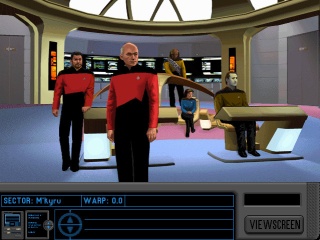
The Federation in Star Trek is another example of a technological organised society. The society is also moneyless. The exact workings of the economy is not fully explained but given the technological nature and the importance of science one can imagine it would be some form of energy accounting. If we look at the starship Enterprise, we again see a society that is organised around technical areas run by technical experts. Mr. Spock as science office, Montgomery “Scotty” Scott, responsible for engineering, Nyota Uhura, in charge of communications, and Dr. Leonard “Bones” McCoy as chief medical office, for example. All under the command of Captain James T. Kirk. The society is still hierarchical but discussions are still held and the opinion of the experts taken into account.

Do you want this kind of future?

If so, then we need to start building it. It won't happen by itself and given the failure we have seen regarding climate change, we need to be more proactive. We would need people who agree with and understand what is proposed. Scientists and engineers but also experts in other fields need to form groups and clubs to start building in the real world. Join up with like minded people. We would need funding, even if we want to build a moneyless society we are not there yet.

We need to start acting. Start doing. If we don’t, then we wont get this king of future. Fiction also provides us with plenty of examples of other types of societies. In the end the choice is ours. Build a better society or settle with what is coming.

EOS is one example of people working together to try and build a better future. Want to join us? Why not start your own group and form a network with us? Much of the ideas are explained in the Design but we are open to discussion if you want to learn more.

Tuesday, 11 April 2023

More time to be human


To be human in the modern world

Foreword

At the moment we live in an unsustainable socioeconomic system that requires infinite exponential growth with finite resources. To be able to live in such a system we require money and for most of us the primary way to obtain the money we need to live is working. We end up spending most of our lives working. A lot of the work we do is demoralising, dehumanising, and, could be argued, unnecessary. From when we leave the education system until we retire and the retirement age is getting higher and higher in many countries. Many people work two jobs to make ends meet. 

Imagine the future

Instead of that, imagine a world where you didn’t need to work, or at least, you didn’t need to work as much as we do today. Those jobs that are needed to be done would be interesting, meaningful, and people who work at those jobs do so because they want to not because they need the money. Working less would mean more time to be human.

Sounds like fantasy? Maybe, but maybe not. EOS proposes a sustainable, moneyless, socioeconomic system that aims to balance our needs with those of nature. In doing so, we could have a system that requires much less work yet still offer a good standard of living for everyone. The system has its roots in the application of science and engineering. How would that work?

The Alternative

To start with, the system that EOS proposes would see society organised in to a people side and a technical side. The people side is all about community, family, and culture. The technical side deals with all the technical aspects of society. From the means of production like farms and factories to transport systems and on to the science and research needed to develop the society. The people side is run by the people through a process of direct democracy and the technical side is managed by interdisciplinary teams of people, each of whom is an expert in their relevant field.

The system EOS proposes is also moneyless. So there is no profit searching behaviours that drive our current destructive system. Instead, the production capacity of a society is divided equally between the people so everyone has an opportunity to gain what they want and what they need. We can do that if we have an accounting system and the one that EOS proposes is based on the physical capacity of society to produce. We can measure that using energy (or to be more exact the usable energy which is called exergy). We can then allocate a set number of energy credits (that represent the production capacity) to individuals who then decide on what gets produced by allocating energy credits (and, therefore, production) to produce items that they want produced. Thus, the system is demand driven and not centrally planed. The teams of experts then manage the system.

As the system is not money based and we are not seeking profit we don’t have a system that needs to continually grow exponentially in the self destructive way of today system. Instead, we have the opportunity to build sustainable products. Built to be recycled or reuse. We can also reduce what we produce. For example, instead of building car after car and then have them spend most of their time standing still in a garage or car park doing nothing. We could rethink our whole transport system and have a system where each car is used for, say, 80% of the time. That means we could reduce the amount of cars we need to produce.

In the system EOS proposes, as much as possible is automated. Robots in factories run by Artificial Intelligence (AI). With the teams of experts running the overall system. With AI and robots doing much of the work, we would have much less work to be done. And what work there is to do would be more interesting to do. 


Building a better world

Conclusion

Less work to do in a sustainable socioeconomic system where everyone has equal access to the means of production would mean more time to be human.

Do you want this kind of “Star Trek” like future? If you want to make this kind of future possible then we need to work together to achieve it. If it is possible to achieve then we can achieve it. 

Links

EOS

The Design